
🐍 Snake Plant
If houseplants gave out awards for patience, the snake plant would have a shelf full of them. Dracaena trifasciata — still Sansevieria trifasciata on half the plant tags in the store, and still “mother-in-law’s tongue” to your grandmother — is the plant you buy for the friend who has killed everything else. It survives dark corners, forgotten waterings, dry air, and vacations. It does all of this while looking like modern art: stiff, upright, sword-shaped leaves in bands of green that seem designed rather than grown.
It comes from the dry, rocky regions of West Africa, from Nigeria to the Congo, where rain is a rumor and the soil is thin. That origin story explains everything about how it behaves in your living room. The leaves are succulent — thick, fleshy water tanks wrapped in a waxy skin — and the plant runs a photosynthetic night shift. Like many succulents, it uses CAM photosynthesis, opening its stomata (the tiny pores on the leaf surface) at night to take in carbon dioxide when the air is cooler and less water is lost, then doing the actual photosynthesis during the day with the doors shut. That is why the old advice says snake plants are good bedroom plants: they do their gas exchange while you sleep. (A much-quoted NASA study did find snake plants removing chemicals from the air — in a sealed chamber, with a lot of plants and no ventilation. In a normal living room with the windows open, the effect is real but small. Buy it because it is beautiful and nearly unkillable, not because it replaces your air filter.)
It also tops the attitude list in our Plants for Black Thumbs roundup, which is the short version of this guide: if you can keep a snake plant alive, you can keep anything alive. If you cannot keep a snake plant alive, you are almost certainly watering it too much — and this guide will fix that.
What it looks like
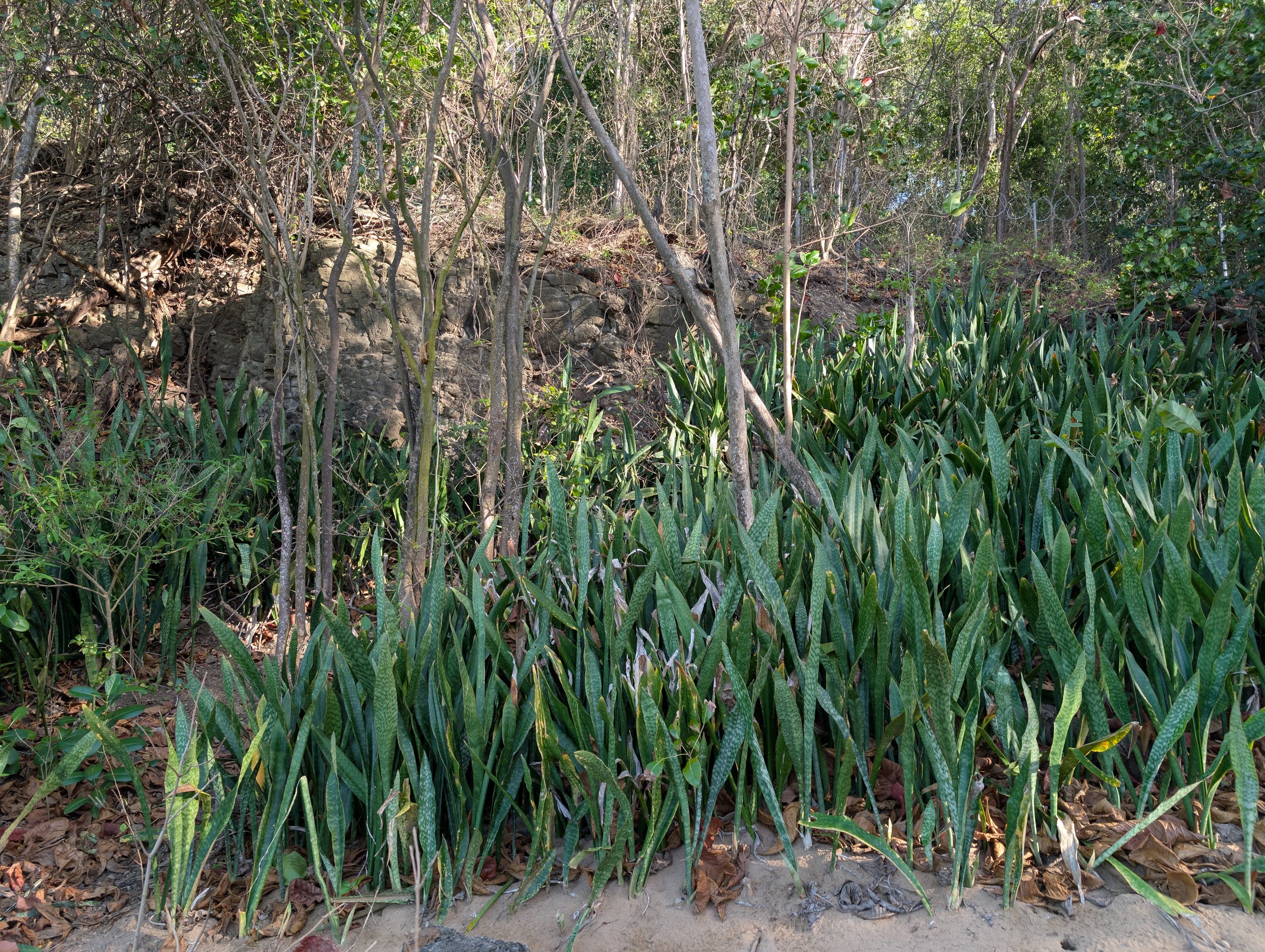
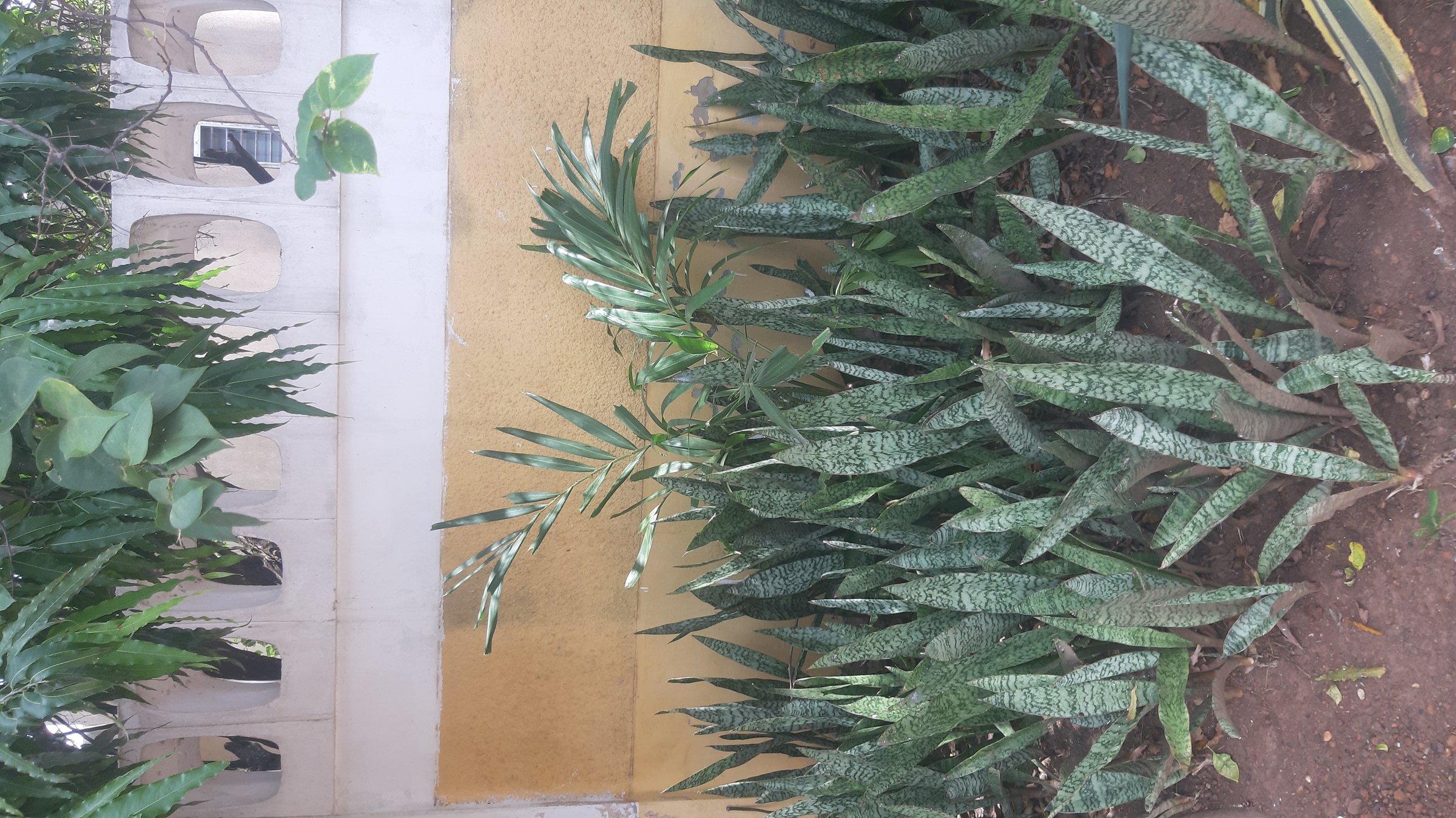
The leaves are the whole show. Each one is a stiff, upright sword, 1 to 4 feet tall in a pot (taller outdoors in the tropics), dark green with lighter green horizontal banding that looks like watered silk or, yes, a snake’s pattern. The leaf is thick and succulent, with a pointed tip that is genuinely sharp — it can draw blood if you brush past it carelessly, which is worth knowing if the pot sits beside a hallway. New leaves emerge from the center of the rosette as tight, pale spears and unfurl into full swords over a few weeks.
There is no visible stem. The leaves rise directly from a thick underground rhizome, a horizontal stem that creeps along just under the soil and sends up new rosettes. That rhizome is the plant’s savings account: it stores water and starch, which is why a snake plant can sit through a month of neglect and then carry on as if nothing happened. It is also why the plant eventually cracks cheap pots — the rhizome grows outward with real force, and a root-bound snake plant can split a plastic nursery pot clean down the side.
The most common form in stores is ‘Laurentii’, with a creamy yellow edge down each side of the leaf. There is also the plain green species form, ‘Moonshine’ with silvery pale leaves, and ‘Cylindrica’, whose leaves are round spears instead of flat swords. All of them want the same care. Flowers are rare indoors but real: a spike of small, creamy-white, intensely fragrant flowers that open at night — the plant’s moth-pollinated heritage showing through — followed by small orange berries. If yours flowers, you are doing something right, and your living room will smell like jasmine for a week.
Light
Bright, indirect light is the sweet spot: a few feet from a sunny window, or a spot that gets a couple of hours of gentle morning sun. In that light the plant grows steadily, the banding stays crisp, and ‘Laurentii’ keeps its yellow edge bright. It will also tolerate a dark corner that would kill almost anything else — it just grows very slowly there, and the leaves may stretch a little and lose some contrast. Low light is survival, not thriving, and if your plant has not grown a single new leaf in a year, light is the first thing to check.
Direct Florida afternoon sun through a window can scorch the leaves, leaving pale, papery patches that never heal. Outdoors, give it shade or morning sun only. And if you move a plant from a dim room to a bright porch, do it gradually over a week or two — even a sun-lover sunburns if you throw it into July light without an adjustment period.
Water
Here is the whole secret of snake plants, in one sentence: water less than you think, and then wait longer. In a typical Florida home, every two to three weeks in summer and every four to six weeks in winter is plenty. The test is the soil, not the calendar: stick a finger or a wooden skewer down into the pot, and water only when the soil is dry all the way down. If the top is dry but the bottom is still damp, walk away. Your plant will thank you by not dying.
When you do water, water thoroughly — soak the soil until water runs out the drainage hole, then empty the saucer so the pot is never sitting in water. Then leave it alone until it is dry again. The rhizome and leaves hold so much water that the plant is effectively carrying its own canteen; it would rather be thirsty than drowned. Overwatering is the number one killer of snake plants, and it is not close: soggy soil rots the rhizome, the leaves turn yellow and mushy at the base, and by the time you notice, the damage is usually fatal. A neglected snake plant looks fine. An overwatered one collapses.
Florida summer complicates this in one specific way: if your snake plant lives outside on a porch, summer rain can water it every afternoon whether you like it or not. Keep outdoor pots under cover, or tip them on their side after a downpour, and make sure the mix drains fast enough that a rainstorm does not leave the roots sitting in a swamp.
Soil & pot
Snake plants want what their West African home gave them: fast drainage and lean soil. A cactus or succulent mix straight from the bag works well. If you are mixing your own, try two parts ordinary potting mix to one part perlite or coarse sand, with a handful of small bark chips for structure. The soil should feel gritty, not spongy, and water should run through it rather than pooling on top.
The pot matters as much as the mix. It must have a drainage hole — no exceptions, no “I’ll just water carefully” arrangements, no decorative pot without a hole unless the nursery pot sits inside it and you empty it after every watering. Terracotta is the classic choice because the clay breathes and pulls excess moisture out of the soil, which is exactly what a rot-prone plant wants. A snug pot is fine; snake plants grow happily slightly root-bound, and a pot that is too big holds too much wet soil around a small root system. Repot only when the rhizome is visibly pushing against the sides, roots are coming out of the drainage hole, or the pot itself is cracking — usually every two to three years, in spring.
Feeding
Snake plants are light feeders, which is a polite way of saying they barely notice fertilizer. In spring and summer, feed once a month at most, with a balanced liquid houseplant fertilizer diluted to half the strength on the label — or skip the bottle entirely and top-dress with a handful of worm castings each spring. Castings feed slowly, add microbes, and cannot burn the roots the way a heavy dose of synthetic fertilizer can. Do not feed in fall or winter, when the plant is barely growing, and never fertilize a dry plant — water first, then feed, so the roots are not shocked.
Overfeeding shows up as brown leaf tips, crusty white salt deposits on the soil surface, and limp growth. If you see that, flush the pot with plain water a few times and skip fertilizer for a few months. The plant will recover; it is a snake plant.
Common problems
Mushy, yellow leaves at the base: root rot from overwatering. This is the big one. Unpot the plant, cut away every soft, brown, smelly root and rhizome section with a clean knife, let the healthy pieces dry for a day, and repot in fresh, dry mix. Water sparingly from then on. If the whole base is mush, save any firm leaves for leaf cuttings (see Propagation below) and start over.
Brown, dry leaf tips: usually inconsistent watering, low humidity, or fertilizer salts. Trim the brown tip with clean scissors, following the natural point of the leaf so the cut is invisible, and flush the soil once with plain water. In Florida this is rarely a humidity problem — our air is wet enough — so check your watering and feeding first.
Leaves falling over or leaning: tall leaves flop when the plant is reaching for light, when it is overwatered and the base is weak, or simply when a leaf gets too tall for its own strength. Rotate the pot a quarter turn every couple of weeks so growth stays even, give it more light, and tie a leaning leaf loosely to a stake if it bothers you.
Wrinkled, thin leaves: the opposite problem — genuine thirst. The leaves are using up their stored water. Soak the pot thoroughly and the leaves should plump up over a few days. If they do not, check the roots: a rotted root system cannot take up water either, and a thirsty-looking plant can actually be a drowning one.
Pests: mealybugs (white cottony clumps in the leaf joints) and scale (small brown bumps) are the usual suspects, and both are rare on a healthy plant. Dab mealybugs with a cotton swab dipped in rubbing alcohol, scrape scale off with a fingernail, and repeat weekly until they are gone. Fungus gnats mean the soil is staying wet — let it dry out and they will leave on their own.
Propagation
Snake plants are generous propagators, with one catch that matters. There are two good methods, and they are not interchangeable.
Division — the best method, and the only one that keeps variegation. When you repot in spring, pull the plant out of its pot and look at the rhizome. You will see natural sections, each with its own rosette of leaves and roots. Cut the rhizome between rosettes with a clean, sharp knife, let the cut ends dry for a day so they callus over, and pot each division in its own pot of dry, gritty mix. Water lightly after a week. A ‘Laurentii’ divided this way keeps its yellow edge, because every leaf is genetically identical to the parent.
Leaf cuttings — easy, satisfying, and sneaky. Cut a healthy leaf into 3- to 4-inch sections, and — this is the part people forget — note which end was the bottom, because a cutting planted upside down will not root. Let the pieces dry for two or three days until the cut ends callus, then push the bottom end about an inch into moist cactus mix, or stand it in a jar of water and change the water weekly. Roots appear in a few weeks; a new pup sprouts from the base in one to three months. The catch: leaf cuttings of variegated forms like ‘Laurentii’ almost always revert to plain green, because the yellow edge lives in a layer of cells that the new pup does not inherit from a leaf section. If you want more ‘Laurentii’, divide. If you want more snake plants and do not care about the edge, cut away.
Either way, propagate in spring or summer when the plant is actively growing, and be patient — snake plants do everything slowly, including making babies.
In Florida
Florida is the one place in the continental United States where a snake plant can live outdoors year-round — and the one place where that is a mixed blessing. In zones 10 and 11 (South Florida), it grows in the ground happily and spreads by rhizome into a dense colony, which is beautiful until it is in your neighbor’s bed. In zones 9a and 9b (including Keystone Heights), it survives most winters in a sheltered spot but will be damaged or killed by a hard freeze, so treat it as a container plant you can move under cover. A frost cloth and a spot against a warm south wall will save it through a light frost; a hard freeze below about 28°F will not.
Summer is the other Florida test. Our humidity is no problem at all — the plant could not care less about wet air, since it drinks through its roots, not its leaves. Our rain is the problem, as noted above: an outdoor pot in a rainy summer needs fast-draining mix and a covered spot, or the rhizome rots. And if you do plant one in the ground, know that it spreads. It is not on Florida’s invasive plant lists, but a clump left alone will widen steadily, and digging out a rhizome mat is real work. Containers keep it polite.
The best Florida life for a snake plant is a bright porch in summer and a bright window in winter, brought inside before the first cold snap. It is the rare houseplant that genuinely enjoys a Florida summer vacation — just not a Florida summer thunderstorm.
Frequently asked questions
Why is my snake plant mushy at the base?
Almost always root rot from overwatering. The soil stayed wet, the rhizome rotted, and the leaves lost their anchor. Cut away all the soft, brown material, let the healthy pieces dry for a day, and repot in fresh, gritty mix. Then water only when the soil is dry all the way down.
How often should I water a snake plant in Florida?
Indoors, every two to three weeks in summer and every four to six weeks in winter — and only when the soil is dry deep down. Florida’s humidity means the soil dries more slowly than it would in a dry climate, so the calendar matters less than the finger test.
Can I put my snake plant outside?
Yes, in shade or morning sun, from spring through fall. Bring it in before temperatures drop below about 50°F, and keep outdoor pots under cover so summer rain does not drown the roots. In South Florida it can grow in the ground, but it spreads by rhizome, so a container is the polite choice.
Why isn’t my snake plant growing?
Usually not enough light, or it is winter and the plant is resting. Move it closer to a bright window and wait for spring. A plant that has not grown in a year in a dark corner is not sick — it is just on standby.
Is snake plant safe for cats and dogs?
No — it is mildly toxic if eaten, because the leaves contain saponins. A nibble usually causes drooling, nausea, or vomiting, but it is rarely dangerous. Keep it out of reach of curious pets, and call your vet if a pet eats a significant amount.
Will leaf cuttings keep the yellow edge?
No — leaf cuttings of ‘Laurentii’ revert to plain green. To keep the yellow edge, propagate by division, cutting the rhizome between rosettes so each new plant is a genetic copy of the parent.
🌱 Keep learning
Three related guides worth reading next:
- Plants for Black Thumbs — Ten Florida-proof plants for people who have killed everything else — the snake plant’s whole philosophy, in list form.
- ZZ Plant: The Houseplant That Laughs at Neglect — The snake plant’s partner in neglect: the ZZ plant stores water in rhizomes and forgives the same forgotten waterings.
- Worm Castings 101 — What castings are, how worms make them, and why leachate is not worm tea.