
✨ ZZ Plant
The ZZ plant looks like it was designed by someone who had never seen a plant die and wanted to keep it that way. Zamioculcas zamiifolia — ZZ for short, “eternity plant” for the romantics — is a glossy, upright, architectural plant from the dry forests and rocky outcrops of eastern Africa, from Kenya to South Africa, where it survives long dry seasons by storing water in fat underground rhizomes that look like potatoes. It tolerates low light, dry air, forgotten waterings, and offices with no windows. It grows slowly, asks for almost nothing, and looks good the entire time.
It is also, quietly, one of the toughest plants you can own. The leaves are thick and waxy, coated in a cuticle that slows water loss to a trickle. The rhizomes hold so much water that the plant can go weeks without a drink. The stems are succulent. Every part of it is built for drought, which is why the number one way to kill a ZZ plant is the same as the number one way to kill a snake plant: watering it like a fern. A ZZ plant does not want your attention. It wants your benign neglect, a bright corner, and a pot that drains.
It arrived in the houseplant trade relatively recently — it was barely known outside botanical gardens until the 1990s, when Dutch nurseries started propagating it — and it has been making up for lost time ever since, becoming one of the best-selling houseplants in the world. The cultivar ‘Raven’ (‘Dowon’), whose new leaves open bright green and darken to near-black, has only made it more popular. If you want a plant that looks expensive, grows slowly enough that you will never need to repot it in a hurry, and survives a two-week vacation without a plant sitter, this is the one.
What it looks like
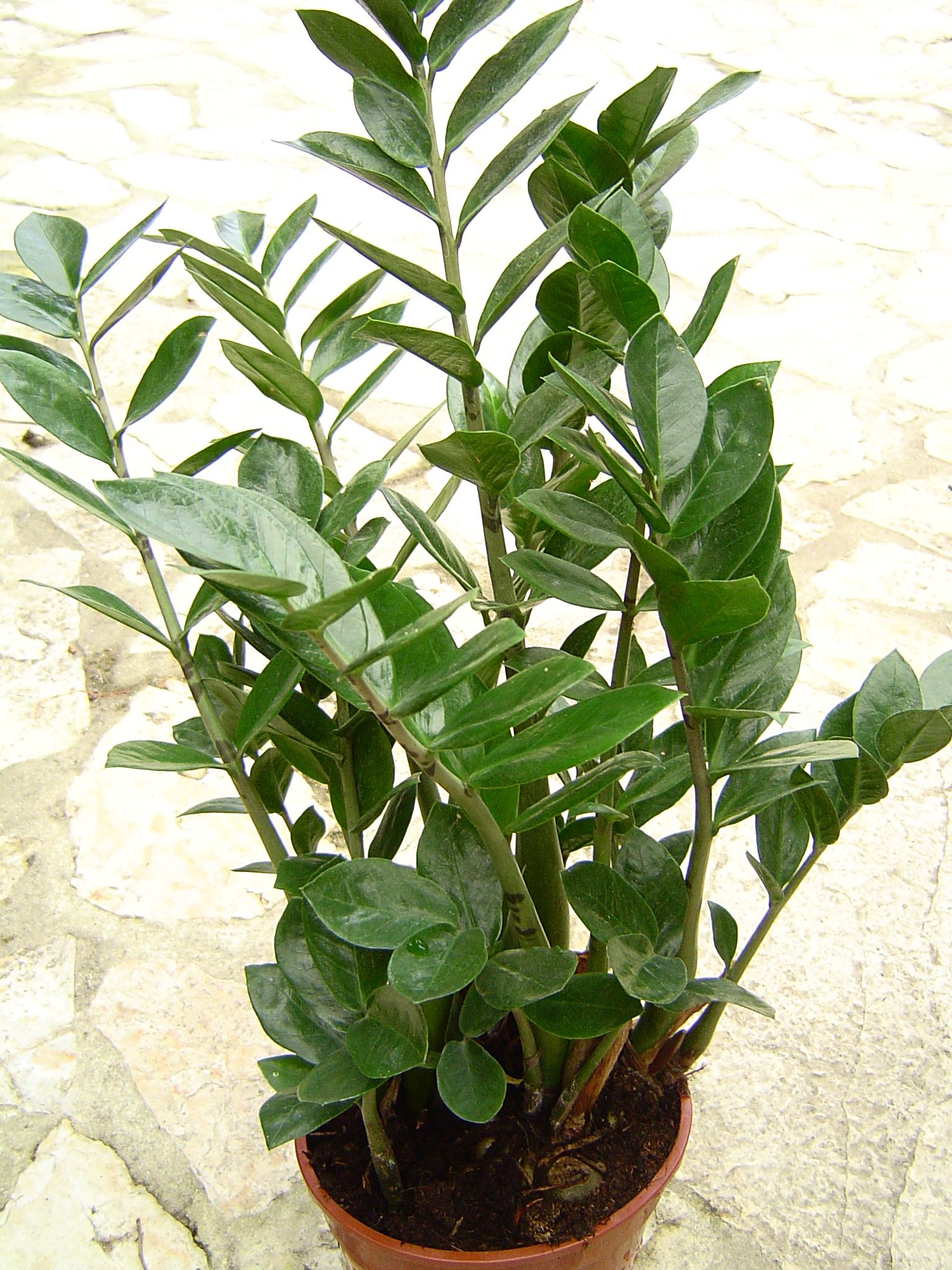
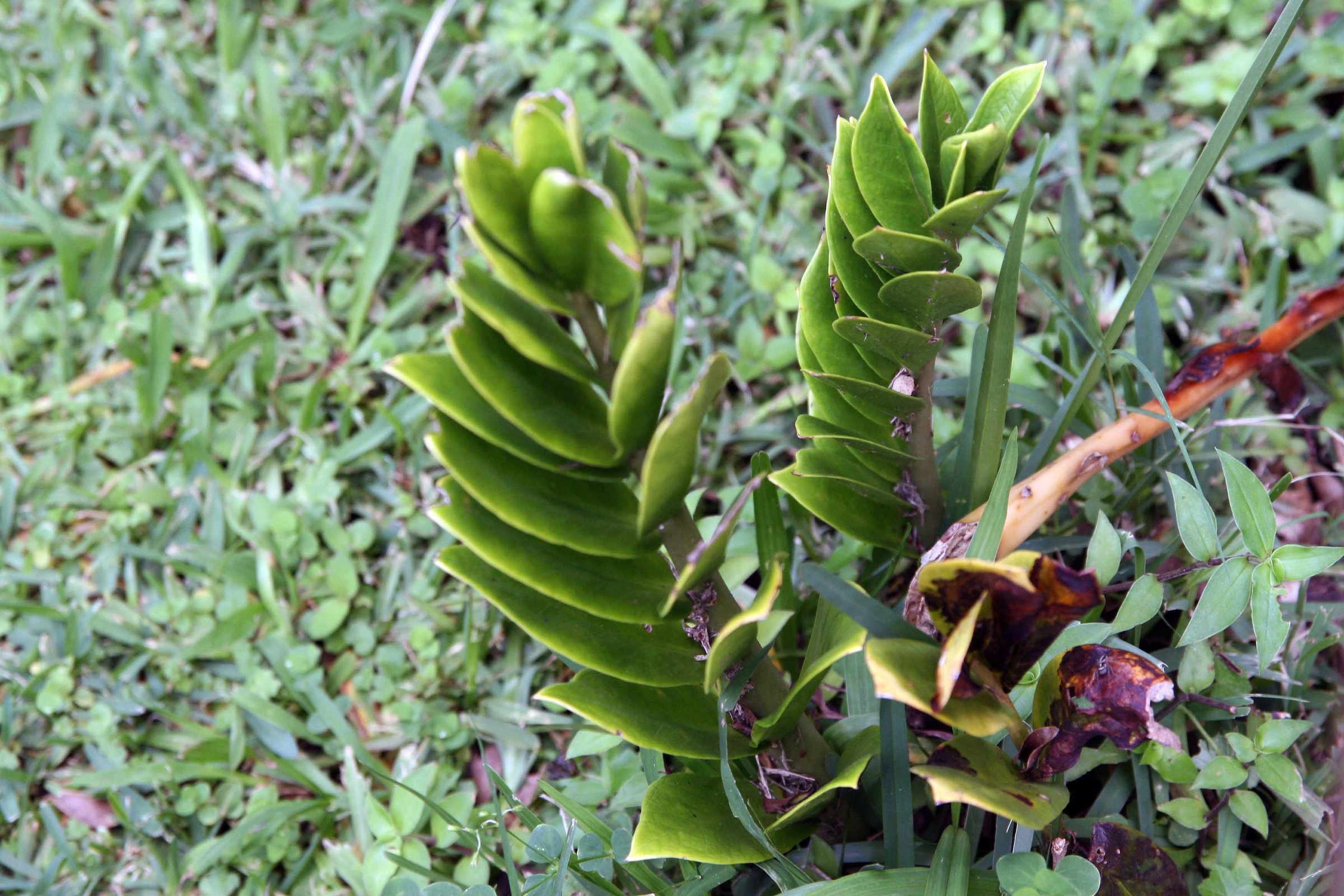
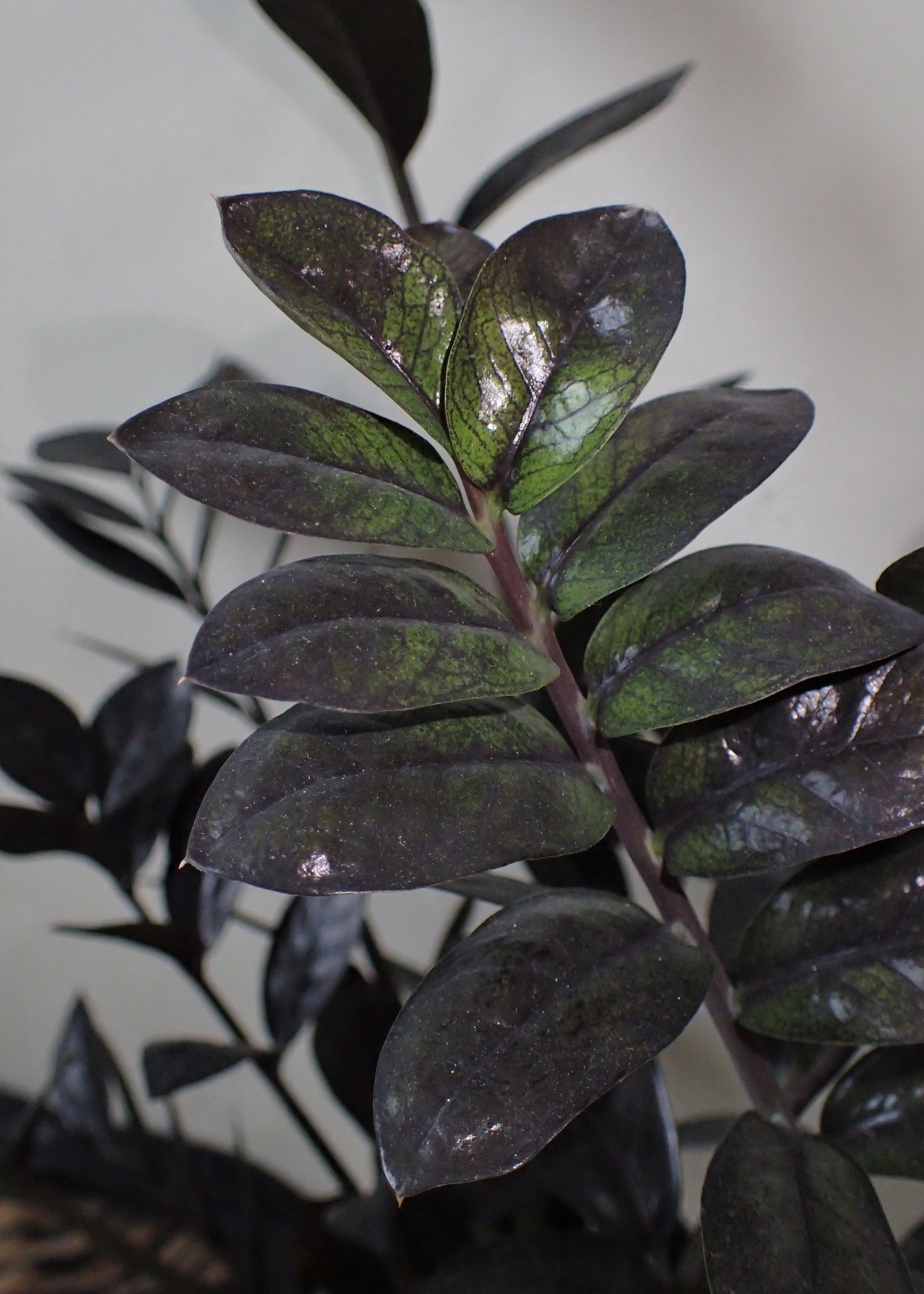
What looks like a stem is actually a leaf — a single, upright, pinnate leaf up to three feet tall, with a fleshy central stalk (the rachis) carrying pairs of glossy, oval leaflets down its length. Each leaflet is thick, waxy, and dark green, like it has been polished. New leaves emerge from the base as tight, pale green spears that unfurl over a few weeks, starting bright and darkening as they harden. A mature plant is a cluster of these upright leaves, arching gently outward, forming a vase shape two to three feet tall and wide.
Underground, the plant keeps its real secret: thick, potato-like rhizomes that store water and starch. If you ever repot a ZZ plant, you will find them — smooth, pale, and surprisingly large, like a handful of small potatoes tucked under the soil. They are the reason the plant survives drought, and the reason overwatering is fatal: a rhizome sitting in wet soil rots, and a rotted rhizome cannot be saved.
Flowers are rare indoors and unremarkable when they appear: a small, pale, spathe-and-spadix bloom (it is in the aroid family, like pothos and peace lilies) that hugs the base of the plant and is easy to miss. Nobody grows a ZZ plant for the flowers. The foliage is the flower.
Light
Bright, indirect light is best — the plant grows fastest there, the leaves stay dark and glossy, and new growth comes regularly. But the ZZ plant’s famous talent is tolerating low light: a north-facing window, a room lit only by a lamp, an office corner far from any window. It will survive in all of them, growing very slowly, which for a plant that already grows slowly means you may not see a new leaf for months. Low light is survival, not thriving, and if your plant has not grown at all in a year, light is the first thing to check.
Direct sun is the one light mistake that hurts. Harsh afternoon sun through a window scorches the leaflets, leaving bleached, papery patches, and a plant moved suddenly from a dim room to a bright porch will sunburn. Florida sun is strong enough to do this through glass, so keep the plant a few feet back from south- and west-facing windows, or give it a sheer curtain. Outdoors, it wants shade — a covered porch or dappled light under a tree, never open sun.
Water
Water every two to three weeks in summer and every three to four weeks in winter — and only when the soil is dry all the way down. Push a finger or a wooden skewer deep into the pot: if the bottom is still damp, walk away. The rhizomes hold so much water that the plant is carrying its own canteen, and it would rather be thirsty than drowned.
When you do water, soak the soil thoroughly until water runs out the drainage hole, then empty the saucer so the pot never sits in water. Then leave it alone. Overwatering is the number one killer of ZZ plants, and it is not close: soggy soil rots the rhizomes, the stems turn yellow and mushy at the base, and the leaves drop. A ZZ plant that is underwatered looks wrinkled and a little sad, and recovers within days of a good soak. A ZZ plant that is overwatered collapses and does not come back. When in doubt, wait a week. The plant has potatoes. It will be fine.
Florida summer adds one wrinkle: if your ZZ plant lives on a porch, summer rain can water it every afternoon. Keep outdoor pots under cover, and make sure the mix drains fast enough that a downpour does not leave the rhizomes sitting in a swamp.
Soil & pot
ZZ plants want fast drainage and a snug pot. A cactus or succulent mix works well, or ordinary houseplant mix cut half-and-half with perlite. The mix should feel gritty and drain quickly — if water pools on top, it is too heavy. Soil pH around 6.0 to 7.0 is ideal, which is where most bagged mixes land.
The pot must have a drainage hole, and terracotta is a good choice because the clay breathes and pulls excess moisture out of the soil. The plant prefers to be slightly root-bound — a pot that is too big holds too much wet soil around a small root system, which is exactly how rhizomes rot. Repot only every two to three years, in spring, going one size up, and while you have it out of the pot you can divide the rhizomes (see Propagation below). If the rhizome is pushing against the sides of the pot or the pot is bulging, it is time.
Feeding
ZZ plants barely need feeding. In spring and summer, feed once every two months at most, with a balanced liquid houseplant fertilizer diluted to half strength — or skip the bottle and top-dress with a thin layer of worm castings each spring. Castings release nutrients slowly, feed the soil microbes, and cannot burn the roots. Do not feed in fall or winter, when the plant is barely growing, and never fertilize a dry plant — water first, then feed.
Overfeeding shows up as brown leaflet tips, a white salt crust on the soil, and leggy, pale growth. If you see that, flush the pot with plain water a few times and skip fertilizer for six months. The plant will recover; it is a ZZ plant. The honest truth is that most ZZ plants are healthiest on almost no fertilizer at all — they evolved in lean, rocky soil, and they are not in a hurry.
Common problems
Yellow leaves, mushy stems: overwatering and rhizome rot. Unpot the plant, cut away every soft, brown, smelly rhizome section with a clean knife, let the healthy pieces dry for a day, and repot in fresh, dry mix. Water sparingly from then on. If the whole rhizome is mush, the plant is gone — save any firm leaflets for leaf cuttings and start over.
Wrinkled, curling leaflets: genuine thirst. The rhizomes are running low. Soak the pot thoroughly and the leaflets should plump up over a few days. If they do not, check the roots — a rotted root system cannot take up water, and a thirsty-looking plant can actually be a drowning one.
Leggy, stretched growth: not enough light. The new leaves are reaching for a window. Move the plant brighter and accept that the stretched leaves will not shorten — new growth will come in tighter.
Brown spots or bleached patches: sunburn, usually from direct sun through a window or a sudden move outdoors. Move the plant back, and the damaged leaflets will not heal — trim them off if they bother you.
Leaves dropping: usually a watering swing — a long drought followed by a heavy soak, or the reverse. Keep the watering steady and infrequent, and the plant will stabilize.
Pests: rare on a healthy ZZ plant. Mealybugs (white cottony clumps in the leaf joints) and scale (small brown bumps) are the usual suspects. Dab mealybugs with rubbing alcohol on a cotton swab, scrape scale off, and repeat weekly. Fungus gnats mean the soil is staying wet — let it dry out and they will leave.
Propagation
ZZ plants propagate readily, but slowly — and the speed depends entirely on which method you choose. Pick based on your patience.
Rhizome division — the fast method. When you repot in spring, pull the plant out and look at the rhizomes. You will see natural sections, each with its own leaves and roots. Cut the rhizome between sections with a clean, sharp knife, let the cut ends dry for a day so they callus, and pot each division in its own pot of dry, gritty mix. Water lightly after a week. You get a full-sized plant immediately, and a ‘Raven’ divided this way stays a Raven.
Stem cuttings — the medium method. Cut a whole leaf (the upright stalk with its leaflets) at the base, let the cut end dry for a day, and push it an inch or two into moist cactus mix, or stand it in water. It will root in a few weeks and grow a new rhizome at the base in a few months. The original leaf will slowly yellow and die as the new plant takes over — that is normal, not failure.
Leaflet cuttings — the slow method, for the patient. Pull a single leaflet off with its tiny stalk, let it dry for a day, and push the stalk into moist mix. It will root, then — over three to six months — grow a tiny rhizome, and then, eventually, a new leaf. The whole process can take a year to produce a plant you would recognize. It is deeply satisfying and deeply slow, which is very on-brand for a ZZ plant.
Whichever method you choose, propagate in spring or summer, keep the mix barely damp rather than wet, and do not dig up your cuttings to check on them. ZZ plants do everything slowly, including making babies, and the surest way to kill a leaflet cutting is to fuss over it.
In Florida
Florida treats ZZ plants well, with the same two limits as every tropical houseplant: cold and rain. Outdoors, a ZZ plant is happy on a shaded porch or under a tree in zones 10 and 11, where our humidity keeps the leaflets glossy and our long growing season means steady, if slow, growth. In zones 9a and 9b, including Keystone Heights, it is a container plant that lives outside from spring through fall and comes in for winter.
Cold is the hard limit. ZZ plants are damaged below about 45°F and killed by frost, so watch the forecast from November on. A night in the 40s means bringing the pot inside or covering it; a freeze means the leaves will blacken and the rhizomes may rot. The best Florida life for a ZZ plant is a bright porch in summer and a bright window in winter, moved under cover before the first cold snap.
Rain is the soft limit. A ZZ plant on an uncovered porch in a Florida summer gets watered every afternoon whether it wants it or not, and rhizomes in a soggy pot rot. Keep outdoor pots under cover, use a fast-draining mix, and tip the pot after a downpour if it has been sitting in rain. And if you are tempted to plant one in the ground in South Florida — do not. It is not on Florida’s invasive lists, but it is a tropical plant with a spreading rhizome, and a pot keeps it polite and movable, which is what you want when the first cold snap arrives.
Frequently asked questions
Why is my ZZ plant turning yellow?
Almost always overwatering. The soil stayed wet, the rhizome started to rot, and the leaves yellowed. Let the soil dry out completely between waterings, make sure the pot drains, and check the rhizome if the yellowing spreads — cut away any soft, brown sections and repot in fresh, dry mix.
How often should I water a ZZ plant?
Every two to three weeks in summer, every three to four weeks in winter — and only when the soil is dry all the way down. The rhizomes store water, so the plant would rather be thirsty than drowned. When in doubt, wait a week.
Why isn’t my ZZ plant growing?
It grows slowly by nature — a few new leaves a year is normal. If it has not grown at all in a year, it probably needs more light. Move it closer to a bright window and wait for spring. A ZZ plant in a dark corner is on standby, not dead.
Can I put my ZZ plant outside in Florida?
Yes, in shade, from spring through fall. Bring it in before temperatures drop below about 45°F, and keep the pot under cover so summer rain does not drown the rhizomes.
Is ZZ plant safe for cats and dogs?
No — it contains calcium oxalate crystals, which irritate the mouth and stomach if eaten, and the sap can irritate skin. Keep it out of reach of curious pets and wash your hands after handling cuttings.
How long does it take to propagate a ZZ plant from a leaf?
Months. A single leaflet cutting takes three to six months to grow a rhizome and up to a year to produce a new leaf. Rhizome division gives you a full plant immediately, and stem cuttings take a few months — pick your method based on your patience.
🌱 Keep learning
Three related guides worth reading next:
- Snake Plant: The Houseplant That Thrives on Neglect — The other unkillable classic — sword leaves, same watering schedule, same forgiveness.
- Plants for Black Thumbs — Ten Florida-proof plants for people who have killed everything else.
- How to Make Hot Compost — ZZ plants barely need feeding, but when they do, homemade compost is the gentle way to do it.