
So you have killed plants. Maybe a lot of plants. Maybe a fern that arrived healthy and left as a brown crunchy thing three weeks later, despite your best intentions. Maybe a succulent — a plant whose entire survival strategy is “store water and wait” — that you somehow managed to drown.
Here is the good news: you are probably not a black thumb. A black thumb is not a diagnosis. It is a mismatch. Most dead plants die for one of two reasons: they got the wrong amount of water (usually too much, which surprises everyone), or they were the wrong plant in the wrong place (a Mediterranean herb in a Florida swamp summer, a shade plant in full sun, a tropical in a frost pocket). The plant was not judging you. It was just in the wrong zip code, hydrologically speaking.
Florida is actually easy mode for gardening — if you pick the right plants. We get a year-round growing season, rain on tap half the year, and soil microbes that never really sleep. The trick is to stop fighting the climate and start hiring plants that already love it: plants that store their own water, shrug at humidity, laugh at heat, and treat neglect as a compliment.
That is what this list is. Twenty-two plants — ten for the yard and porch, twelve for indoors — ranked from hardest to kill to merely very hard to kill, every one of them with a full growing guide on this site. Each pick tells you why it refuses to die (the mechanism, because “hardy” is not a mechanism), what will kill it anyway (because honesty is the whole point — everything has a limit), and how it behaves in Florida specifically.
How to read the labels: Yard means it goes in the ground. Pot / porch means it is happy in a container on a sunny porch or a bright windowsill. Indoor means it lives inside — no porch required. If you only have a porch, start with the pot picks. If you only have indoors, start with the indoor picks.
1. Sweet Potato: The Vine That Outruns Your Mistakes
Yard + big pot — Sweet Potato growing guide
Sweet potato (Ipomoea batatas) is the closest thing gardening has to a cheat code. It is a tropical vine that grows inches a day in Florida heat, roots wherever a stem touches soil, and produces two harvests at once: edible leaves all season and sweet potatoes underground. The mechanism is simple — explosive vining growth plus deep roots means it finds its own water and outgrows its problems. A nibbled leaf is replaced by Tuesday.
What will kill it anyway: A hard freeze will blacken the vines overnight (it usually comes back from the roots in zones 9–11), and a pot with no drainage will rot it — the one thing a sweet potato cannot forgive is sitting in standing water.
Florida notes: Year-round in zones 10–11, a warm-season annual everywhere else in the state. Plant slips after the last frost and then mostly leave it alone. The leaves are edible — cook them like spinach — which means your “I killed a plant” story becomes a dinner story instead.
2. Purslane: The Weed That Decided to Be Dinner
Pot (contained!) + yard edges — Purslane growing guide
Purslane (Portulaca oleracea) is a succulent, and succulence is a survival strategy: thick, fleshy leaves are water tanks. A purslane plant can sit through a dry spell on the water it stored last week, then resume growing like nothing happened. It also self-seeds so freely that one plant can make tens of thousands of seeds — which is either a feature or a problem, depending on your feelings about volunteers. The leaves are lemony, crisp, and hold the plant-world record for omega-3 fatty acids among leafy greens.
What will kill it anyway: Soggy soil. Purslane is a succulent and rots in standing water — the one way to kill it is to love it with the hose. And here is the honest part: purslane is listed as invasive in parts of the United States, including Florida. Grow it in containers, harvest before it sets seed, and never plant it in open beds near natural areas.
Florida notes: It loves heat, tolerates poor soil and drought, and grows as an annual in zones 2–11, overwintering in zones 10–11. Do not confuse it with spurge — spurge looks similar but has milky sap when broken and is toxic; purslane sap is clear. When in doubt, do not eat it.
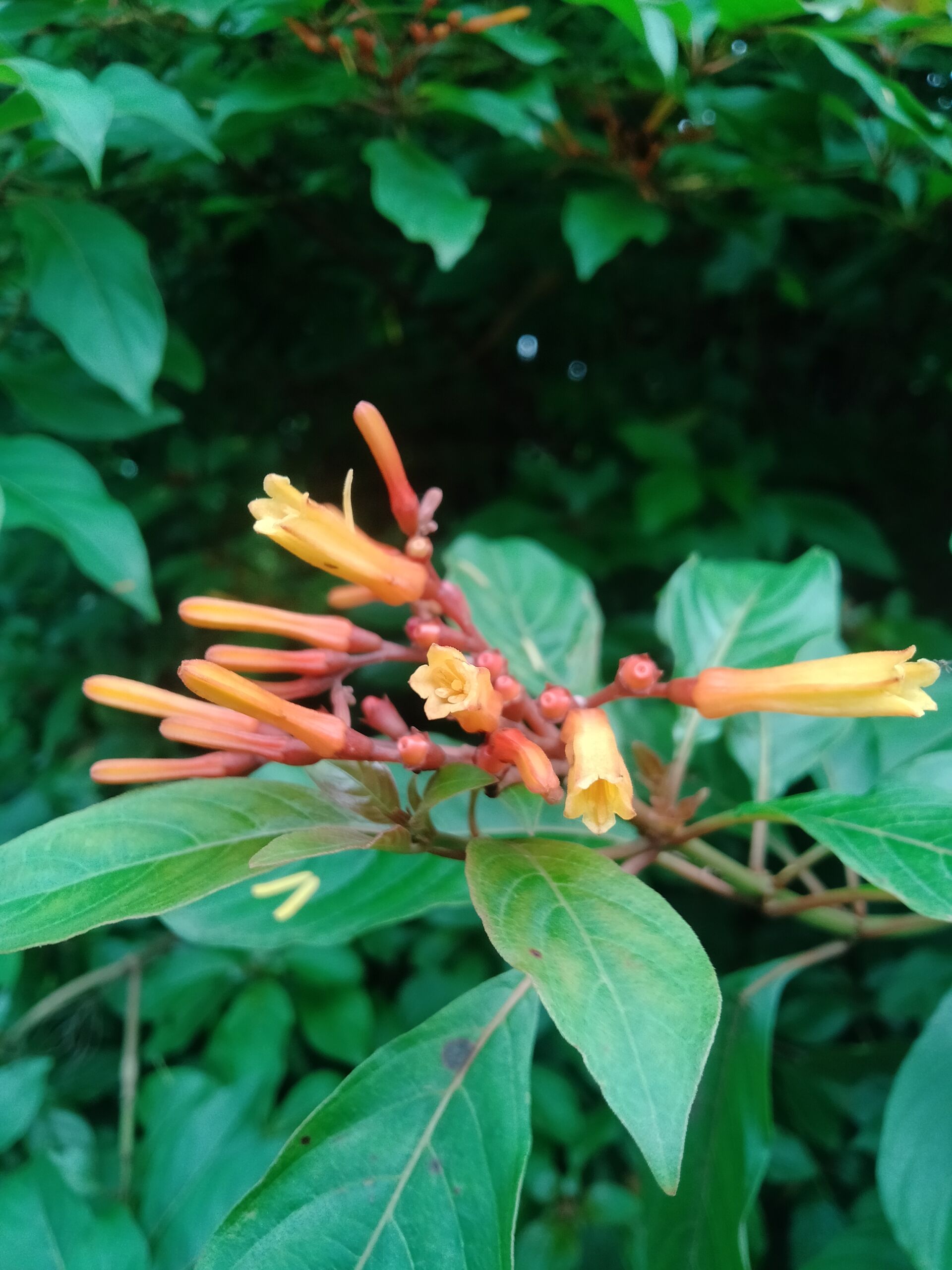
3. Firebush: The Shrub That Feeds Hummingbirds on Neglect
Yard — Firebush growing guide
Firebush (Hamelia patens) is a Florida native shrub that treats drought and heat as a personal challenge. It grows fast, flowers in tubular red-orange clusters nearly year-round in warm zones, and hummingbirds will find it before you finish planting it. The mechanism is native adaptation: it evolved in exactly this climate, with deep roots, tough leaves, and a flowering habit that does not wait for permission.
What will kill it anyway: A hard freeze will knock it back to the ground — but in zone 9 it usually resprouts from the roots in spring. Soggy, poorly drained soil is the other killer; firebush wants drainage, not a swamp.
Florida notes: Evergreen in zone 10 and warmer, root-hardy in zone 9 with mulch. Plant it in the sunniest spot you have and let it do its thing. Cut it back hard in late winter to refresh it.
4. Pentas: The Flower That Never Takes a Day Off
Bed + pot — Pentas growing guide
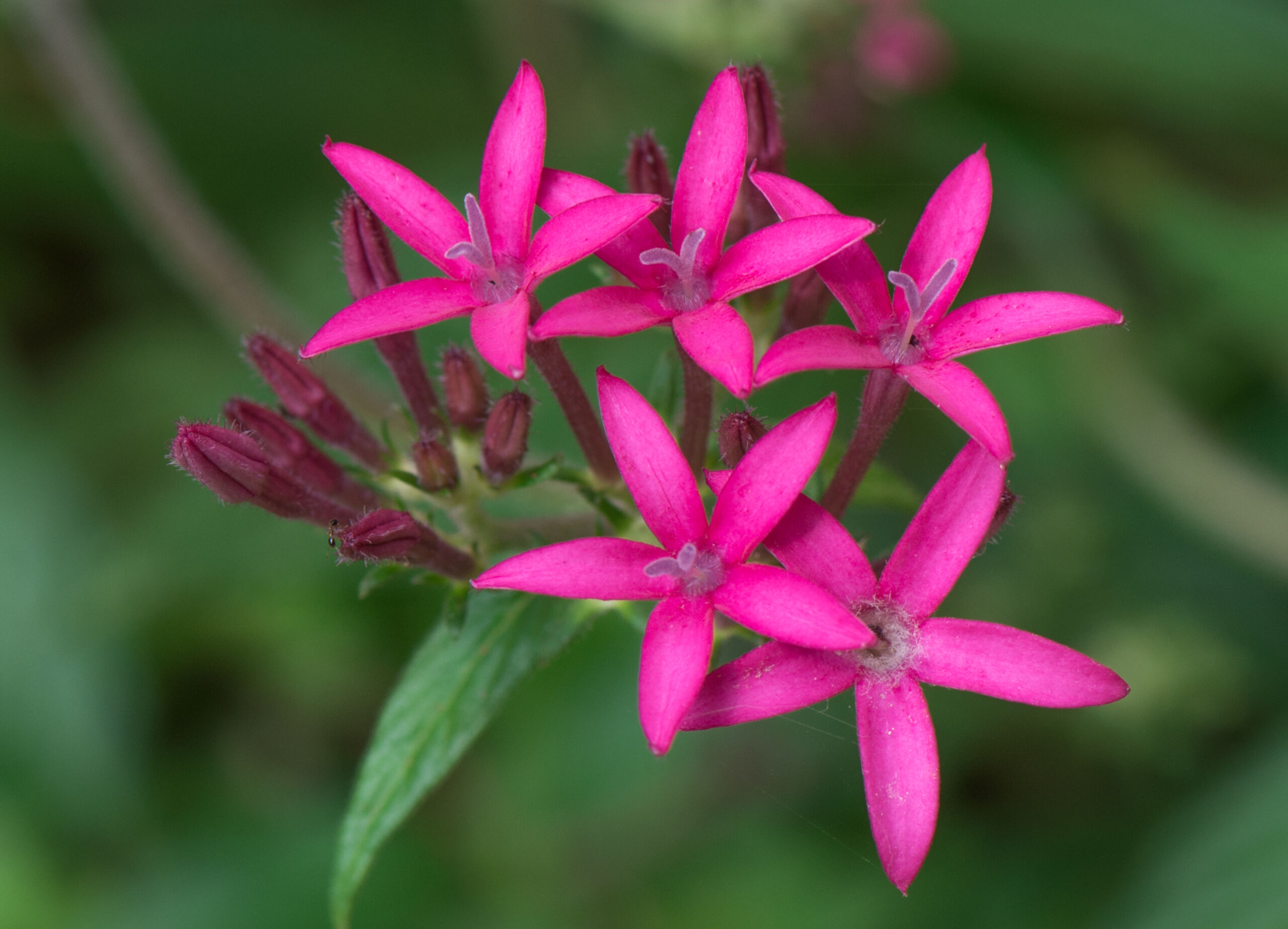
Pentas (Pentas lanceolata) is a tropical perennial that blooms nearly year-round in Florida, in clusters of star-shaped flowers that butterflies treat like a buffet. Its secret is that it actually likes heat and humidity — the two things that kill most “easy” flowers here. While other plants are melting in August, pentas is just getting started.
What will kill it anyway: Frost. Pentas is a tropical and a freeze will take it down (it sometimes returns from the roots in zone 9). The other killer is root rot in heavy, wet soil — it wants drainage, not a puddle.
Florida notes: Give it full sun to light shade and room to spread. Deadheading keeps it tidy but is not required — this is a black-thumb list, and pentas respects that by blooming whether you deadhead or not.
5. Muhly Grass: The Ornamental Grass That Asks for Nothing
Yard — Muhly Grass growing guide
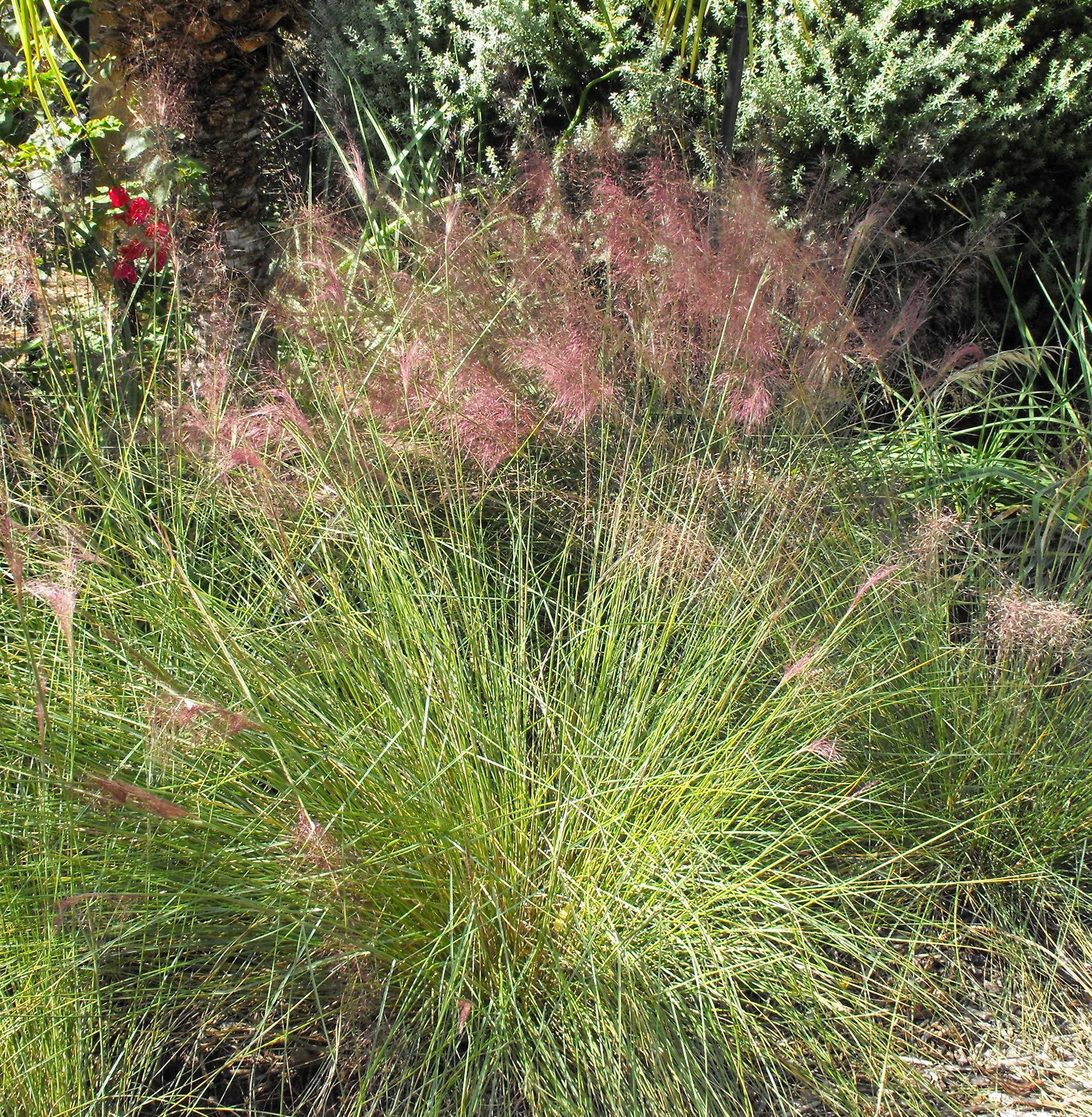
Muhly grass (Muhlenbergia capillaris) is a Florida native ornamental grass that spends most of the year as a tidy green fountain and then, in fall, erupts into clouds of pink-purple plumes that look like cotton candy caught in a breeze. Its survival mechanism is the grass playbook perfected: a deep, fibrous root system, narrow leaves that lose very little water, and a growth habit that stores energy underground.
What will kill it anyway: Wet feet — muhly grass wants drainage and will rot in soil that stays soggy. Heavy shade is the other one; it needs sun to plume.
Florida notes: Cut it back hard in late winter and it returns better than ever. It is drought-proof once established, needs no fertilizer, and the fall plumes are the payoff for eleven months of benign neglect.
6. Beach Sunflower: The Groundcover That Takes Over (Politely)
Yard — Beach Sunflower growing guide
Beach sunflower (Helianthus debilis) is a Florida native groundcover that does exactly what its name promises: it grows at the beach, in sand, salt, sun, and drought, and it flowers anyway. Small yellow sunflowers on sprawling stems, nearly year-round. Its mechanism is native toughness — deep roots, salt tolerance, and a spreading habit that lets it colonize bare ground faster than weeds can.
What will kill it anyway: Shade and soggy soil. Beach sunflower wants sun and drainage; plant it in a dark wet corner and it will quietly give up. A hard freeze knocks it back, but it usually returns.
Florida notes: Give it a sunny, dry spot — a hellstrip, a sandy bed, the edge of a driveway — and it will cover it in flowers. It spreads, so give it room or a hard edge. Butterflies and bees will find it within days.
7. Lemongrass: The Pot Plant That Smells Like Dinner
Pot / porch + yard — Lemongrass growing guide
Lemongrass (Cymbopogon citratus) is a clumping tropical grass that grows into a fountain of lemon-scented blades and asks for almost nothing in return. It is a grass, and grasses are survivors: it grows from a dense crown, tolerates heat that wilts everything else, and actually grows faster when you cut it — harvesting is pruning, and pruning is encouragement.
What will kill it anyway: A hard freeze will kill the tops (it returns from the crown in zones 9–11), and a pot with no drainage will drown it. The blades are sharp, so wear gloves when you harvest — lemongrass fights back, but only in the way paper does.
Florida notes: This is the best pot pick on the list: one clump in a big pot on a sunny porch gives you cooking lemongrass all year and a mosquito-repelling rumor (the smell helps a little; the plant is not a force field, and anyone who tells you otherwise is selling something). Bring the pot in or cover it on the coldest nights.
8. Longevity Spinach: The Leafy Green That Grows Like a Weed
Pot + yard — Longevity Spinach growing guide
Longevity spinach (Gynura procumbens) is a tropical leafy green that thrives in Florida heat — the exact conditions that make regular spinach bolt, sulk, and die. It grows as a sprawling, semi-succulent vine with thick, fleshy leaves you can eat raw or cooked, and it roots wherever a stem touches soil, which is how it earns its “grows like a weed” reputation. The mechanism is succulence plus tropical heat tolerance: it stores water in its leaves and never gets the memo that summer is supposed to be hard.
What will kill it anyway: Frost — it dies back in a freeze but usually returns from the roots in warm zones. And drought, eventually: it is tougher than lettuce by miles, but it is not a cactus. A dry pot for weeks will still win.
Florida notes: Grow it in a pot or a contained bed, because it spreads. Partial shade in the hottest afternoons keeps the leaves tender. Harvest the tips regularly — cutting it back is how you keep it leafy instead of leggy.
9. Lantana: The Butterfly Magnet With One Non-Negotiable Rule
Yard — Lantana growing guide
Lantana (Lantana camara) is one of the toughest flowering shrubs in Florida: it thrives on neglect, blooms harder the hotter it gets, and is extremely drought-tolerant once established. Butterflies treat it like a buffet, and it flowers in clusters of pink, orange, red, or yellow from spring through frost. Its mechanism is Mediterranean-grade toughness — deep roots, leathery leaves, and a flowering habit that does not need deadheading or fussing.
The rule, and it is not optional: plant sterile cultivars only — the Bloomify series (Bloomify Rose, Bloomify Orange) is the one our guide names. The seeding kind of lantana is a Category I invasive in Florida, which means it escapes gardens and invades natural areas. Sterile cultivars give you all the flowers and butterflies with none of the invasion. Do not plant the seeding kind. Ever.
What will kill it anyway: Frost knocks it back (cut it back hard in late winter and it returns), and lace bugs sometimes stipple the leaves — blast them off with water.
Florida notes: Plant after all frost danger in the hottest, sunniest spot you have. Berries are toxic to pets and livestock, so site it thoughtfully. Evergreen in zone 10 and warmer, root-hardy in zone 9 with mulch.
10. Okra: The Vegetable That Thinks Summer Is a Spa Day
Yard — Okra growing guide
Okra (Abelmoschus esculentus) is the vegetable for people who have killed every vegetable. It is a heat-loving annual with a deep taproot, big hibiscus-like flowers, and a production habit that borders on rude: plant it in spring, harvest pods all summer, and it keeps going until frost. Its mechanism is tropical heritage — okra evolved in African heat, so a Florida August is not a stress test, it is a vacation.
What will kill it anyway: Cold — okra stops growing below about 60°F and dies at frost. Soggy soil rots the roots. And shade: okra without full sun is just a tall, sulky stick.
Florida notes: Direct-sow after the last frost in full sun. Harvest pods young (2–4 inches) every day or two — pods left on the plant get woody fast, and the plant slows down when it thinks it has finished its job. Keep picking and it keeps producing.
Houseplants: The Indoor Unkillables
No yard? No porch? No problem. The twelve plants below live indoors — on a windowsill, a bookshelf, or a dim corner that has killed everything else you put there. They are ranked among themselves, hardest to kill first, and they play by different rules than the yard picks: indoors there is no freeze, no summer deluge, and no blazing sun to survive — but there is low light, dry air conditioning, and a human who forgets to water. These twelve forgive all three. One Florida warning up front: several of them are tropical escape artists that run wild if planted in a Florida yard, so keep them in pots, indoors, where they belong.
11. Snake Plant: The Plant That Thrives on Being Ignored
Indoor
Snake plant (Dracaena trifasciata, formerly Sansevieria trifasciata) is the houseplant for people who have killed houseplants. Its thick, waxy, upright leaves are water tanks, its underground rhizomes store even more water and sprout new leaves, and it runs CAM photosynthesis — opening its pores at night instead of in the heat of the day — so it sips water instead of gulping it. It grows in light so low that most plants would sulk themselves to death, and it genuinely seems to do better when you forget about it for a month.
What will kill it anyway: Overwatering — the classic. Soggy soil rots the rhizome, and a rotted snake plant collapses at the base like a felled tree. A freezing windowsill during a cold snap will do it too. Water it like a cactus that happens to live in your living room: rarely, and only when the soil is bone dry.
Florida notes: Indoors year-round, it never meets a freeze — that is the whole point of a houseplant. In summer it can sit on a shaded porch, but bring it in before the first cold snap. Keep it potted and indoors: planted in a Florida yard, its rhizomes spread and it escapes beds. Mildly toxic to pets if chewed, so keep it out of reach of a determined cat.
12. ZZ Plant: The One With Potatoes Underground
Indoor
ZZ plant (Zamioculcas zamiifolia) keeps its survival kit buried: thick underground rhizomes — literal potato-like lumps — that store water for months, plus waxy leaflets that lose almost no moisture to the air. It evolved in the dry shade of East African forests, which is roughly the conditions of a neglected living room: low light, irregular water, and nobody paying attention. It grows slowly, which is a feature — slow growth means low demands.
What will kill it anyway: Overwatering, again — the rhizomes that save it in a drought rot in soggy soil. And cold: anything below about 45°F will damage it, so it never goes outside in winter. Yellowing leaves almost always mean too much water, not too little.
Florida notes: Indoors, where Florida humidity is a bonus rather than a threat. It is one of the best plants on this list for a windowless office or a north-facing room. Toxic to pets if eaten, so site it where the dog cannot sample it.
13. Cast Iron Plant: The Name Is the Review
Indoor
Cast iron plant (Aspidistra elatior) earned its name in Victorian parlors, where it survived coal smoke, gaslight, drafts, dust, and owners who watered it when they remembered — which was rarely. Its mechanism is brute toughness: thick, leathery, evergreen leaves that shrug off low light, drought, and neglect, on a plant that grows so slowly it barely notices a bad month. If a plant could be a cast iron skillet, it would be this one.
What will kill it anyway: Almost nothing indoors. Direct sun scorches the leaves brown, and soggy soil rots the roots — but short of those two, it just keeps going. A hard freeze will kill it if you leave it outside, which is why it lives in the house.
Florida notes: Indoors year-round. In zones 9–11 it can summer in deep shade outdoors — a shady porch corner is perfect — but it comes back inside before the first cold snap. The slowest grower on this list, so buy the size you want rather than waiting for it to fill in.
14. Pothos: The Vine That Roots From Every Joint
Indoor
Pothos (Epipremnum aureum) is the vine that refuses to stay dead because it never puts all its eggs in one basket: every node along the stem can sprout roots, so a cutting in a glass of water becomes a whole new plant, and a vine that gets knocked off a shelf just re-roots where it lands. It tolerates low light, erratic watering, and the kind of benign neglect that kills fussier vines, and its variegated leaves keep photosynthesizing in rooms that barely qualify as lit.
What will kill it anyway: Chronic overwatering — root rot is the one thing it cannot outgrow. Cold below about 50°F, and total darkness, which eventually starves even this opportunist. Leggy, bare vines mean it wants more light, not more water.
Florida notes: Keep it in a pot, indoors. Planted in a Florida yard, pothos climbs trees and smothers them — it is a documented invasive here, so the pot is not optional, it is containment. A hanging basket on a shaded porch in summer is fine, as long as it comes inside for cold weather. Toxic to pets if chewed.
15. Spider Plant: The One That Makes Its Own Replacements
Indoor
Spider plant (Chlorophytum comosum) has two survival strategies, and either one alone would earn it a place on this list. First, fleshy tuberous roots that store water like a camel’s hump, so a missed month of watering is an inconvenience, not a funeral. Second, it dangles baby plantlets — spiderettes — on long stems, each one a complete plant waiting to root. Even if the mother plant struggles, its children carry on, which is either inspiring or a comment on parenting.
What will kill it anyway: Soggy soil rots those tuberous roots, and a hard freeze finishes it. Brown leaf tips are usually fluoride or salts in tap water — ugly, not fatal, and fixed by using rainwater or letting tap water sit out overnight.
Florida notes: Indoors, where it loves Florida humidity, or hanging on a shaded porch in summer. The plantlets make it the easiest plant on this list to share: snip one off, pot it, hand it to a friend, and you have just cured someone else’s black thumb too.
16. Heartleaf Philodendron: Pothos’s Tougher Cousin
Indoor
Heartleaf philodendron (Philodendron hederaceum) is pothos’s close cousin with the same bag of tricks: every node can root, the heart-shaped leaves photosynthesize happily in low light, and the vining habit means you can cut it back hard and it just regrows. It is the plant for the dim hallway, the bathroom with one small window, the shelf above the bookshelf — anywhere light is a rumor rather than a fact.
What will kill it anyway: Overwatering, which rots the roots, and cold — it is a tropical plant that has never met a frost it survived. Its leaves contain calcium oxalate crystals, so it is toxic to pets if chewed.
Florida notes: Indoors, in a pot. Like pothos, it can escape outdoors in South Florida, so the pot is containment, not decoration. It trails beautifully from a hanging basket or climbs a moss pole if you give it something to grab.
17. Jade Plant: The Succulent That Outlives Its Owner
Indoor
Jade plant (Crassula ovata) is a succulent with ambitions: thick, fleshy leaves that store months of water on woody stems that thicken into a tiny tree trunk over time. A jade can live for decades — there are jades older than their owners’ mortgages, passed down like furniture — because its entire strategy is patience. It grows slowly, drinks rarely, and asks for one thing only: light.
What will kill it anyway: Overwatering, which rots the stem from the inside out, and frost — one cold night on a porch can turn a jade to mush. Too little light makes it stretch out leggy and pale, reaching for a window it cannot find.
Florida notes: Give it the brightest windowsill you have — a south- or west-facing window is ideal. Outdoors only in frost-free zones 10–11, and even there in a pot you can move when a cold snap is forecast. Mildly toxic to pets if eaten.
18. Aloe Vera: The Medicine Cabinet on the Windowsill
Indoor
Aloe vera (Aloe vera, also listed as Aloe barbadensis) is a succulent whose leaves are gel-filled water reservoirs — the same gel you rub on a sunburn is the plant’s drought insurance. It grows in poor soil and bright light with almost no feeding, and it tells you when it is thirsty: the fat leaves go thin and curl inward, then plump right back up after a drink.
What will kill it anyway: Overwatering, the classic aloe murder — the gel that saves it in a drought rots in soggy soil. And freeze: cold turns the leaves to mush overnight, so it never spends a winter night outside in most of Florida.
Florida notes: The sunniest windowsill in the house. In zones 10–11 it can live in a pot outdoors year-round, in full sun with sharp drainage. The gel soothes minor burns — snap a leaf, squeeze, apply — but it is a first-aid plant, not a pharmacy.
19. Monstera: The Big Tropical That Forgives Beginners
Indoor
Monstera (Monstera deliciosa) is the big, dramatic one — huge leaves with natural splits and holes (fenestrations) that let wind pass through instead of tearing them, and thick aerial roots that grab moisture straight out of humid air. It grows fast for a houseplant and rebounds hard from pruning, which means a beginner’s mistakes get outgrown in weeks rather than mourned for months.
What will kill it anyway: Darkness — a monstera in a dim corner slowly starves, putting out small, solid leaves with no splits, which is the plant telling you it needs more light. Overwatering rots the roots, and cold below about 50°F damages it. It also gets big: give it room, or it will take room.
Florida notes: Indoors near a bright window, where it loves Florida humidity — those aerial roots are drinking the air. Keep it potted: in South Florida it can climb trees and escape if planted out. Toxic to pets if chewed.
20. Bromeliad: The Plant With Its Own Water Tank
Indoor
Bromeliad (family Bromeliaceae — the familiar houseplant types are mostly Guzmania) carries its own water supply: its stiff leaves form a central cup, a tank, that holds water like a tiny birdbath. Its roots are mostly for anchoring, not drinking — in the wild, many bromeliads grow on trees, not in soil at all. That epiphyte heritage makes it nearly impossible to kill by forgetting to water the soil, because the soil was never the point.
What will kill it anyway: A stagnant tank — flush the cup with fresh water weekly or it turns into a mosquito nursery and rots the plant from the center. Overwatering the potting mix rots the base, and direct sun scorches the leaves. After flowering, the mother plant slowly dies — but she leaves pups at her base, which is the next generation, free of charge.
Florida notes: Bright indirect light indoors, where Florida humidity suits it perfectly. In zones 10–11 many bromeliads live outdoors in shade year-round — they are the rare houseplant that can graduate to the garden, in a pot or mounted on a tree.
21. Air Plant: The Plant That Needs No Soil at All
Indoor
Air plant (Tillandsia spp.) is the houseplant for people who have killed plants in pots: it has no pot, no soil, and barely any roots. Silvery scales called trichomes cover the leaves and absorb water and nutrients straight from the air, the way its wild cousins do while clinging to tree branches. It lives on a shelf, in a glass globe, or glued to a piece of driftwood — wherever you put it, it stays put and asks for nothing but air.
What will kill it anyway: The paradox of the air plant: with no soil, there is no buffer. Skip soakings for weeks and it dries out and curls up; soak it and leave it sitting wet with no airflow and it rots from the center. It also needs bright indirect light — a dark shelf will starve it slowly.
Florida notes: Florida humidity is an air plant’s best friend — it is the one plant on this list that actually prefers your air to be wet. Mist it or soak it weekly, then set it upside down to dry so water does not pool in the crown. In zones 9–11 it can live outdoors in shade, tucked into a tree branch the way it grows in the wild, and brought in before a frost.
22. Peace Lily: The Drama Queen With a Built-In Alarm
Indoor
Peace lily (Spathiphyllum wallisii) is the thirstiest plant on this list — and it knows it, and it tells you. Forget to water and its big leaves droop dramatically, like a fainting Victorian, then perk right back up within hours of a drink. That built-in alarm is the mechanism: it is almost impossible to underwater a peace lily by accident, because it stages a full performance first. It also tolerates low light and flowers indoors, which is more than most houseplants offer.
What will kill it anyway: Weeks without water will eventually finish even this drama queen, and cold below about 40°F damages it fast. Brown leaf tips usually mean fluoride or salts in tap water — switch to rainwater and the tips stay green. It is toxic to pets if chewed.
Florida notes: Indoors, where it loves Florida humidity — a steamy bathroom with a window is peace lily paradise. Water when it droops and it forgives you every time: the one plant on this list that prefers a drink to a drought.
Plants That LOOK Easy but AREN’T (in Florida)
Some plants arrive with a reputation for being indestructible — and then Florida humbles them. These are the usual suspects. If you have killed one of these, it was not your thumb. It was the climate.
English lavender. Lavender looks like the ultimate low-maintenance herb — silvery, fragrant, Mediterranean, thrives on neglect. In Florida it is one of the hardest herbs to keep alive. UF/IFAS Extension calls English lavender (Lavandula angustifolia) the most difficult lavender to grow in Central Florida, because of high temperatures and humidity in summer: it is susceptible to root rot in soggy soil, needs well-draining alkaline soil (pH 6.5–7.5), and does best in raised beds or containers with afternoon shade. The fix is not to try harder — it is to pick the right lavender: Spanish lavender or the hybrid ‘Phenomenal’ handle Florida heat and humidity far better.
Summer tomatoes. Tomatoes are the classic first garden plant, and in Florida they are a cool-season crop wearing a summer disguise. When nights stay hot, tomato blossoms drop without setting fruit — the pollen simply does not work in the heat. Planting tomatoes in June and watching them flower beautifully and produce nothing is a rite of passage here, not a failure. Grow them fall through spring instead.
Summer lettuce. Lettuce bolts in heat — it shoots up, turns bitter, and goes to seed the moment Florida summer arrives. Lettuce is a cool-season crop here, full stop. If you want salad in Florida, grow it in the cool months — our Florida Winter Lettuce Bed guide is the right season for it — and grow longevity spinach and purslane in summer instead.
Frequently Asked Questions
Am I really a black thumb, or just unlucky?
Almost certainly unlucky — or, more precisely, mismatched. A black thumb is usually overwatering plus the wrong plant in the wrong place. Pick a plant from this list, put it where it wants to be, and water it less than you think. Your thumb will change color fast.
What is the number one plant killer?
Water. Too much of it, specifically. More houseplants and garden plants die from overwatering than from drought, because wet soil suffocates roots — roots need oxygen, and waterlogged soil has none. The squeeze test never lies: if the soil is damp an inch down, do not water yet.
Can I really not kill these?
You can kill anything if you try hard enough — a freeze, a flood, or total abandonment will eventually win. But these twenty-two forgive the most. They forgive forgotten watering, bad soil, missed feedings, and a gardener who is still learning. That is the whole point.
I only have a porch or a balcony. Which picks?
Start with the pot picks: lemongrass in a big pot, purslane in a hanging basket or shallow pot, longevity spinach in a container, and pentas in a sunny pot. A sunny porch is a garden — it just has a smaller zip code. And if you have no porch at all, start with the indoor picks below: snake plant, ZZ plant, and cast iron plant are the three hardest to kill indoors.
What if I forget to water for weeks?
Your best bets are the drought-proof ones: muhly grass, firebush, beach sunflower, and lantana (sterile cultivars only). Succulents like purslane also ride out dry spells on stored water. The leafy edibles — longevity spinach and okra — will forgive a missed watering, but not a missed month. Indoors, the same rule holds: snake plant, ZZ plant, and cast iron plant ride out dry spells on stored water, while peace lily is the one indoor pick that will not.
What if I overwater everything?
Then pick the plants that tolerate wet feet best: sweet potato and lemongrass both handle generous watering better than most — though even they need drainage. And fix the pot: no drainage hole, no plant. That one change saves more plants than any fertilizer ever will.
Do I need fertilizer?
Mostly, no. Every plant on this list grows fine in ordinary Florida soil with little or no feeding — that is part of why they are on the list. A little compost or worm castings at planting is plenty. If you feed anything, feed the edibles (okra, sweet potato) lightly, and skip the ornamentals entirely.
What about winter cold snaps?
Most of these die back in a freeze and return from the roots in spring — firebush, lantana, pentas, lemongrass, longevity spinach, and sweet potato all do this in zone 9. Mulch the crowns, cover pots on the coldest nights, and do not panic when the tops blacken — check the roots in spring before you declare anything dead.
Are any of these invasive?
Two need care. Lantana: only sterile cultivars — the seeding kind is a Category I invasive in Florida. Purslane: listed as invasive in parts of the United States including Florida — grow it in containers and harvest before it sets seed. Everything else on the list is native or well-behaved.
Where do I start — just one plant?
Yes. One plant. A sweet potato slip in a big pot, or a pot of purslane on a sunny porch. Grow it, eat some of it, keep it alive for a season. Then add a second. Black thumbs are cured one living plant at a time — and the first one is the hardest, because after that you know you can do it.
🌱 Keep learning
Three related guides worth reading next:
- The Lazy Gardener’s Guide to Starting a Garden — the whole start-a-garden plan: setups, tools, and what to buy first.
- How to Make Hot Compost — feed your unkillable plants with compost you made yourself.
- Worm Castings 101 — the other end of the black-thumb cure: what castings are, how worms make them, and why leachate is not worm tea.
🪱 Your Soil Needs This
Reading about healthy soil is great. Growing in it is better. Our small-batch, traceable worm castings are the shortcut your garden deserves.
Shop Worm Castings Subscribe & SaveEvery bag comes with a lot certificate. Know what's in your soil.