
🌿 Panicled Aster
What it looks like
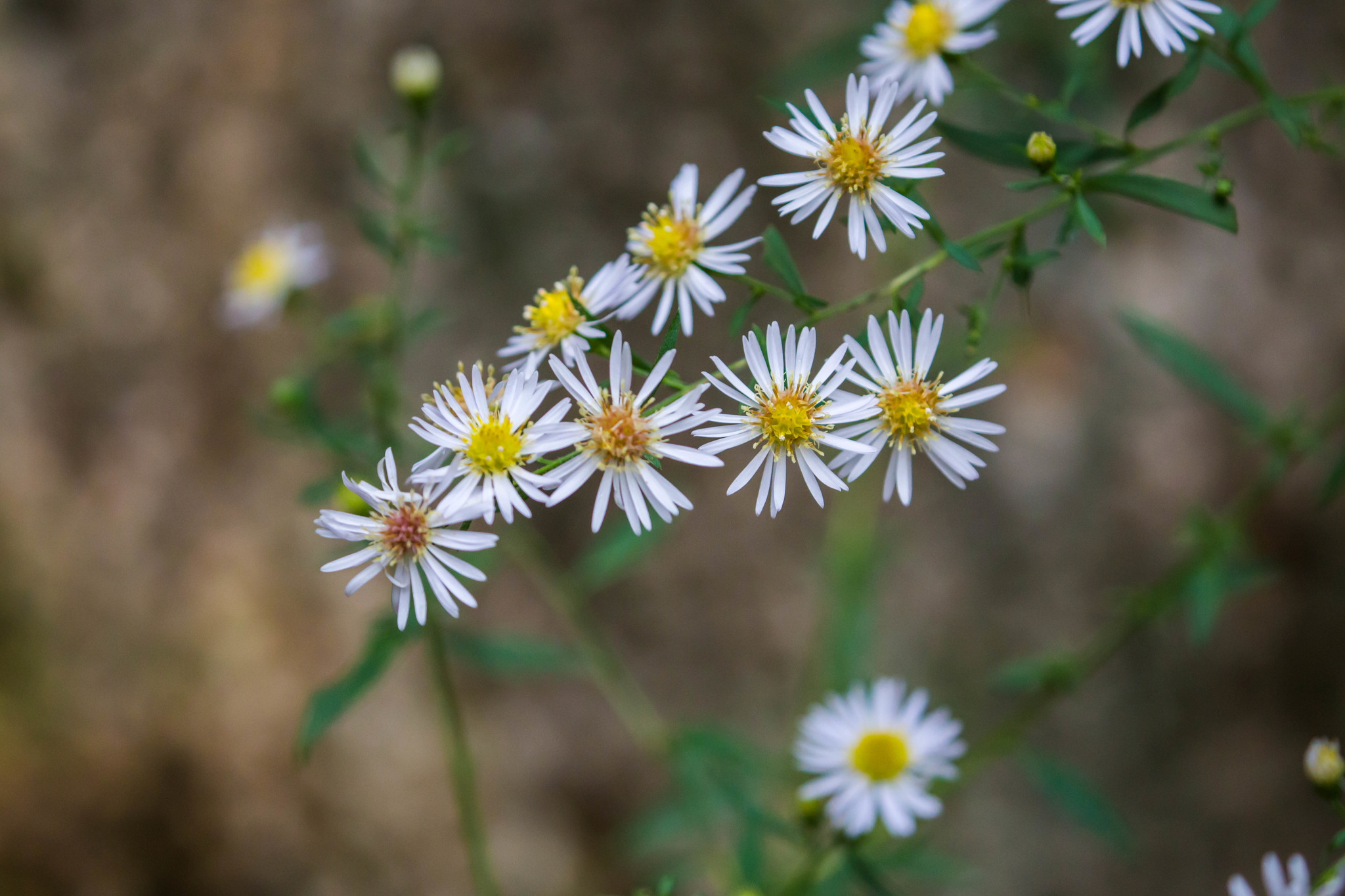
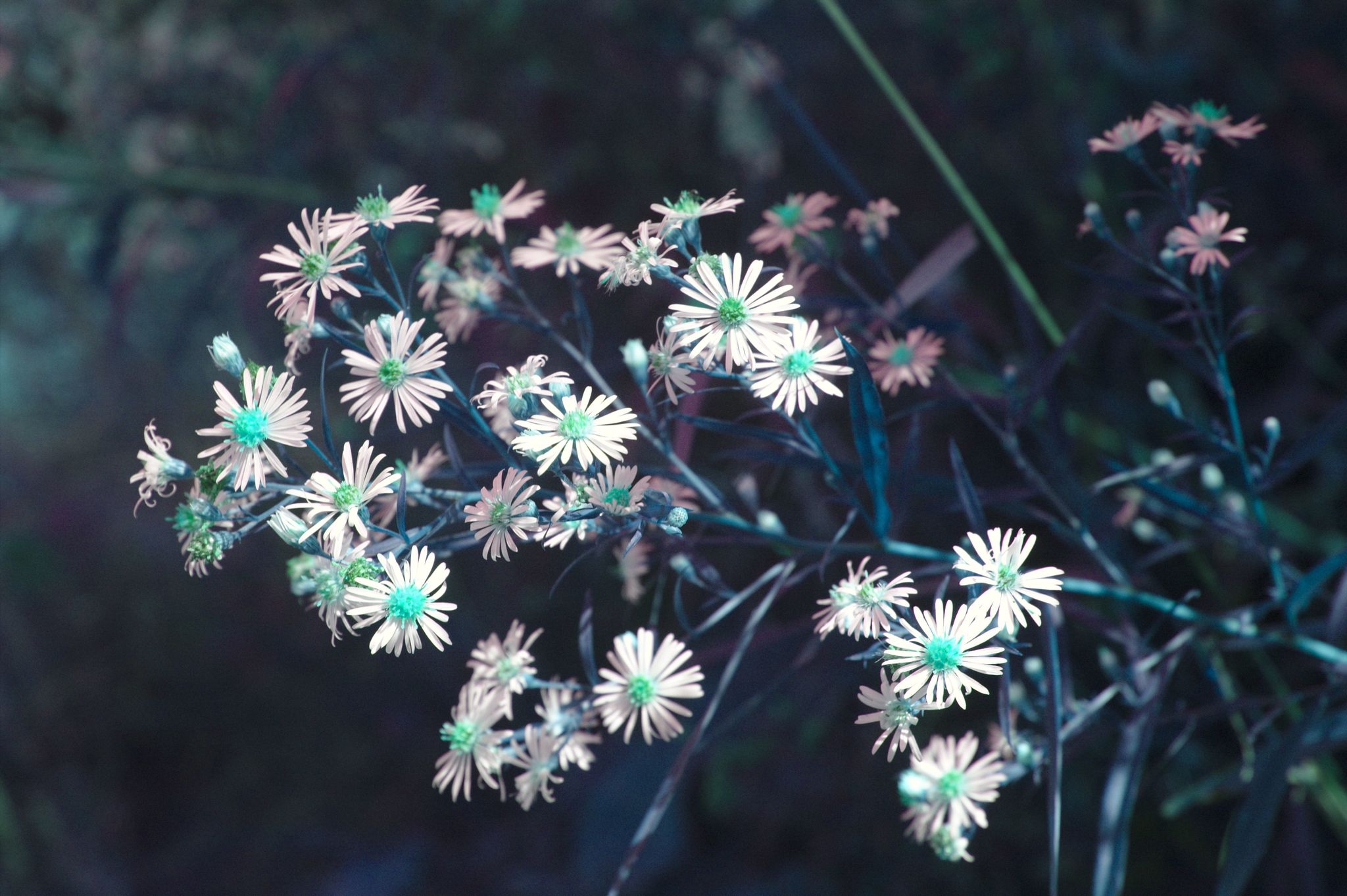
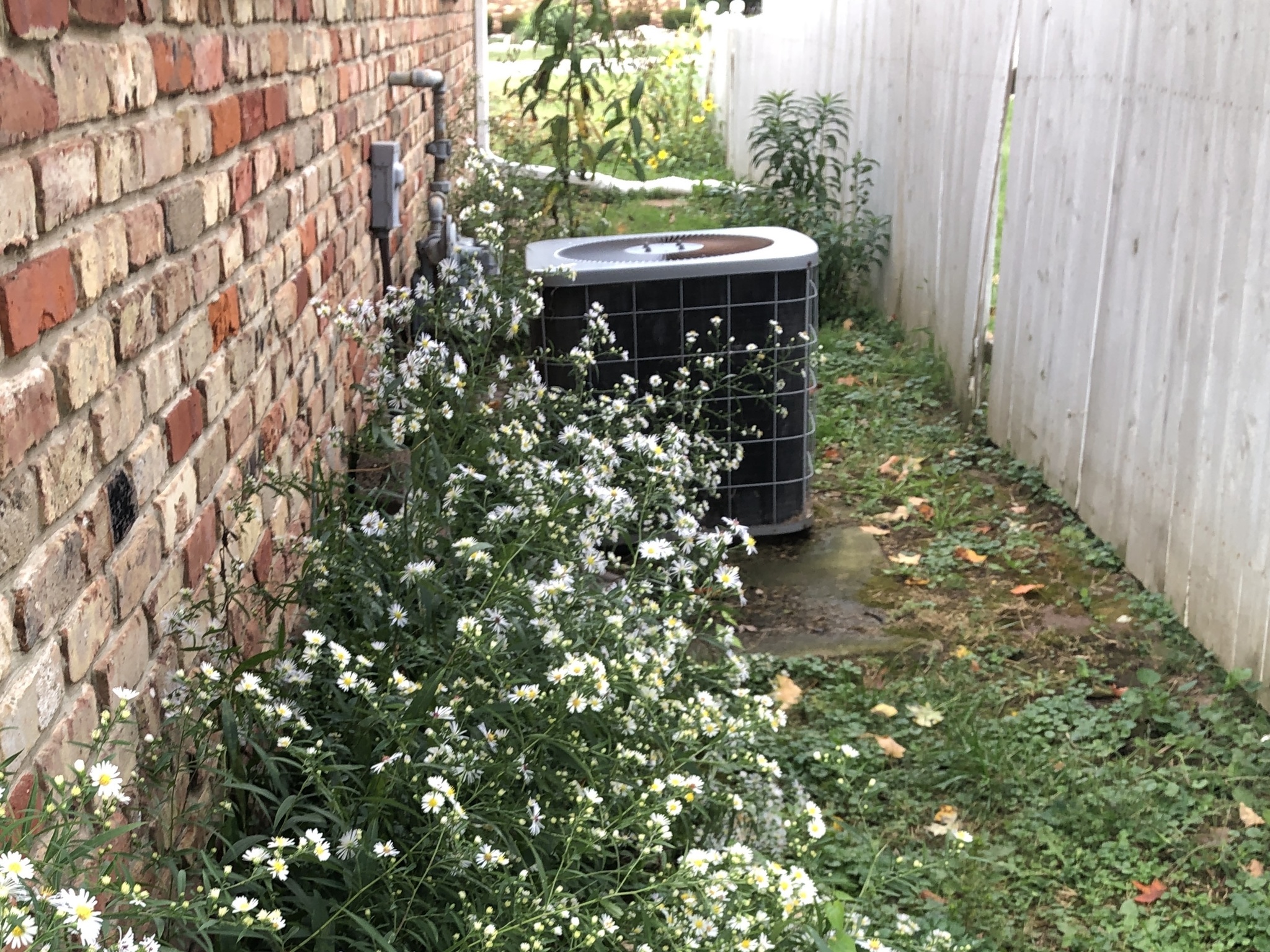
Panicled aster is a perennial, one to five feet tall (occasionally taller farther north), growing in colonies from long, usually white, thick, contorted rhizomes — a plant that walks sideways through damp soil and comes up in a crowd. A single upright stem rises from the colony, glabrous or hairy only in lines, and branches into an ample, diffuse, leafy panicle: the branching, many-headed flower cluster that gives the plant its common name. The whole effect in bloom is a loose white spray, like a bottlebrush that learned to flower.
The leaves are the identification, and they are exactly what the names say. Lanceolatum means lance-shaped, and latifolium means broad-leaved: in this variety the leaves are broadly oblanceolate — widest above the middle, tapering toward the base — and, crucially, they are not much reduced in the flower cluster. In most asters the leaves shrink to tiny bracts as you climb into the flowers; in var. latifolium they stay broad and leaf-like almost to the top. The leaves are thin, not leathery, with flat margins — not curled under — and usually toothed edges. The lower leaves wither by flowering time, which is normal, not a problem. The leaf faces are glabrous underneath, with vein patterns that are faint and elongated, and the leaf tips end in a tiny sharp point.
The flowers are small and white. Each head carries 16 to 50 ray florets — white, sometimes tinged pink or pale blue-violet — each ray only about an eighth to a third of an inch long and very narrow, around a center of 20 to 40 disc florets that open yellow and age purple. The cup beneath each head — the involucre — is bell- to cylinder-shaped and usually 4 to 5.5 millimeters long in this variety, with four to six series of linear-lance-shaped bracts. The flower stalks carry 5 to 13 small bracts each, which is a lot — most of its relatives carry one to three — and that crowded, bract-covered stalk is one of the best field marks. The seeds are gray or tan, about 1.5 to 2 millimeters long, and wear a white to tawny tuft of bristles. It blooms from summer into fall, July through October across its range.
One honest note about the photographs: they show Symphyotrichum lanceolatum, the species, photographed outside Florida, and are captioned that way. No verifiable photograph labeled as var. latifolium specifically exists in the public collections this guide could check, so the photos show the species and the text tells you which variety Florida has. The white flowers and the broad, barely-reduced leaves in the pictures are what the Florida plant looks like — the variety is a leaf-shape distinction, not a flower-color one.
How to tell it from its lookalikes
Panicled aster lives in the hardest corner of the Florida aster key — the big-headed, white-flowered group — and it is separated from its neighbors by leaf texture, bract counts, and disc color. The Flora of Florida key gives the tests; here they are in plain language.
- Simmonds’ aster (Symphyotrichum simmondsii). The closest Florida relative. Its stem leaves are sharply reduced on the flowering branches — the opposite of var. latifolium, whose leaves stay broad in the flower cluster — and its disc florets are yellow turning reddish, with seeds 2 to 2.6 millimeters long. If the leaves shrink to nothing in the flowers and the centers turn red, it is Simmonds’; if the leaves stay broad and the centers turn purple, it is panicled.
- Willowleaf aster (Symphyotrichum praealtum). Its leaves are firm with often recurved margins, the upper leaf faces are waxy, and its flower stalks carry only 1 to 3 (rarely 5) bracts. Panicled aster’s leaves are thin with flat margins, the upper faces are not waxy, and its stalks carry 5 to 13 bracts. Count the bracts on the stalk: five or more, panicled; three or fewer, think willowleaf.
- Rice button aster (Symphyotrichum dumosum). Smaller-headed, with rays that are pinkish, bluish, or white and noticeably wider (1 to 1.7 millimeters), and seeds 1.5 to 2.5 millimeters long with prominent nerves. Panicled aster’s rays are white and narrower, and its heads sit in a much ampler, more diffuse panicle.
- Smooth white oldfield aster (Symphyotrichum racemosum). Also white-rayed, but its rays are very narrow (0.5 to 1.2 millimeters wide), its seeds are smaller (1 to 1.8 millimeters) and only faintly nerved, and its flower stalks are copiously bracted with tiny 2-to-7-millimeter leaves subtending them. Panicled aster is the bigger, broader-leaved plant of the two.
- Calico aster (Symphyotrichum lateriflorum). Its disc florets are whitish to cream with lobes that bend sharply backward, like tiny trumpets flaring open — a distinctive look once you have seen it. Panicled aster’s disc florets are white to yellow with short triangular lobes that spread only slightly.
The practical checklist: thin leaves with flat margins, leaves staying broad up into the flower cluster, flower stalks with 5 to 13 bracts, linear-lance-shaped bracts under the head, white rays, and disc florets that start yellow and age purple. Four out of five is a strong identification; the bract count alone rules out most of the competition.
Where it grows in Florida
Panicled aster is native in Florida, where the Atlas of Florida Plants lists it as var. latifolium with the common name white panicle aster and a wetland status of FACW — facultative wetland, meaning it usually occurs in wetlands but is also found in uplands. That status is a good summary of the plant: it is a plant of damp ground that is not a prisoner of it.
Its habitat is thickets, the edges of wet deciduous woods, stream banks, and ditches — bottomlands and other moist sites, in full sun to partial shade, from sea level to about 800 meters across its range. Rangewide, var. latifolium is the southern race of the species, occurring in eastern Canada and the eastern United States, in all states east of the Mississippi except New York and Delaware, and west along the river states to Texas. In Florida it is a plant of the north — the panhandle and north peninsula, where the wet woods and stream banks it favors still exist. The Atlas page for the Florida taxon confirms its native status but, like the Atlas pages for several of these asters, carries no county-level distribution in its crawlable text, so this guide does not invent a county list. What is documented is the habitat and the variety, and both point to the same conclusion: look for it where the ground stays damp and the trees thin out.
How to grow it — or leave it
Panicled aster is a wildflower of wet edges, and the honest growing guidance is short because the Florida-specific evidence is short: no Florida cultivation trial, no nursery listing for the Florida variety, and no documented garden performance in this state. What exists is the general picture from its habitat and its rangewide behavior, and this section sticks to that.
Rangewide, it is a plant of moist soil in full sun to partial shade — a rain-garden plant, a pond-margin plant, a ditch-bank plant. It spreads by rhizomes into a colony, so it needs room, or a spot where a spreading native is a feature rather than a problem. It wants damp ground and will not thrive in a dry, sunny bed; it will also not tolerate standing deep water. Give it the edge of the wet place, not the middle of it, and let it billow.
For a Florida gardener with a wet spot, the practical advice is: this is a “grow it if you can find it, leave it if you can’t” plant. It is not in the Florida nursery trade under its variety name, and plants sold as panicled aster farther north are the northern varieties, not var. latifolium. Do not dig wild plants. If you want a white-flowered native aster for a damp north-Florida spot, the site’s calico aster is the documented, garden-available alternative, and Elliott’s aster is the wet-ground workhorse. Panicled aster’s job in Florida is to be wild, on stream banks and ditch edges, feeding late-season pollinators that have very few white flowers left to work.
Pollinators & wildlife
Panicled aster blooms from summer into fall, and a colony in full flower is a white cloud of small, open heads — exactly the shape that generalist pollinators need. Small native bees, syrphid flies, skippers, and butterflies work the white rays and yellow discs, and the sheer number of heads on a single plant means a single colony can feed a large crowd. The white flowers are particularly valuable late in the season, when most of the summer’s color is gone and the fall migrants are passing through.
As with the other asters in this series, the caterpillar connection is documented at the genus level, not the species level: the site’s heath aster guide notes that the Pearl Crescent guide’s host list names true asters (Symphyotrichum species) as caterpillar hosts, and panicled aster is a true aster. This guide claims that general relationship and no more — no source ties Pearl Crescent caterpillars specifically to var. latifolium in Florida, and this guide does not pretend otherwise. The seeds feed small birds through the fall and winter, and the standing stems shelter overwintering insects. A white panicled aster on a stream bank in September is doing quiet, necessary work, and the best way to help it is to leave the stream bank alone.
Varieties
The species Symphyotrichum lanceolatum has five recognized varieties in the Flora of North America, and Florida has exactly one of them. This guide covers that one — var. latifolium — and names the other four so the picture is complete.
- Var. latifolium — this plant. The southern race: leaves broadly oblanceolate and not much reduced in the flower cluster, involucres usually 4 to 5.5 millimeters, rays white. Eastern Canada and the eastern United States, including Florida. Hexaploid, with 64 chromosomes — the highest chromosome count in the species, which is part of why botanists treat it as a distinct race rather than a local form. Also called white panicle aster and broadleaf panicled aster. Latifolium means broad-leaved, and the leaves are the whole distinction.
- Var. lanceolatum. Leaves linear to oblanceolate and reduced in the flower cluster, involucres 3.5 to 5 (rarely 6) millimeters, rays white to purplish. Eastern and central Canada and the United States. It does not occur in Florida.
- Var. hesperium. The western variety, with outer bracts two-thirds or more as long as the inner ones and heads usually subtended by large leafy bracts. Cordilleras and prairies. It does not occur in Florida.
- Var. hirsuticaule. Stout stems, moderately to densely short-woolly from the base. Great Lakes region to southeastern Manitoba. It does not occur in Florida.
- Var. interior. Heads congested on the lateral branches of the flower cluster, involucres 3 to 4 millimeters. Midwestern United States, southern Ontario, southern Quebec. It does not occur in Florida.
One naming footnote: the name Aster tradescantii has sometimes been misapplied to this species, and the old name Aster lanceolatus (Willdenow, 1803) is the basionym. If you see either name in an old field guide, it is this plant — but check the variety, because the old books did not always distinguish them.
Frequently asked questions
What is var. latifolium, and why does this guide name it?
Because it is the variety that grows in Florida. The species Symphyotrichum lanceolatum has five varieties; var. latifolium is the southern, broad-leaved race, with leaves that stay broad up into the flower cluster and involucres usually 4 to 5.5 millimeters. The other four varieties do not occur in Florida, so a Florida panicled aster is var. latifolium by definition — and this guide says so in the title line rather than burying it.
How do I tell it from Simmonds’ aster?
Look at the leaves in the flower cluster. In panicled aster var. latifolium the leaves stay broadly oblanceolate and barely shrink as they climb into the flowers. In Simmonds’ aster the stem leaves are sharply reduced on the flowering branches, and the disc florets turn reddish rather than purple. Broad leaves in the flowers, panicled; leaves shrinking to nothing, Simmonds’.
How do I tell it from willowleaf aster?
Count the bracts on the flower stalks. Panicled aster’s stalks carry 5 to 13 bracts; willowleaf aster’s carry 1 to 3, rarely 5. Willowleaf aster’s leaves are also firm with waxy upper faces and often curled-under margins; panicled aster’s are thin with flat margins and no wax.
When does it bloom?
Summer into fall — July through October across its range, according to the Lady Bird Johnson Wildflower Center. In Florida that means late summer and fall, when the white flowers stand out against the green of the wet woods.
Can I grow it in my garden?
Maybe, if you have the right spot and can find the right plant — and both of those are honest caveats. It wants moist soil in full sun to part shade, spreads by rhizomes, and suits a rain garden or pond margin. But the Florida variety is not in the nursery trade, northern plants sold as panicled aster are different varieties, and no Florida garden trial exists. Do not dig wild plants. Calico aster and Elliott’s aster are the documented, garden-available white-flowered alternatives for damp spots.
What does FACW mean?
Facultative wetland. It is a wetland indicator status from the National Wetland Plant List: a FACW plant usually occurs in wetlands (about two-thirds to nearly all the time) but is also found in uplands. Panicled aster is a plant of damp ground that is not a prisoner of it — stream banks, ditch edges, and wet thickets, not open water.
Is it native to Florida?
Yes. The Atlas of Florida Plants lists var. latifolium as native, with the common name white panicle aster. It is a plant of the north — panhandle and north peninsula — where the wet woods and stream banks it favors still exist.
Why are the photos labeled as the species, not the variety?
Because no verifiable photograph labeled as var. latifolium specifically exists in the public collections this guide could check. The photos show Symphyotrichum lanceolatum and are captioned that way. The variety is a leaf-shape distinction — broad leaves, barely reduced in the flower cluster — not a flower-color one, so the species photos show what the Florida plant’s flowers look like, and the text tells you which variety Florida has.
What pollinators use it?
Generalist late-season pollinators — small native bees, syrphid flies, skippers, and butterflies — drawn to a colony carrying hundreds of small white heads. Asters as a group are also Pearl Crescent caterpillar hosts, and panicled aster is a true aster, but no source ties that caterpillar specifically to the Florida variety, so this guide claims the general relationship and no more.
What does “panicled” mean?
It describes the flower cluster: a panicle is a branching, many-headed inflorescence, like a loose spray rather than a single flat head. Panicled aster throws up a whole branching panicle of small white heads — dozens to hundreds of them — which is why a colony in bloom reads as a white cloud from a distance rather than a single flower.
🌱 Keep learning
Three related guides worth reading next:
- Aster: Growing Guide — Asters as a group — how the genus works, and where panicled aster fits inside it.
- Calico Aster (Symphyotrichum lateriflorum) — The white-flowered aster most likely to be confused with this one — and the garden-available alternative for a damp spot.
- Elliott’s Aster (Symphyotrichum elliottii) — The wet-ground aster workhorse of Florida gardens, for the rain garden or pond margin where panicled aster grows wild.