
🧅 Egyptian Onion
What it looks like
How to grow
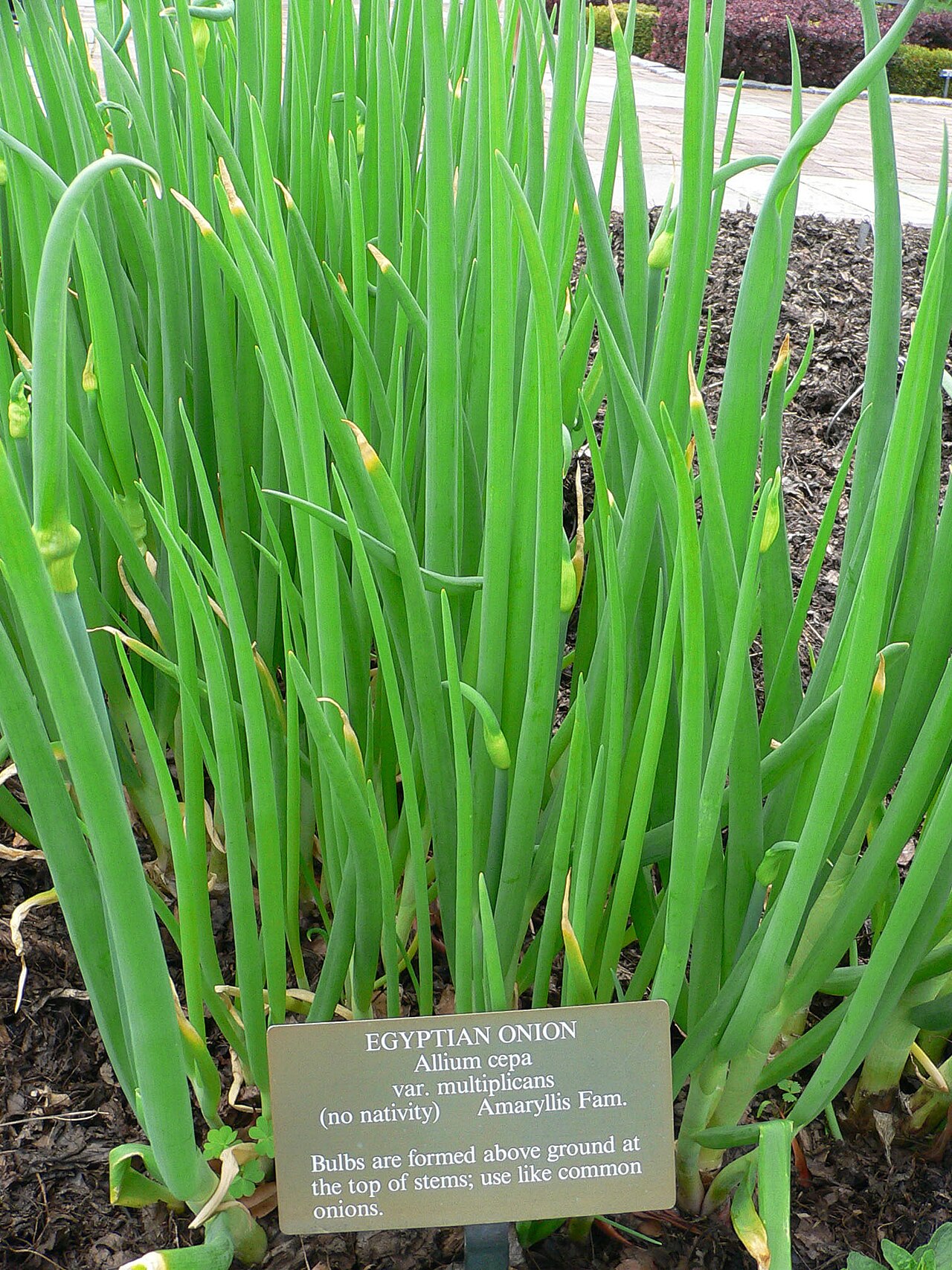
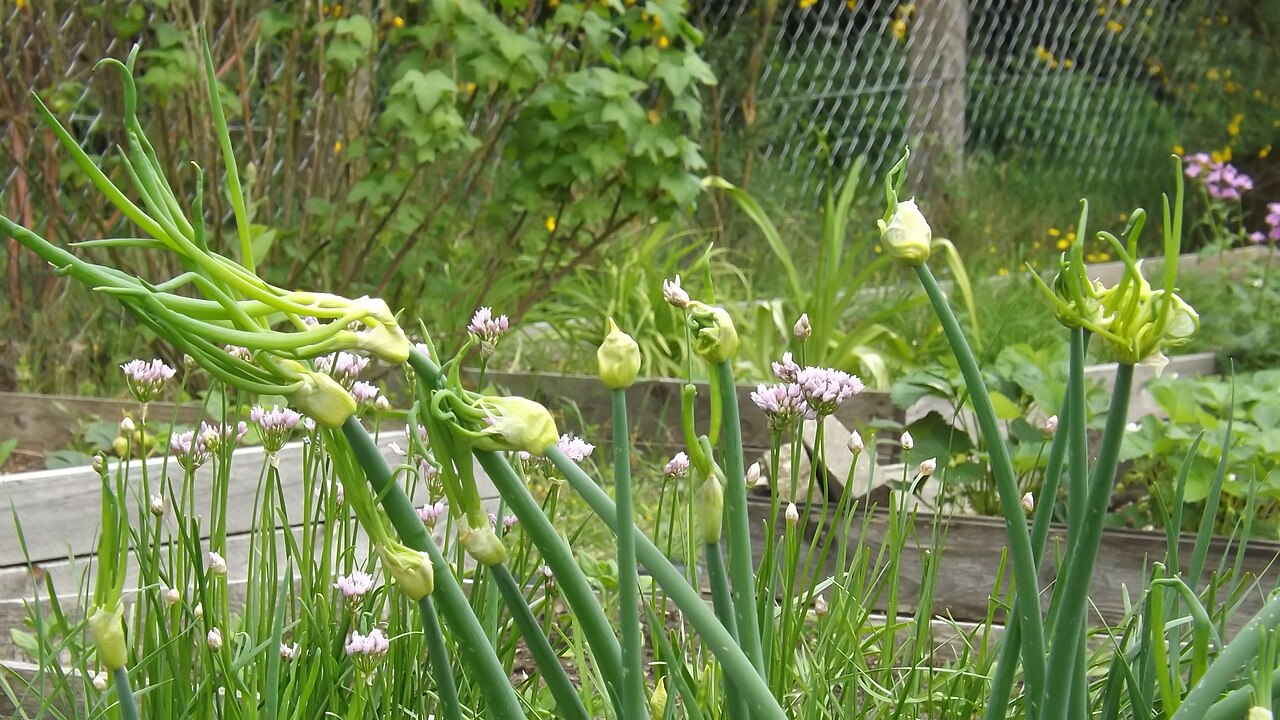
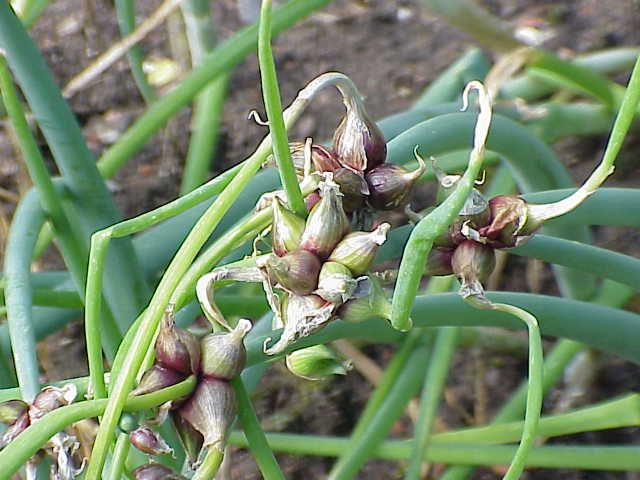
Egyptian onion, also called walking onion or tree onion, is a perennial allium thought to be a cross between common onion and a bunching onion — despite the name, its Egyptian origin is more story than evidence. Plant topsets (the small bulbs that form on top of the stalks) 1–2 inches deep in fall or spring, 4–6 inches apart, or 12 inches apart if you plan to leave the patch undisturbed. In the first year plants make green tops; in the second year they form topsets on tall stalks, which bend over, touch the ground, and root — hence walking. Give it its own bed, because a walking onion patch expands a foot or more a year and does not like competing with aggressive spreaders. Despite the exotic name, it is hardy and low-maintenance.
Water & feeding
Water regularly until established, then about an inch a week in dry periods; mature plants are fairly drought-tolerant but produce better greens with steady moisture. Feed lightly with compost — rich soil grows lots of top growth at the expense of bulbs. Mulch with straw to hold moisture and suppress weeds.
Common problems
- Onion thrips — watch for silvery streaks and use insecticidal soap if numbers build.
- Overcrowding — divide clumps every few years in fall or early spring to rejuvenate the patch.
- Walking into paths — pull stray plants promptly; topsets root wherever they land.
- Rot in wet soil — plant in well-drained soil and do not overwater in winter.
Harvest
Harvest three ways: snip green tops any time like scallions, cutting a couple of inches above soil level; pick topsets in late summer when they are firm, for pickling, roasting like pearl onions, or replanting; and dig small underground bulbs in late summer, using them like shallots — but harvest bulbs sparingly so the patch keeps going. A well-kept patch can produce for 15 years or more, which is a good return on a handful of topsets.
Browse all plant & pest guides
Propagation
Forget seed saving for this one — and that is good news, not a gap. Egyptian onion (Allium × proliferum) is a hybrid walking onion that, instead of flowers and seed, grows clusters of small bulbs called bulbils or topsets at the top of its stalks, and those bulbils are clones of the parent plant. Every plant you grow from a bulbil is genetically the same onion, which means no crossing worries, no hybrid lottery, and no wondering whether your saved stock will come true. It will. The plant has simply replaced the seed packet with a self-planting bulb factory, and your job is to manage the factory rather than outsmart it.
The main method is bulbils. Let the stalks do their thing through summer: the topset clusters form, swell, and eventually grow heavy enough to bend the stalk toward the ground — the famous walk. If you want to control where the patch goes, and you should, harvest the clusters in late summer when the bulbils are firm and well formed, before they flop over and root wherever they land. Break the cluster apart into individual bulbils, keep the plumpest ones for planting, and use the rest like pearl onions or shallots in the kitchen. Plant bulbils about an inch deep with the pointed end up, roughly four to six inches apart, or wider if you plan to leave the patch undisturbed — this guide’s own spacing, and worth following, because a walking patch expands a foot or more a year and crowds itself happily if you let it.
Timing is forgiving, which is part of this plant’s charm. Plant bulbils in autumn for the strongest start, or in spring if that is when you have them; they will root and make green tops in their first season, and topsets of their own from the second year on. Bulbils you are not planting straight away keep best cool and dry, in a paper bag or open container with air moving around them — never sealed damp in plastic, where they will sprout or rot in protest. In Florida’s humidity, check stored bulbils for soft spots and mold, and plant the firm ones first.
The second method is division, and it is how you rescue a patch that has gotten too enthusiastic. Every couple of years, or whenever the clump starts looking crowded and the greens get thin, dig up part of the patch and pull the underground bulbs apart into smaller clusters, replanting what you need and eating or sharing the rest. Division is best done when the plant is not in full summer growth — autumn or spring — and it doubles as thinning, which the patch needs anyway: an undivided walking onion will eventually strangle its own productivity in a thicket of its own children.
One caution, delivered with affection: containment is propagation management. A patch left entirely to itself will walk across the bed, rooting bulbils a little farther out each generation, which is delightful until it walks into the carrots. Give it its own bed, harvest topsets before they drop if you want the patch to stay put, and treat any bulbil that lands in a path as a volunteer to move, not a weed to curse. Shared properly, this is the most generous plant in the garden: a handful of topsets becomes a patch that feeds you green onions for a decade or more, and every gardener you hand bulbils to gets the exact same onion you grow.
Varieties
Every named variety of Egyptian Onion with its own growing guide:
- Catawissa Egyptian Onion — The Catawissa walking onion — a taller, more vigorous heirloom strain with red topsets and clusters that keep setting.
- Egyptian Winter Egyptian Onion — The Egyptian Winter strain — an old farm strain for the earliest spring green onions, harvested twice a year.
- McCullar White Egyptian Onion — The white walking onion: pale, mild topsets on a perennial that walks across the bed — the gentle cousin of the red walking onions.