
🌴 Cassava
What it looks like
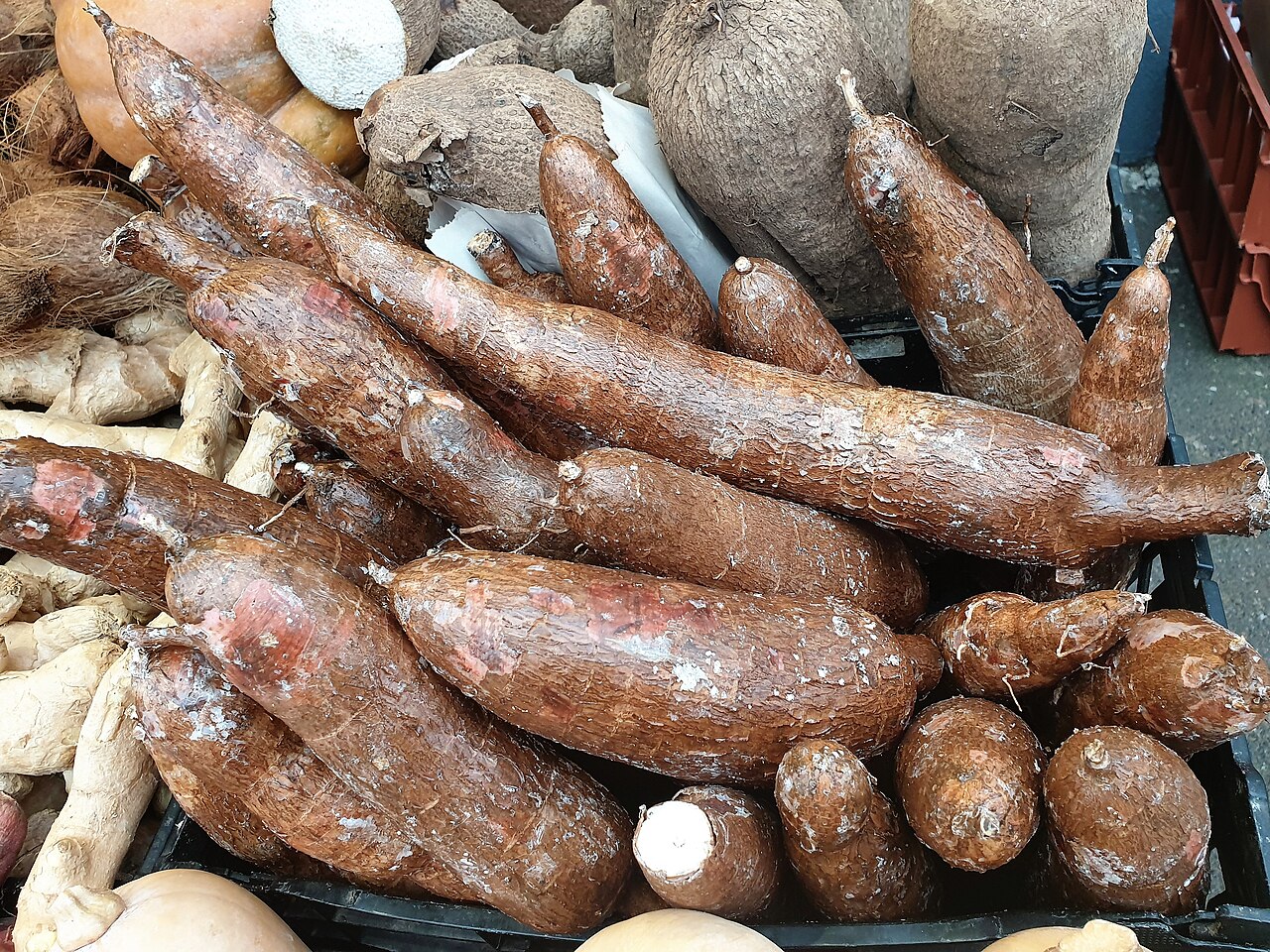
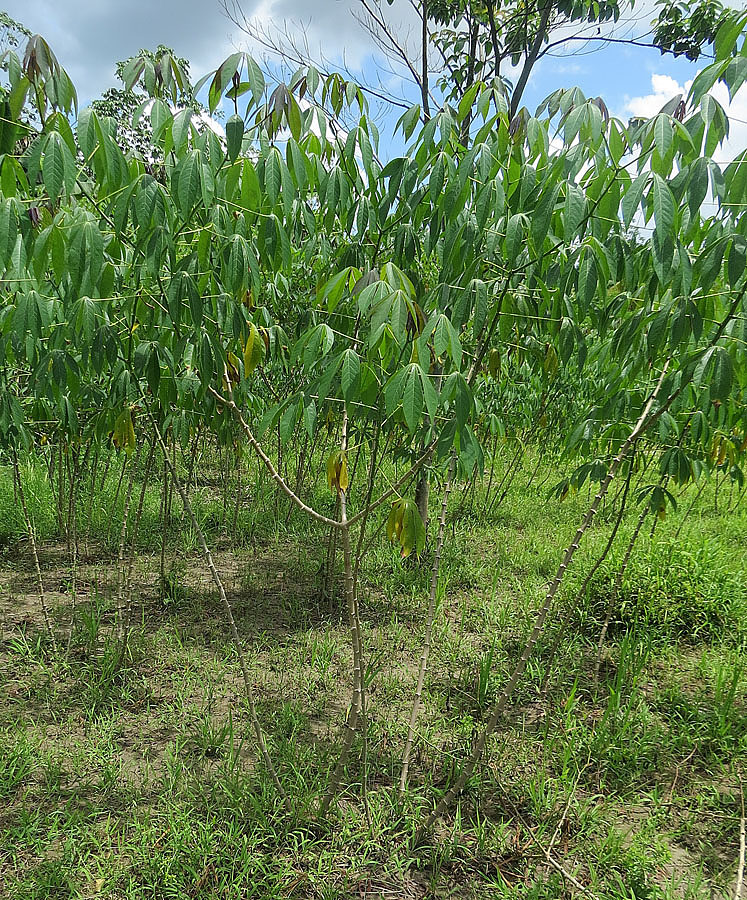
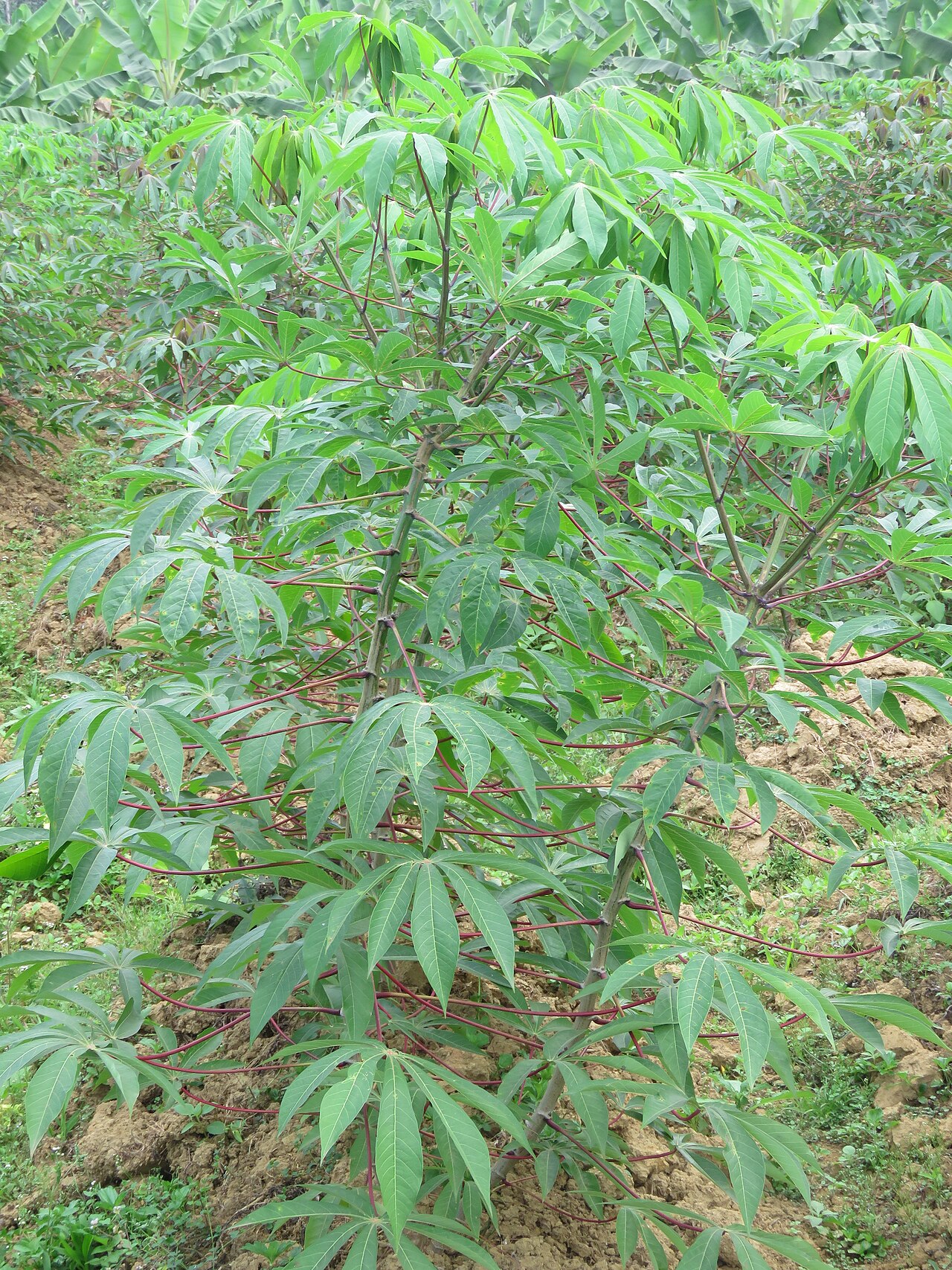
How to grow
Cassava, also called yuca, manioc, or tapioca, is a woody tropical shrub grown for large, starchy roots. It is NOT a temperate garden crop: it needs at least eight months of heat, stops growing below 50°F, and is killed by frost. In the United States that means South and Central Florida, the Gulf Coast fringe, Hawaii, and similar frost-free pockets — zones 9–11, with zone 8 possible only by overwintering stem cuttings indoors. Plant stem cuttings, not seed, in spring after frost danger, setting 8–12 inch cuttings 3–4 inches deep and 3–4 feet apart (5–6 feet for vigorous varieties) in well-drained sandy loam. Plants reach 6–12 feet tall. Sweet varieties are best for home gardens; bitter varieties contain much higher cyanide and need elaborate processing.
Water & feeding
Water about an inch a week during establishment and dry spells; established cassava tolerates drought, but roots get woody if soil dries out repeatedly. Never plant where soil waterlogs — cassava rots in wet clay. Feed lightly with compost and a balanced fertilizer early in the season; cassava produces well even in poor soil, which is part of its value in the tropics.
Common problems
- Frost — the hard limit; a single freeze kills tops, and repeated freezes kill roots. Protect cuttings indoors in zone 8.
- Waterlogging — the other killer; use raised beds in heavy soil.
- Mites and mealybugs in dry weather — blast with water and remove heavily infested stems.
- Woody, fibrous roots — harvested too late (after several years) or grown too dry.
Harvest
Harvest roots 8–12 months after planting, usually in late fall in Florida, by cutting stems to about a foot above ground and pulling or digging roots carefully to avoid nicking them. Use roots quickly — they spoil within days of harvest, unlike potatoes. CRITICAL SAFETY NOTE: never eat cassava raw. Peel roots fully, discard the peel and woody core, and boil or roast thoroughly; proper cooking removes the cyanogenic compounds. Save stem cuttings for replanting: in zones 10–11 replant immediately, and in zones 8–9 store cuttings indoors or under hay until spring.
Propagation
First, the safety line, because it belongs at the top of anything about multiplying this plant: cassava is not grown from seed in a home garden, and no part of the plant is a snack. The roots carry cyanogenic compounds that proper peeling and thorough cooking remove, but raw roots, peel, and leaves are not food, and stem pieces saved for planting are planting material, not something to nibble while you work. With that said, cassava is gloriously easy to multiply, because its real seed is a stick.
Forget true seed. Cassava does flower and set seed capsules, but seedlings are a genetic lottery: they do not reliably repeat the parent’s root quality, and germination is poor and slow. Breeders use seed; gardeners use stakes. A stake is a section of mature stem, and because it is a clone, it grows into the exact variety you already liked eating. That is the whole trick, and it is why cassava has travelled the tropics for thousands of years as bundles of sticks rather than packets of seed.
Save your stakes at harvest time, when you are cutting stems back anyway. Choose thick, healthy stems from your best plants, the ones that yielded well and showed no mottled or distorted leaves. That last point matters more than it looks: mosaic-type viruses travel in stakes, so a cutting from a sick plant is a sick plant with a head start. Skip thin green tips and any stem that is soft, cracked, or oozing. Cut stakes roughly 20 to 30 centimetres long with at least five nodes each, and keep track of which end is up, because a stake planted upside down will not grow. Let the cut ends dry for a day or two in the shade so they callus, which helps keep rot out of the wound.
Plant stakes when the soil is warm, burying most of the nodes and leaving a few above ground, either vertical, angled, or laid sideways in a shallow trench. In zones 10 and 11 you can replant immediately; in zone 8 and the colder pockets of zone 9, where frost kills the tops, the overwintering move is to bundle stakes upright in a dry, ventilated spot indoors and wait for spring. Florida humidity is the enemy of stored stakes, so do not seal them in plastic, where they sweat and mould. Dry air, airflow, and a regular check for soft spots will carry them through winter far better than a sealed bag will.
Two things not to try. You cannot grow cassava from a grocery-store root: unlike a potato, a cassava root carries no buds and will never sprout, however long you stare at it. And do not save stakes from a plant you would not eat from. Select for vigour, health, and yield every single year, and your cassava patch quietly improves itself, one stick at a time, without a seed packet ever entering the picture.
Browse all plant & pest guides
Varieties
Every named variety of Cassava with its own growing guide:
- CMC40 Cassava — The high-yield sweet cassava: a vigorous, productive, sweet-type selection sold by Florida nurseries, the cassava to plant for actual harvests.
- Variegata Cassava — The ornamental cassava: red stems and green-yellow-cream variegated leaves, the cassava grown for looks — and never for food.
- Valencia Cassava — The high-yield sweet cassava of Costa Rica: productive, reliable, and the type to plant when you want actual harvests, not just a tropical look.
- Yellow Sweet Cassava — The golden-fleshed sweet cassava: vigorous, yellow-rooted, and ready in ten to twelve months — sunshine you can boil.