
🌴 Date
What it looks like
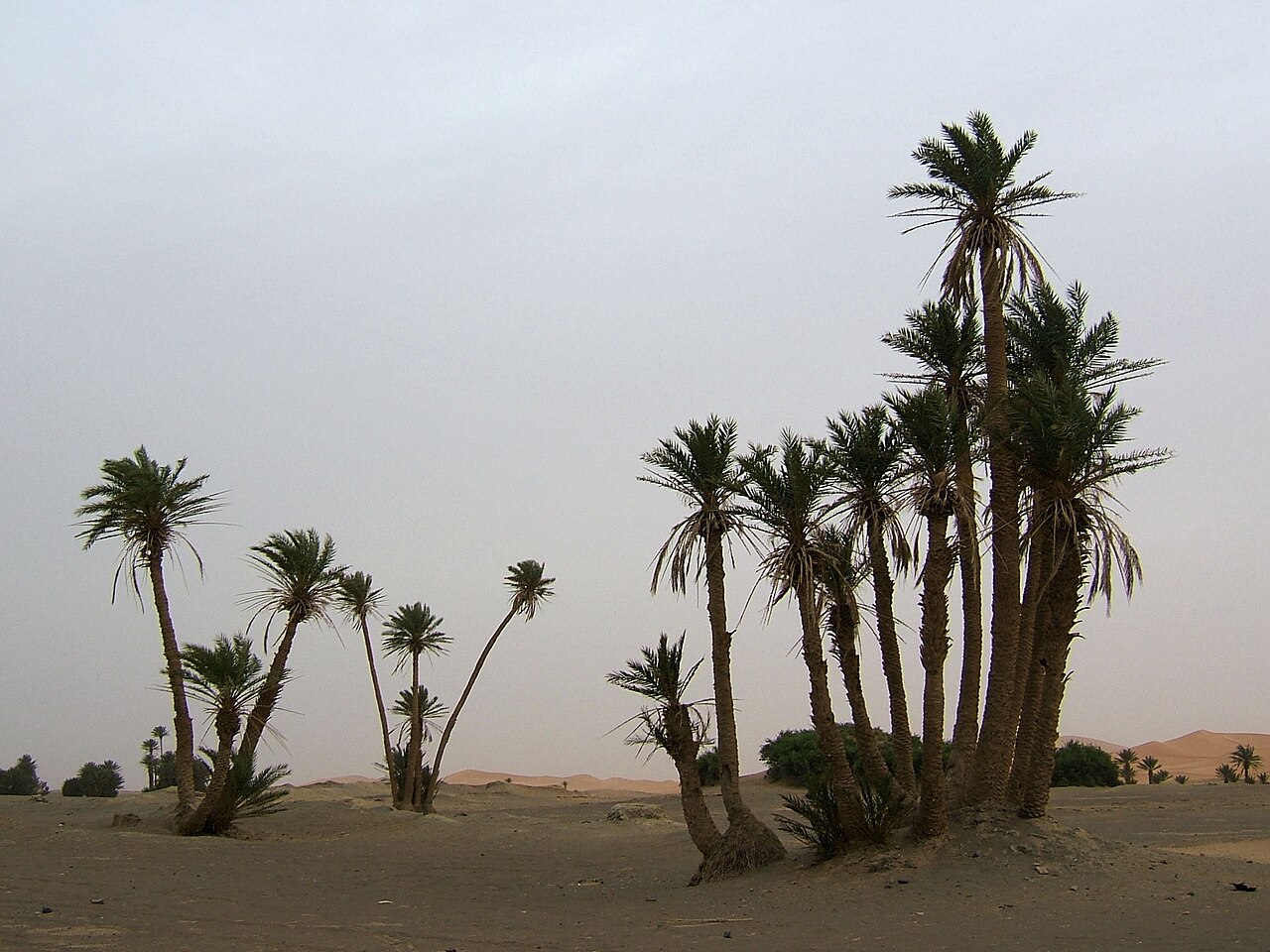
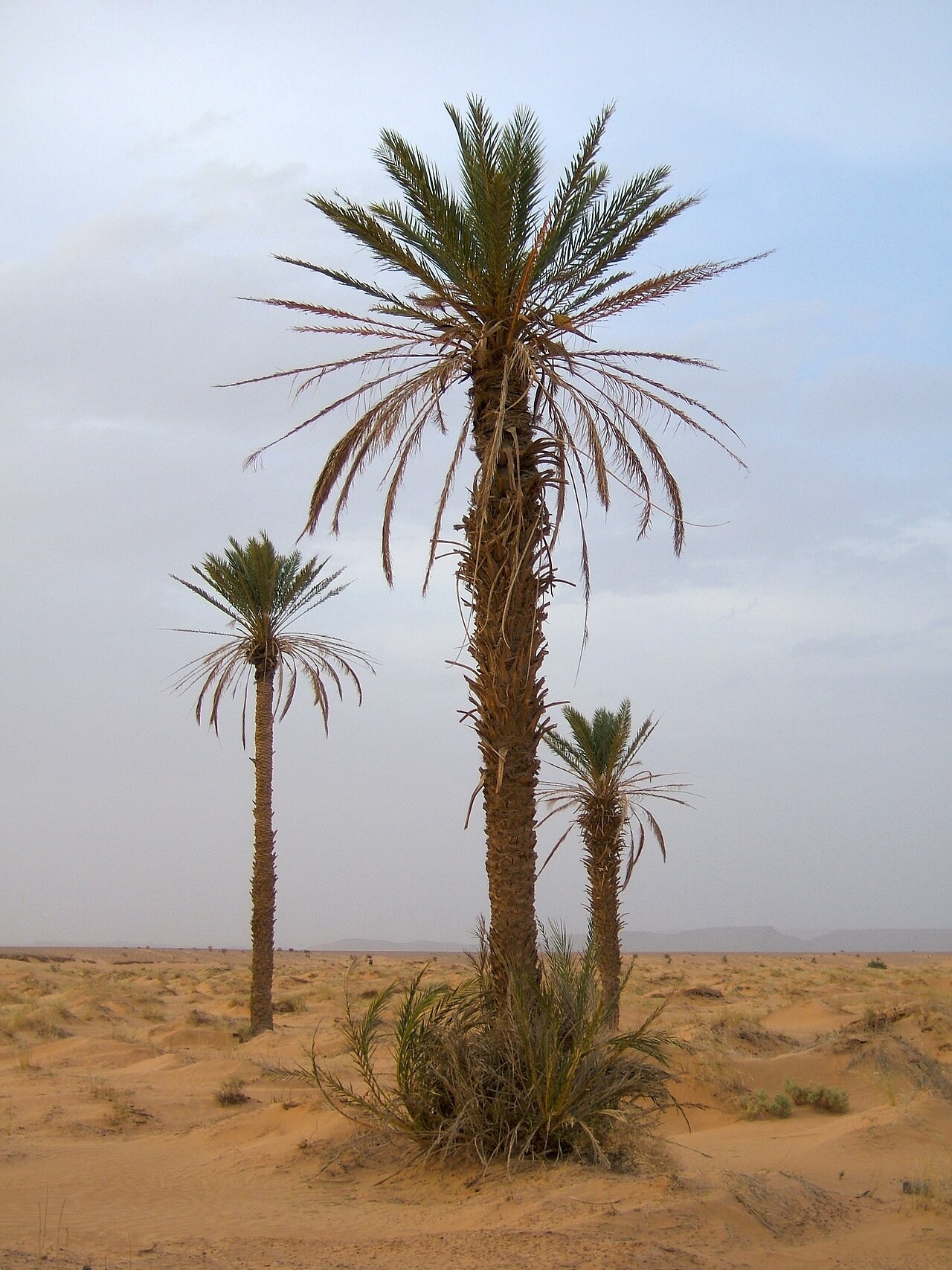
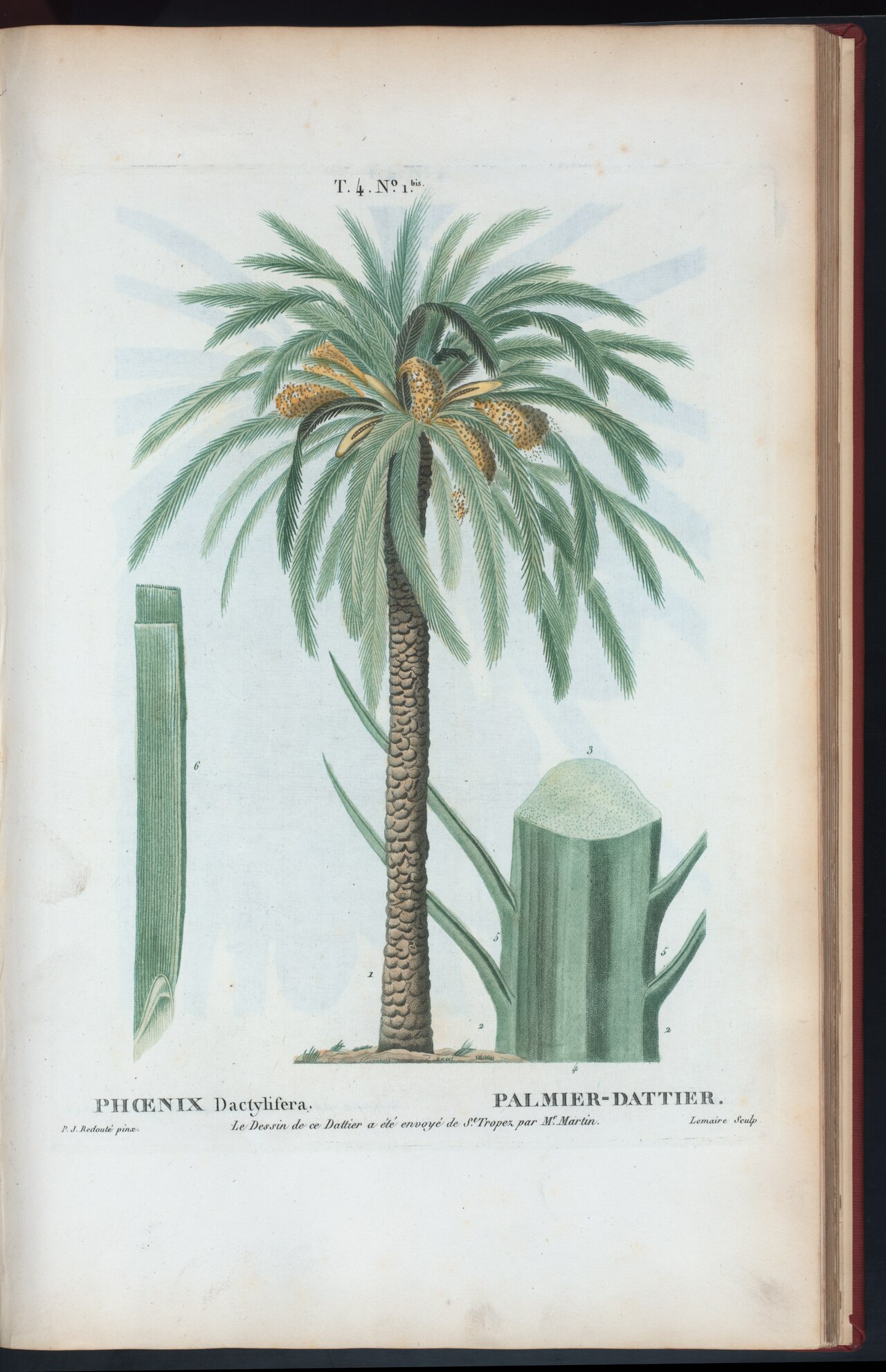
How to grow
Date palms are desert trees that demand what most fruit trees dread: intense summer heat, low humidity during ripening, and long, hot seasons. In the United States that means the low deserts of California and Arizona, plus the warmest parts of Texas and Florida where humidity is lower — in humid climates, dates often fail to ripen properly and rot instead. Plant nursery-grown offshoots (not seedlings, which are a genetic lottery and half male) in spring in deep, well-drained soil. Dates are dioecious: you need one male palm for every 20 or so females, and commercial growers hand-pollinate — home growers can too, by dusting female flowers with male pollen. Female palms produce huge hanging clusters that need thinning and, in many regions, bagging against rain, birds, and insects.
Water & feeding
Water deeply and regularly — date palms are not cacti, and despite their desert reputation they are heavy drinkers with deep roots. They tolerate somewhat salty water better than most fruit trees. Mulch young palms and feed with a palm fertilizer through the growing season.
Common problems
- Humidity during ripening — fruit rots in wet, humid falls; arid climates are strongly preferred
- No male pollinizer or no hand-pollination — flowers without pollen mean no dates
- Birds and insects on ripening clusters — bag clusters as they color
- Lethal yellowing and other palm diseases in some regions — buy clean stock
Harvest
Pick in late summer into fall, when the fruit has colored fully and softened to your preferred stage — dates are eaten at the firm khalal stage, the soft rutab stage, or the dried tamar stage, and the same cluster can offer all three over weeks. Dry fully ripe fruit for storage; properly dried dates keep for months.
Browse all plant & pest guides
Propagation
Date palms break the usual seed-saving story, so this section is a propagation section, not a seed-saving one, and the distinction matters. Yes, you can plant a date pit. It will probably sprout, given warmth and patience, and it is a fine windowsill experiment. But a seedling date palm is a genetic lottery ticket, and the house usually wins. Date palms are dioecious, meaning each palm is either male or female, and you cannot tell which sex a seedling is until it flowers, often many years after planting. Roughly half your seedlings will be males, which produce pollen but no fruit, and the females will usually bear fruit of variable and often inferior quality compared with a named variety. Planting a Medjool pit does not give you a Medjool palm. It gives you a brand-new palm that happens to have a Medjool mother, and that is a very different thing. For fruit you can count on, growers propagate by offshoots, and this guide already says to plant nursery-grown offshoots, not seedlings.
Offshoots, sometimes called suckers or pups, are baby palms that sprout from the base of a mature palm. Because they grow from buds on the mother palm itself, they are genetic clones of her: same fruit, same habit, same sex, which means a female offshoot from a female palm is a female palm, and you can plan a grove around that certainty. That is how named varieties have been passed down for centuries, long before tissue culture existed. A palm produces only a limited number of offshoots, mostly in its early years, and only a few are suitable in any given year, which is one reason named palms cost what they do. Buy clean nursery stock from a healthy, productive mother, since a bargain offshoot from a diseased palm is no bargain.
Separating an offshoot is not a job for a trowel and optimism. The offshoot joins the mother by a short, woody base, and inside that base sits the growing point, the single bud the whole palm depends on. Damage it and the offshoot is finished, because a palm has one growing point, not a network of backups. The sensible home route is to buy a well-rooted, nursery-grown offshoot and plant it in spring in deep, well-drained soil, in full sun, 25 to 30 feet apart, as this guide specifies. Water deeply and regularly while it establishes, mulch the young palm, and feed it through the growing season with a palm fertiliser. If you separate one yourself, use sharp, clean tools, protect the bud above all else, and nurse the young palm in a pot or sheltered spot until well rooted.
What about that pit, then? If you want the experiment, clean the pit fully, soak it, and plant it in a deep pot of free-draining mix, kept warm and moist. Germination can take weeks to months, and the seedling will need years before it flowers and reveals its sex, let alone its fruit quality. Keep it as a handsome foliage palm, but do not plan a fruit harvest around it, and do not sell or gift it as a named variety, because it is not one. In Florida, humid falls can rot fruit that a desert climate would have sweetened, so a seedling gamble is an even longer shot where ripening is already a challenge. Buy the offshoot, know the sex, know the variety, and let the pit be a story, not a plan.
Varieties
Every named variety of Date with its own growing guide:
- Medjool Date — The king of dates: huge, soft, caramel-sweet fruit on a palm that turns blazing heat into candy.
- Deglet Noor Date — The translucent, honey-sweet 'date of light': firmer, drier, and more versatile than Medjool, and the classic cooking date.