
🌿 Doublefile Viburnum
What it looks like
Quick facts
- Sun: Full sun to part shade; full sun gives the best flowering
- Soil: Moist, well-drained soil; tolerates sand, loam, and clay if drainage is good
- Spacing: 8–12 feet apart — this is a big shrub, give it room
- Mature size: Typically 8–12 feet tall and 9–15 feet wide
- Zones: USDA zones 5–8 (Virginia Tech lists 4–8)
- Florida: North Florida trial only — a cool-temperate shrub, not a statewide Florida plant; see the honest Florida note below
What it is
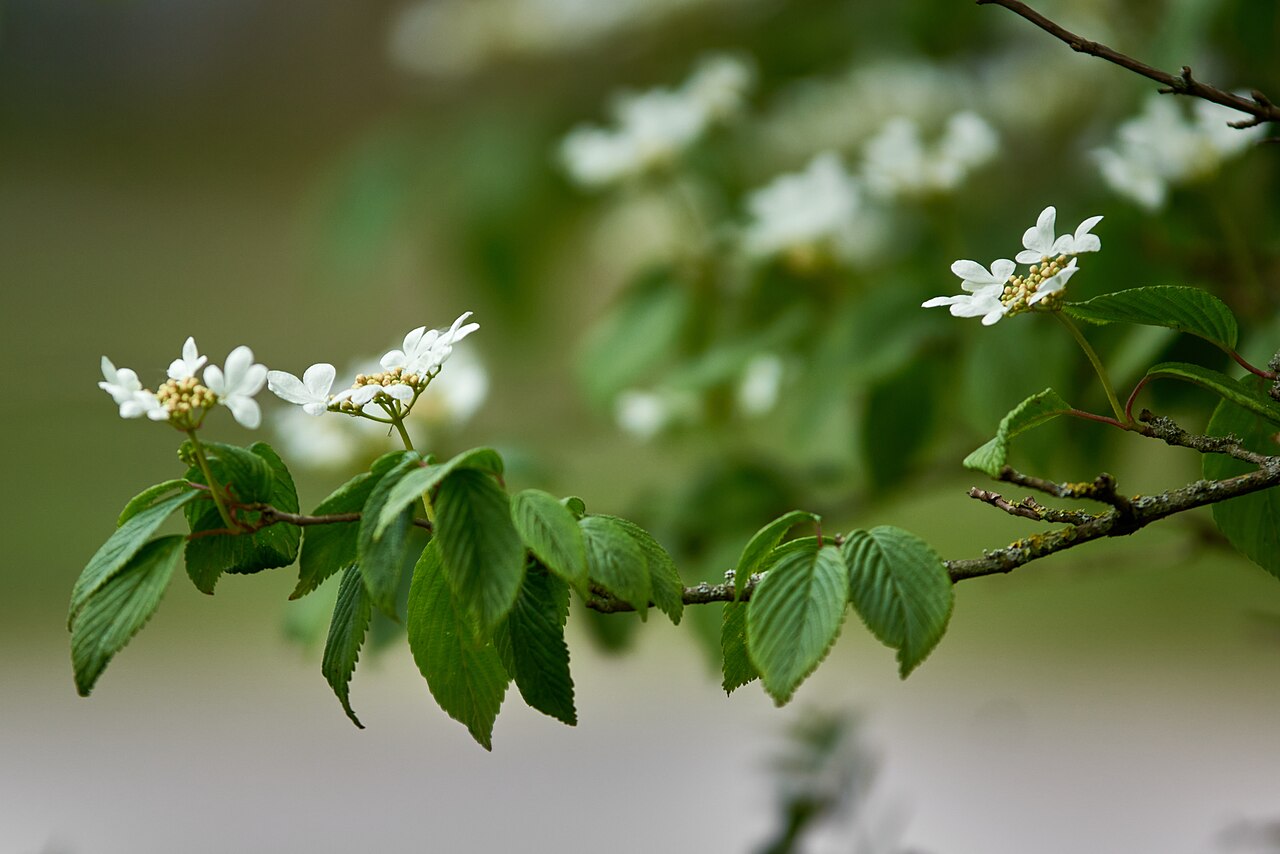
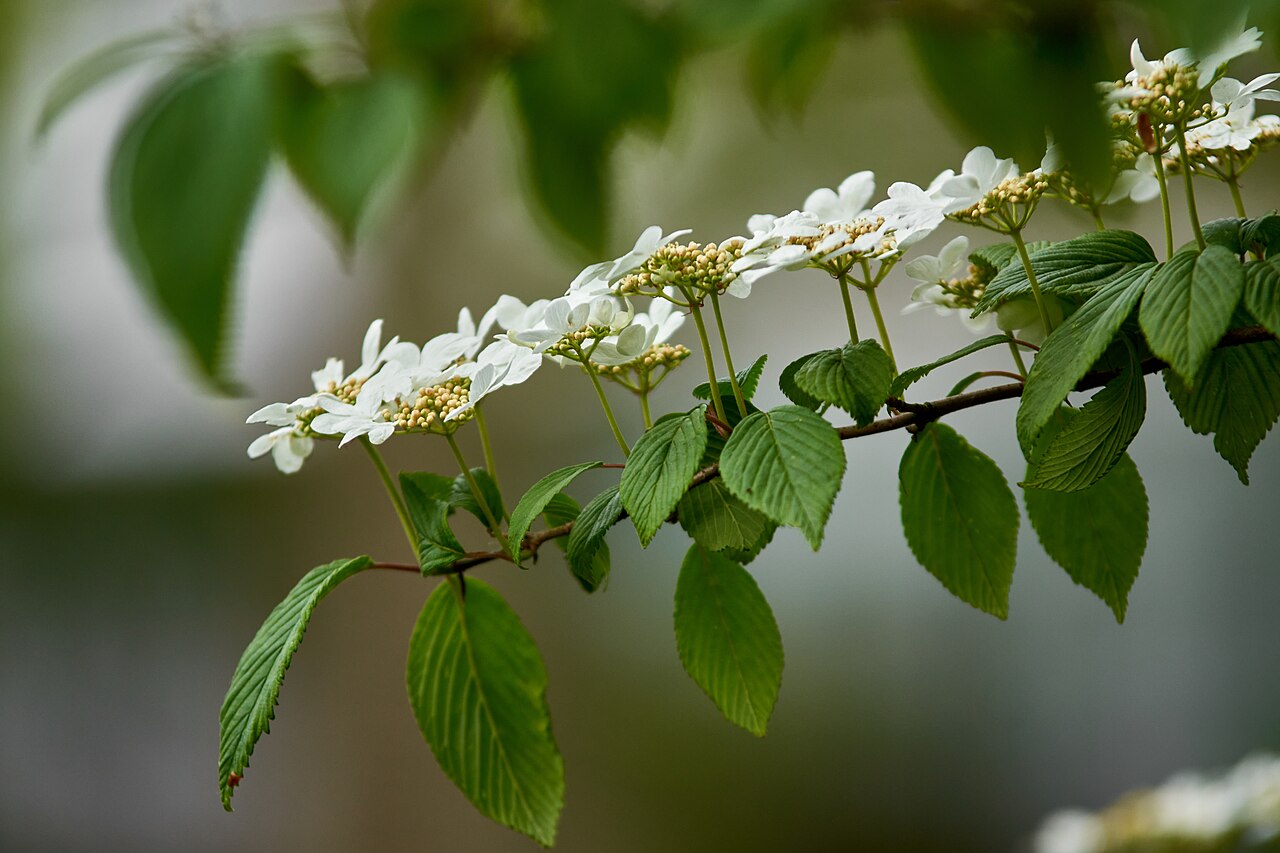
Doublefile viburnum is a shrub you recognize by its architecture before you ever notice its flowers. Viburnum plicatum in its doublefile form (f. tomentosum) is a large, deciduous, multi-stemmed shrub native to Japan and China, whose branches grow in distinct horizontal tiers, like shelves, with leaves and flowers arranged in two opposite rows along each branch — hence “doublefile.” In mid to late spring, each tier carries flat-topped, lacecap flower clusters 2 to 6 inches across: a ring of large, showy, sterile white flowers around a center of small, fertile flowers, sitting above the foliage like white plates on a shelf.
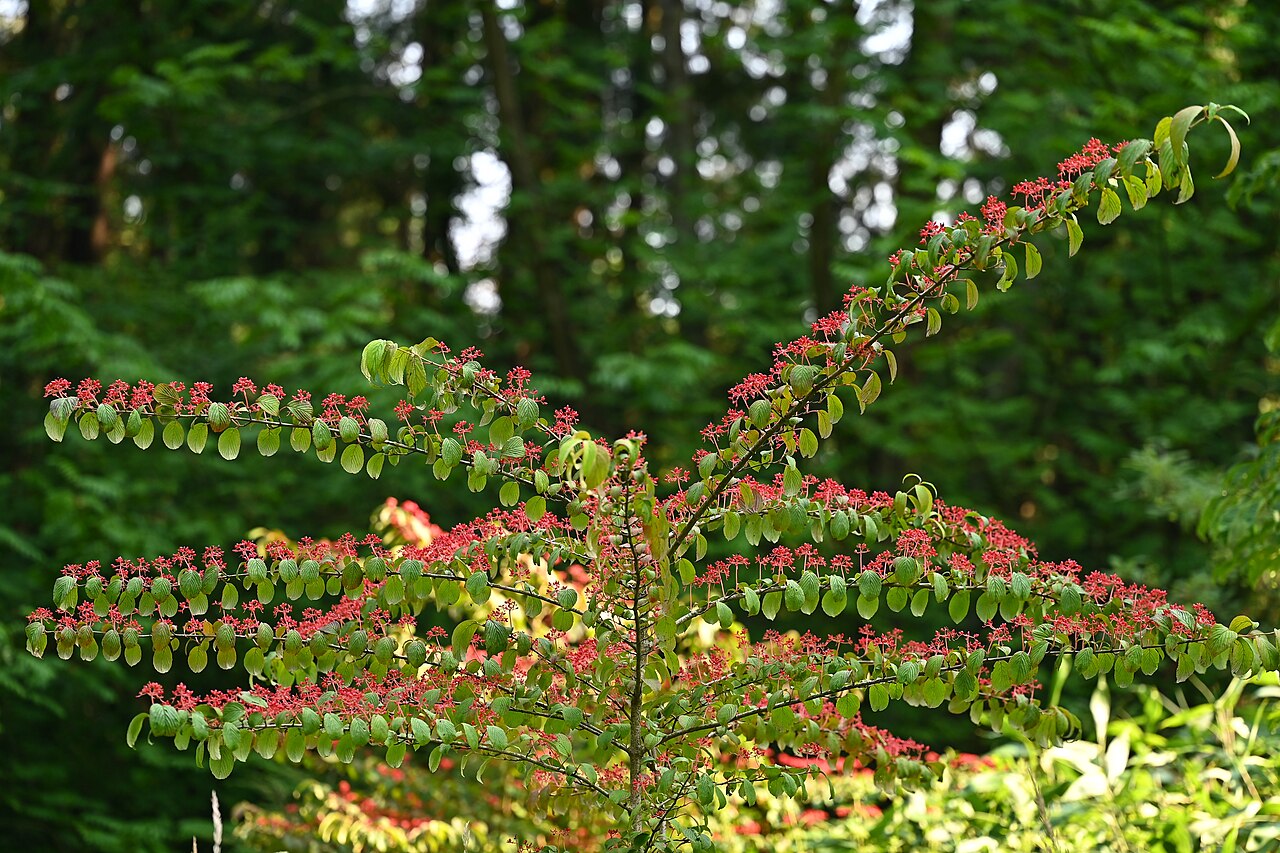
The leaves are part of the show too: opposite, ovate, deeply veined and pleated — plicatum means “pleated” — dark green in summer, turning reddish-purple in autumn. After flowering, small berries follow, ripening from bright red to black in late summer and fall, and birds love them. A quick distinction that saves confusion at the nursery: the doublefile form bears flat lacecap clusters, while the other form of the species (f. plicatum, the snowball form) bears round, ball-shaped flower heads. They are the same species in two very different outfits, and this guide covers the doublefile form — the tiered, lacecap one.
How to grow
Plant in spring or autumn in full sun to part shade, in moist, well-drained soil. Doublefile viburnum wants room — a mature plant spreads 9 to 15 feet wide, and its whole beauty is in the horizontal tiers, so do not plant it where you will be tempted to shear the branch ends. Pruning the tips destroys the layered silhouette; the correct approach is to remove whole branches from the base if it outgrows its space, or to leave it alone entirely. It tolerates regenerative pruning to about a foot above ground if it becomes ratty, but that is a reset button, not routine maintenance.
Water deeply during establishment and through dry spells; it prefers consistent moisture and dislikes heavy clay that stays waterlogged, even though it tolerates clay that drains. Mulch the root zone, keep the soil cool, and give it a few years: doublefile viburnum is a moderate grower that looks better every year as the tiers develop, and a young plant will not show its full architecture in season one.
Water & feeding
Evenly moist, well-drained soil is the target. A spring mulch of compost feeds the soil and holds moisture, and a light balanced feed in spring is plenty in poor soil. Over-fertilizing produces soft growth that flops and spoils the tiered form — feed the soil, not the ego of the shrub.
Common problems
Doublefile viburnum is generally pest- and disease-light, with occasional aphids, scale, or leaf spot in wet, crowded plantings. Its real enemy is bad siting: too little room, too much shade (which reduces flowering), or waterlogged soil. Give it space, sun, and drainage, and it is one of the lowest-maintenance large shrubs you can plant.
Seasonal interest
Spring brings the lacecap tiers — the headline event. Summer is deep green and structural. Late summer and fall bring red-to-black berries and reddish-purple foliage. Winter shows the tiered branch architecture, bare and sculptural. It is a genuine four-season shrub in its climate, and the reason it appears in so many “best shrubs” lists is that no season is a letdown.
The honest Florida note
Doublefile viburnum is a cool-temperate shrub, and Florida is a stretch. Its zone range tops out at zone 8, and even there it wants cool springs, moist soil, and a winter that actually feels like winter. A north Florida gardener with a large, moist, well-drained, partly shaded site could trial it — with the understanding that flowering and autumn color may be muted compared with its performance further north — but it is not a statewide Florida shrub, and central and south Florida should not plant it expecting success. Enjoy it as the reference for tiered shrub architecture, and plant heat-adapted viburnums at home.
Nerdy fact: name ‘doublefile’ is literal garden geometry: the flowers and leaves are arranged in two files — two opposite rows — along each horizontal branch, so the whole shrub reads as a series of double-ranked shelves. It is one of the few common names that is also an accurate botanical description, which, in a world of ‘Greek valerians’ that are not valerians, is a small mercy.
Where it fits in the Living Root guides
This plant is also covered in our survey guide to the wider group — see Viburnum: Growing Guide for how it compares with its relatives. Browse all the plant guides in the Plant Guides index.
Saving seeds
Doublefile viburnum seed saving is an exercise in delayed gratification, and anyone who attempts it should know that going in, because the shrub itself is in no hurry. The lacecap flowers of spring become clusters of drupes that ripen from red to black in late summer and fall, and each drupe holds a single flat stone. Collect the fruit when it is fully coloured and slightly soft, and clean the pulp off the stones promptly — birds will happily do the collecting for you if you dither, and pulp left on the seed does germination no favours. The fastest route, and the one old propagation references prize, is the “green seed” trick: harvest seed that is fully developed but not yet fully ripe, and sow it immediately in a cold frame. Sown green, it should germinate the following spring, skipping the long dormancy that makes stored viburnum seed such a test of character. If you miss that window, you have the slow road instead.
The slow road is genuinely slow, so say it out loud before you commit: stored doublefile seed typically needs about two months of warm stratification followed by about three months of cold, and even then germination can take 18 months or more, with seedlings emerging in dribs and drabs rather than a flush. That is not a mistake in your technique; it is a double dormancy — coat plus embryo — doing what double dormancies do. Sow in a cold frame or pots of well-drained mix, keep them moist but never sodden, label them with the sowing date in large letters, and then — this is the hard part — leave them alone through a winter or two, weeding gently and watering in dry spells, until seedlings appear. Prick seedlings out into individual pots when they are big enough to handle, grow them on in a cold frame or sheltered spot, and plant out in late spring or early summer of the following year. From seed to a shrub with the famous tiered wedding-cake shape is a multi-year story, and the first flowering will make you feel like you have earned it, because you have.
Two honesty notes matter more than the sowing depth. First, seedlings do not come true to named varieties. Mariesii, Shasta, and Summer Snowflake — the varieties listed at the end of this guide — are propagated by cuttings or layering precisely because seed from them gives you doublefile viburnums, not copies of the parent. If you want another Mariesii, take softwood cuttings in early summer, or half-ripe cuttings with a heel in July and August, or layer a low branch in summer and wait the better part of a year and a half for it to root; that is the reliable route to a known plant, and seed is the route to a surprise. Second, the Florida note: doublefile viburnum is already a marginal, cool-climate-leaning shrub in much of Florida, and its seed’s long chilling requirement is not something a mild Florida winter reliably supplies outdoors. If you attempt stored seed here, do the cold phase in the fridge, in damp peat in a sealed bag, and keep expectations modest — this is a project for a patient gardener with a cool windowsill, not a fast path to a hedge. Label the packet with the parent variety, the collection date, and the words “may take 18 months,” and future you will be grateful for the warning.
Varieties
Every named variety of Doublefile Viburnum with its own growing guide:
- Mariesii Doublefile Viburnum — The wedding cake shrub: tiered horizontal branches stacked with white lace.
- Shasta Doublefile Viburnum — The award-winning doublefile: abundant white flowers, good fruit, and dependable fall color.
- Summer Snowflake Doublefile Viburnum — The long-blooming doublefile: white lace in spring, then a few flowers all summer.