
🦋 Gaura
What it looks like
How to grow
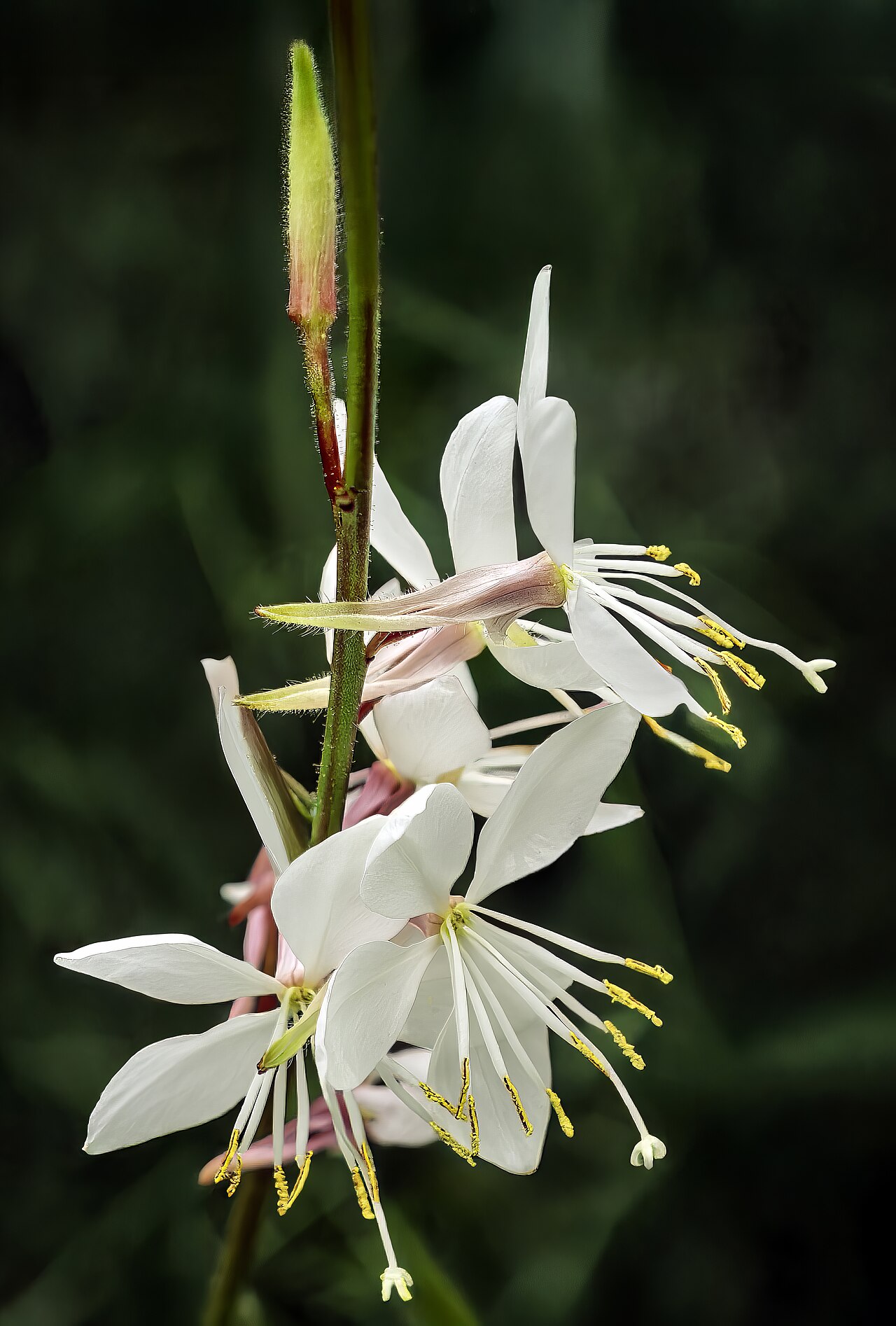
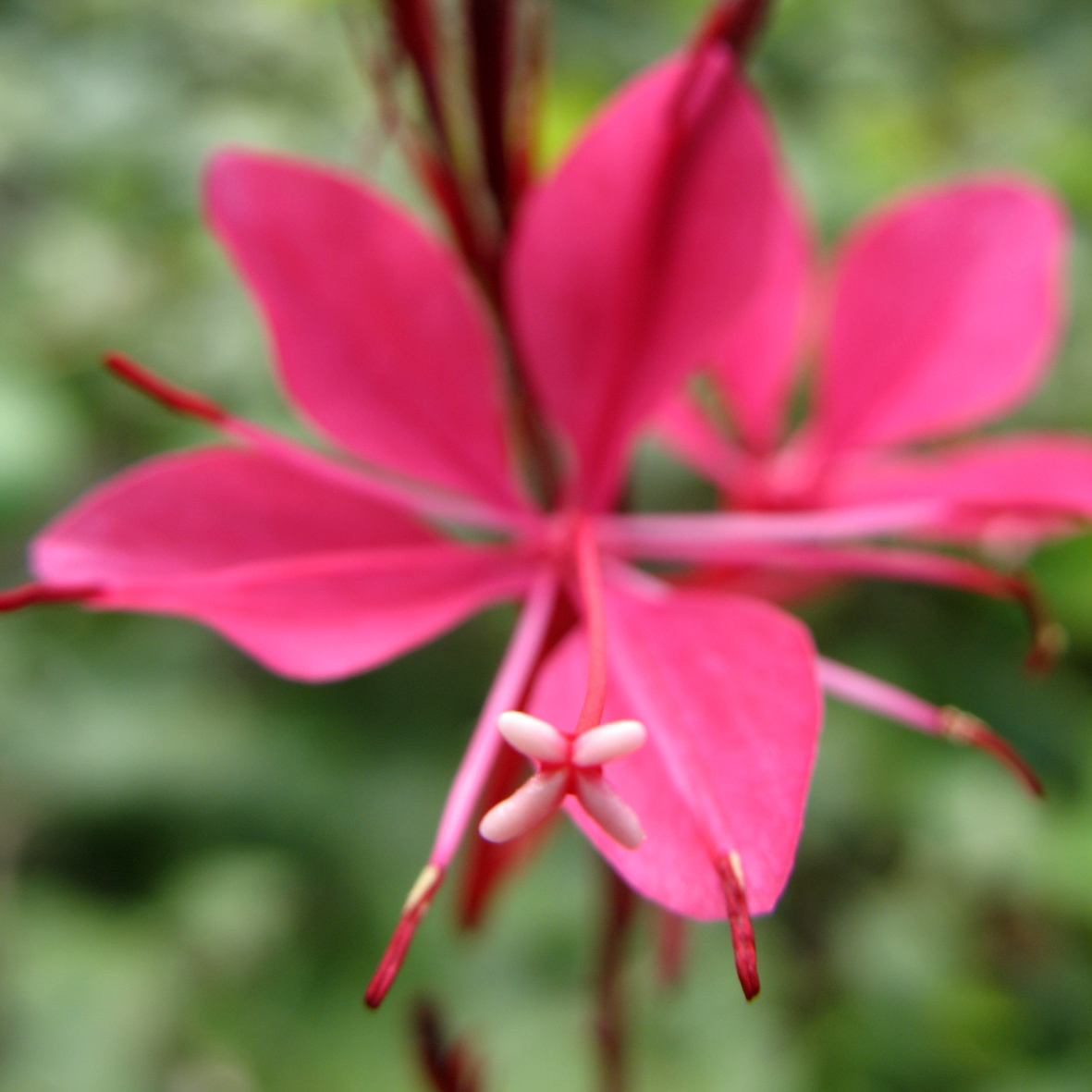
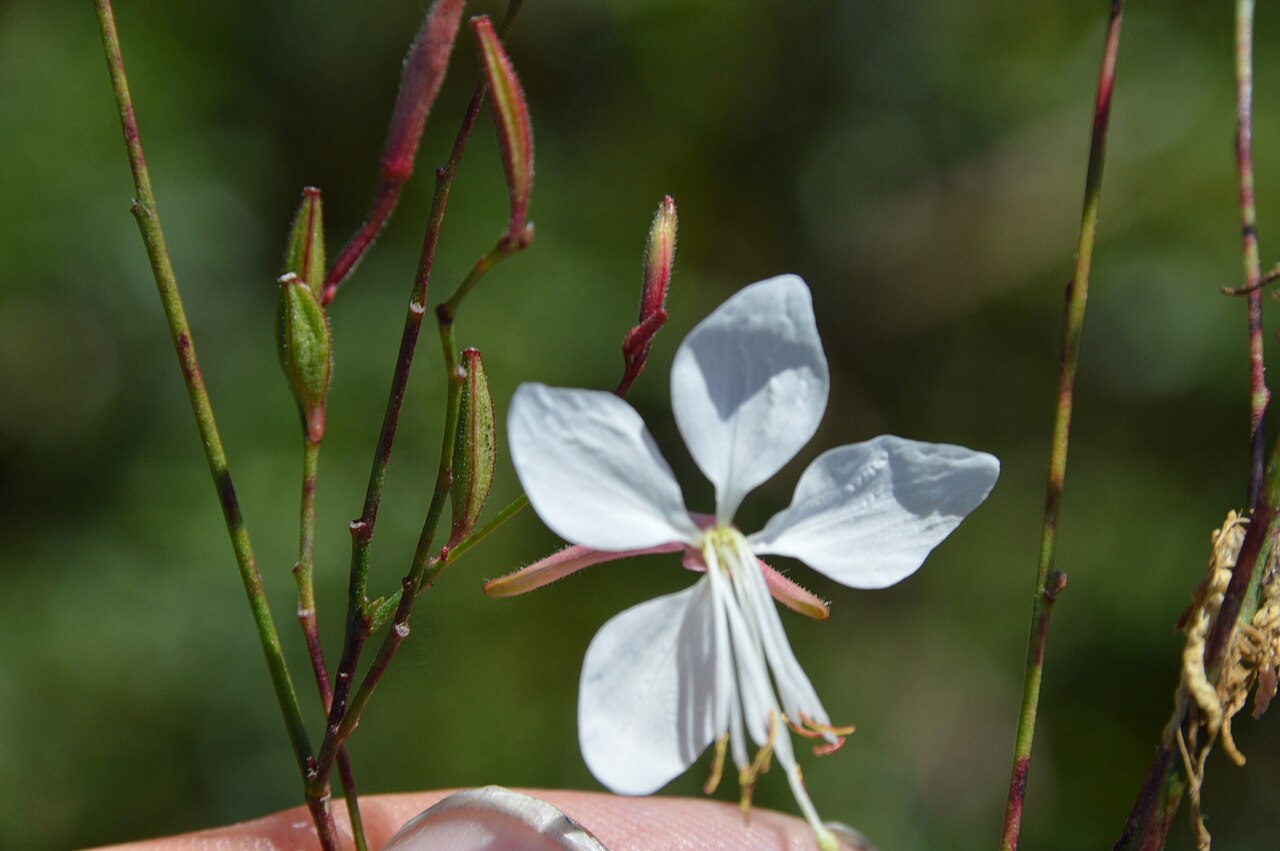
Gaura, or wandflower, is a billowy perennial 2–4 feet tall with wiry stems carrying small white or pink four-petaled flowers that look like butterflies hovering — they open a few at a time over a very long season, from summer to frost, and sway in the slightest breeze. It is a prairie plant at heart: give it full sun and well-drained soil, even poor or sandy soil, and it will bloom its head off. Plant in spring, spacing 18–24 inches apart, and do not overwater or overfeed — gaura in rich, wet soil grows lush and flops, while gaura in lean, dry soil stays upright and floriferous. It is a superb companion for grasses, coneflowers, and salvias, and a magnet for bees and butterflies.
Water & feeding
Water regularly until established, then water sparingly; established gaura is drought-tolerant and hates wet feet, especially in winter. Feed lightly if at all — compost at planting is enough. In wet climates, plant high or in a raised bed to keep the crown dry in winter.
Common problems
- Flopping — too much water, fertilizer, or shade; give sun and lean soil, and cut back by a third in midsummer if needed.
- Winter rot in wet soil — drainage is the deciding factor; gravel mulch helps.
- Short life in cold zones — at the cold edge (zone 5), mulch and site in a sheltered spot; let it self-seed as insurance.
- Lanky growth — shear back after the first flush for bushier rebloom.
Notes
Deadheading is optional — gaura blooms continuously whether you deadhead or not — but shearing back by a third in midsummer refreshes leggy plants. Cut back in late winter or early spring. Propagate by softwood cuttings in summer or let it self-seed; seedlings may vary in color. In zones colder than 5, grow gaura as an annual or overwinter in a pot.
Browse all plant & pest guides
Saving seeds
Gaura wants to save its own seed, with or without your permission, so the first thing this section has to say is a warning, not an invitation. Left alone, a gaura in a favorable spot self-sows freely, scattering seedlings around the parent the following spring, and in a warm climate like Florida’s that habit is enthusiastic. Volunteers are charming in a loose, cottage-style bed and a nuisance in a tightly designed border, especially because seedlings from named cultivars usually revert toward the taller, white-flowered species form rather than repeating the compact pink plant you bought. If you do not want volunteers, deadhead the flower spikes before the capsules mature — and if you do want seed, collect deliberately from the plants you actually want more of, before the garden collects it for you.
Collect from midsummer onward, as the small, hard-shelled capsules along the spent flower spikes turn reddish-brown and dry. They ripen from the bottom of the spike upward, so you will often find ripe capsules at the base while the tip is still flowering; snip individual capsules as they dry, or cut whole spikes once most capsules have matured and let them finish drying in a paper bag indoors. Each capsule holds just a few seeds. Dry them thoroughly before storage — in Florida humidity, that means a ventilated spot indoors, not a sealed bag of half-dry capsules, which will mold — then store the cleaned seed in a labeled envelope inside a jar in a cool, dry place, ideally the refrigerator. Under good storage gaura seed stays viable for a couple of years, with germination declining over time, so sow last year’s seed before reaching for older packets.
Sow in spring or fall. For first-year flowers, start indoors eight to ten weeks before the last frost: sow on the surface of a well-drained seed mix and press the seed in lightly, since gaura seed germinates best with light — sources differ on whether to dust it with the barest covering or leave it fully exposed, so press it in and cover almost nothing, and you will be within everyone’s advice. Germination typically takes two to four weeks in warm conditions. One complication is dormancy: gaura seed can germinate patchily if sown with no pretreatment, and a period of cold, moist stratification — seed mixed with damp sand or vermiculite in a sealed bag in the refrigerator for roughly eight weeks — improves emergence for many growers. It is not mandatory, but if a first sowing comes up thin, stratification is the first thing to try. Direct-sow after frost has passed, or in early fall where winters are mild, pressing seed into prepared soil and keeping it moist until established. Seedlings started early indoors often bloom in their first year.
Now the true-to-type truth. Seed is the cheap, generous route for the straight species and open-pollinated types, and it is the right route for a meadow or naturalized planting where variation is a feature. It is the wrong route for cloning a favorite cultivar: seedlings from a named hybrid may be taller, paler, and rangier than the parent, and some cultivars are sterile outright — the compact Ballerina series, for example, produces no viable seed — so no amount of careful saving will reproduce them. For an exact copy, take basal or softwood cuttings in late spring or summer, dip in rooting hormone, and root them in a humid, well-drained mix. Division is possible in spring but is the least loved option, because gaura’s deep taproot resents being dug and divided and the parent may sulk for a season. Seed for abundance, cuttings for fidelity, deadheading for control: those three moves cover everything gaura will do in your garden, wanted or not.
Varieties
Every named variety of Gaura with its own growing guide:
- Belleza Dark Pink Gaura — The dark pink gaura: deep pink, butterfly flowers on compact plants, the gaura for pots and small beds that still dances.
- Whirling Butterflies Gaura — The white butterfly wand: white, butterfly-shaped flowers on wiry stems that dance in the wind from summer to frost.