
🌿 Globe Artichoke
What it looks like
How to grow
The globe artichoke is the unopened flower bud of a giant thistle, and growing it is a long-game decision: in mild zones it is a perennial that returns for years, and in cold zones it is a pampered annual. Either way, start with transplants, not direct seed — seed-grown artichokes are variable, and a variety bred for first-year buds (like ‘Imperial Star’) is the difference between eating artichokes this year and admiring foliage.
Plant transplants after last frost in rich, deep soil, and give them the full spacing — a mature artichoke is the size of a small shrub and resents neighbors. In perennial zones, cut plants back after harvest and mulch the crown for winter; in cold zones, either treat them as annuals or dig crowns, store them cool and barely moist, and replant in spring.
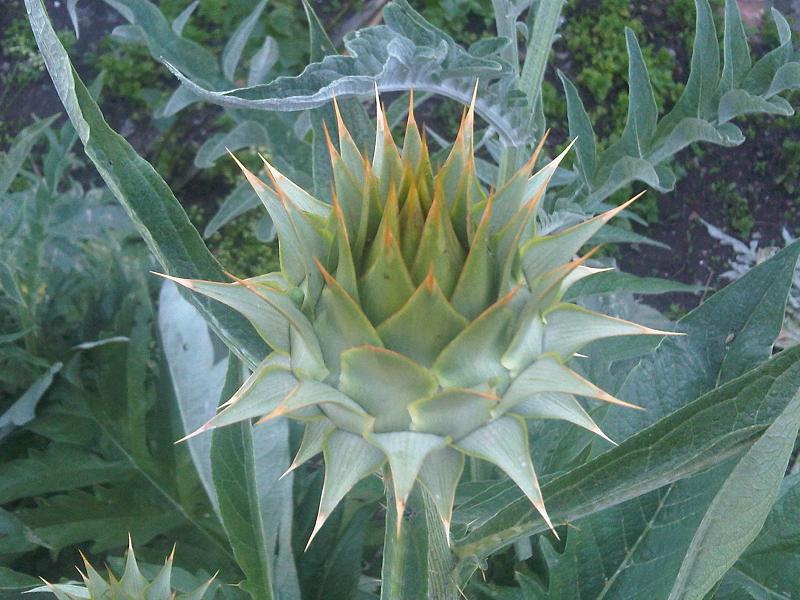
Buds form on tall stalks from the center of the plant. Let the plant establish before expecting a crop: even first-year varieties do better if you remove the smallest buds and let the plant put energy into a few large ones.
Water & feeding
Deep, regular water — 1–2 inches a week — is the difference between tender buds and tough, fibrous ones; drought-stressed artichokes open early and turn woody. Work worm castings generously into the planting hole and side-dress in spring; castings carry a low burn risk and suit a heavy-feeding perennial that stays in one spot for years. Mulch thickly to hold moisture and suppress weeds around the wide crown.
Common problems
- Buds opening into flowers: harvest delay or drought stress — pick buds while scales are still tight, and keep water even.
- Aphids clustering on buds and stems: blast with water and inspect before harvest; ladybugs do real work here.
- Slugs on young plants: traps and clean mulch; mature spiny foliage is less bothered.
- Winter kill in marginal zones: mulch crowns heavily, or lift and store crowns where winters are severe.
Harvest
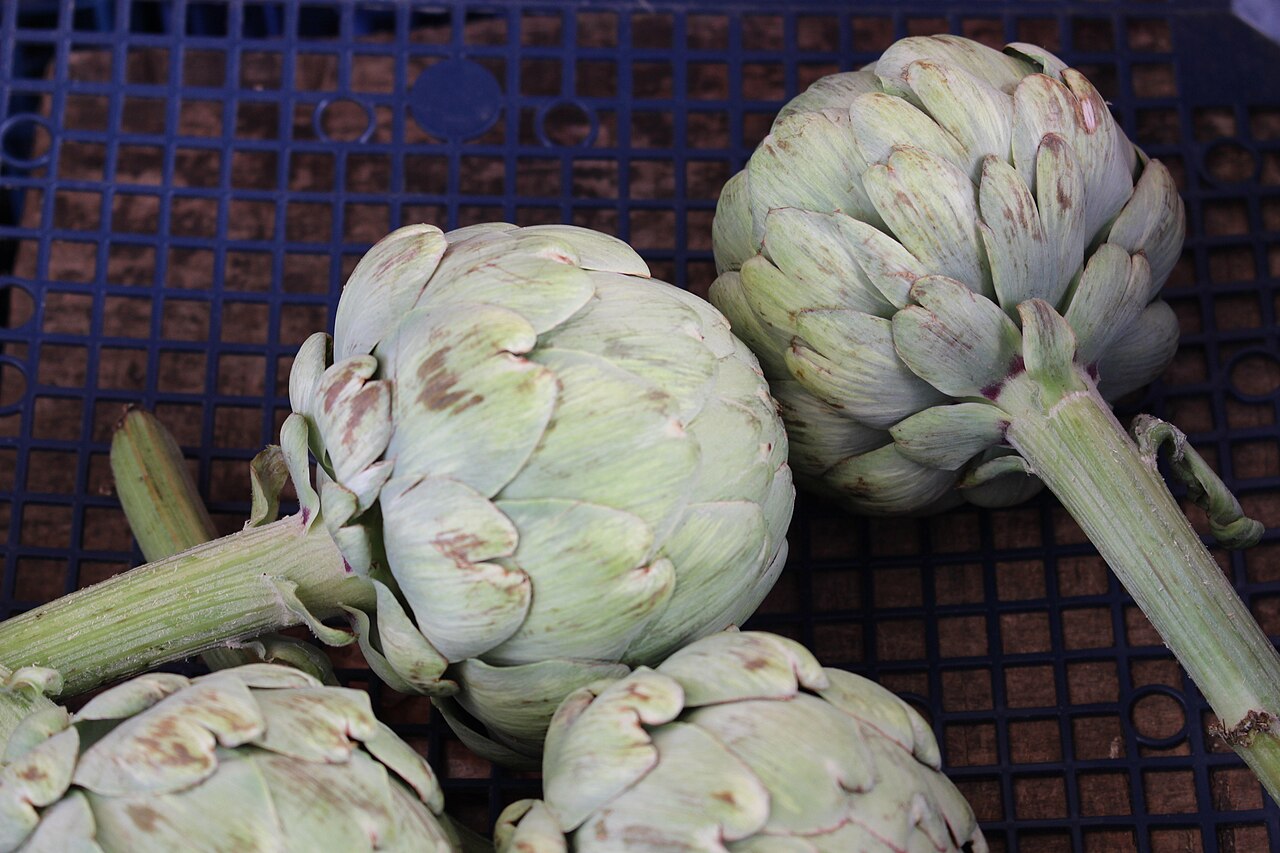
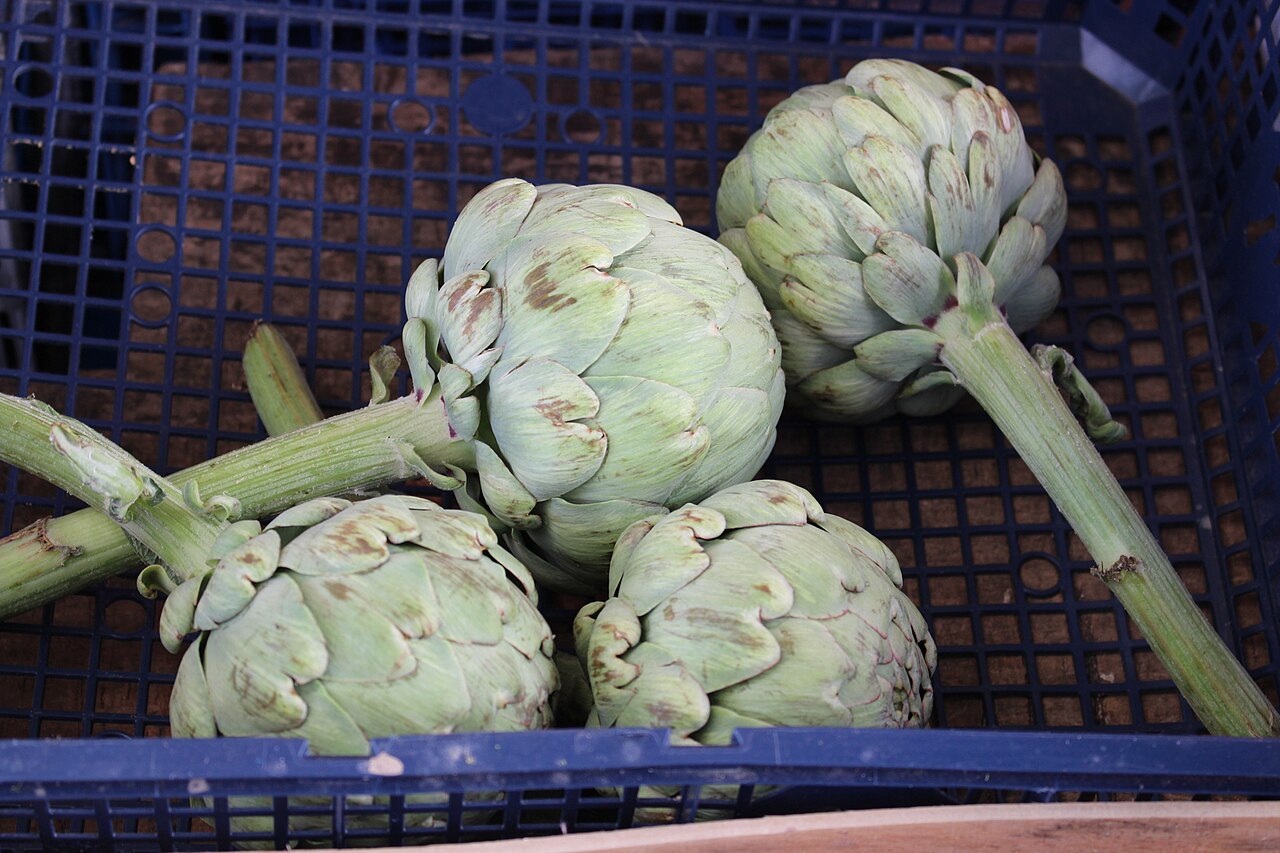
Cut buds when they reach full size but the scales are still tightly closed, with 1–2 inches of stem attached. The first (central) bud is the largest; side buds follow smaller. If a bud starts to open and show purple, it is past eating and on its way to a spectacular thistle flower — leave one for the bees and enjoy the show. Steam whole buds and eat scale by scale, or trim to the heart for cooking.
Saving seeds
Saving artichoke seed means sacrificing dinner, and you should make that bargain before the season, not at the table. Pick your strongest plant, leave one or two of its best heads uncut, and let them do what an artichoke desperately wants to do: open into a spectacular purple thistle flower that bees will queue for, then dry into a brown, fluffy head. The heads you eat are flower buds that never bloomed; the heads you save from are the ones you let finish the job.
Harvest when the head is fully brown and dry, and wear gloves and long sleeves for the job, because a dried thistle head is all spines and attitude. Break it apart over a paper bag and pull the grey-brown seeds away from the feathery pappus — the same fluff that was the inedible choke in the bud you would have eaten. Dry the seed further indoors in a ventilated room until it feels snap-dry; in Florida humidity, if it feels at all damp, it is not dry, and mouldy seed is dead seed.
Store the seed airtight, cool, and dark, labelled with variety and year. Sources put viability at up to about five years, with the best germination in the first year or two, so sow the oldest seed first and sow a few extra for insurance. No soaking or chilling treatment is needed before sowing; sow warm, and expect sprouts over roughly one to three weeks.
Will seedlings grow true? Open-pollinated varieties come reasonably true but variable — that variation is normal, so rogue out the off-types and keep seed from plants that look and taste like the variety you wanted. Hybrid varieties sold as F1 will not come true at all; their children segregate into a mixed bag, some fine, some not the variety you bought. Artichoke also crosses freely with cardoon, which belongs to the same species group, and insects do the carrying, so if cardoon or another artichoke variety is flowering nearby, expect some cardoon-ish children in the mix. No single isolation distance is agreed in home-garden sources, so the practical home rule is simple: one variety flowering for seed at a time, or accept the lottery.
If the lottery does not appeal, divide the plant instead: artichokes throw offsets and suckers from the crown, and divisions taken every few years are clones — an exact copy of the parent, no bees required. For Florida gardeners, heat is a mixed blessing here: it pushes artichokes to flower fast, which means smaller eating heads but a very willing seed crop, provided you still dry that seed thoroughly before it goes into storage.
Browse all plant & pest guides
Varieties
Every named variety of Globe Artichoke with its own growing guide:
- Green Globe Globe Artichoke — The classic green globe artichoke — big, tender buds and the standard perennial artichoke.
- Imperial Star Globe Artichoke — The annual artichoke — bred to fruit in its first year from seed, no mild winter required.
- Violetto Globe Artichoke — The purple Italian artichoke — violet-tinged buds, tender hearts, and old-world flavor.