
🍺 Hops
What it looks like
How to grow
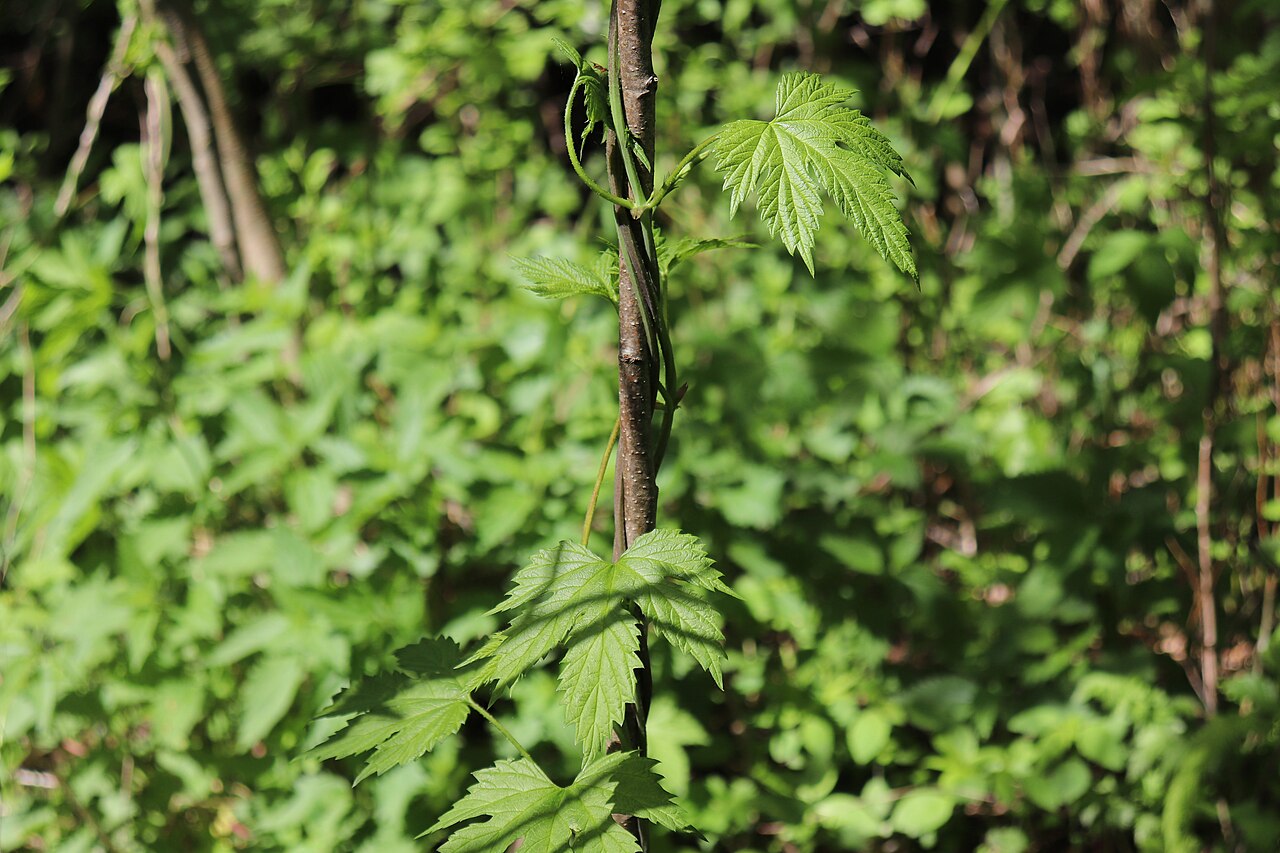
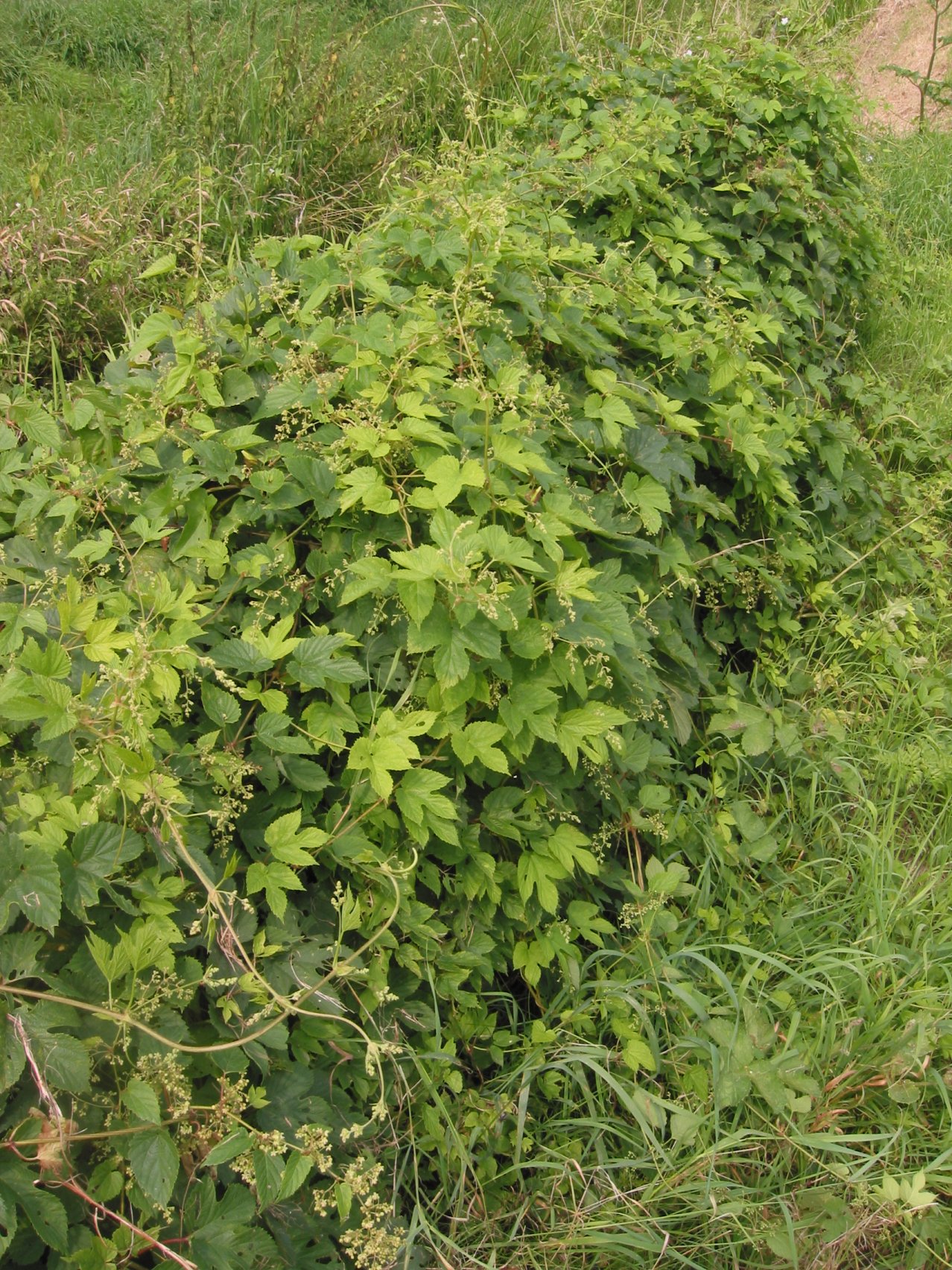
Hops are a herbaceous perennial vine — botanists call it a bine, because it climbs by twining its main stem rather than by tendrils. Plant rhizome cuttings in spring in deep, humus-rich, well-drained soil, and give them something serious to climb: mature bines reach 15–25 feet, and a sturdy trellis, arbor, or lines run to the eaves is not optional. In spring, thin to the strongest 2–3 bines per plant and train them clockwise around their twine.
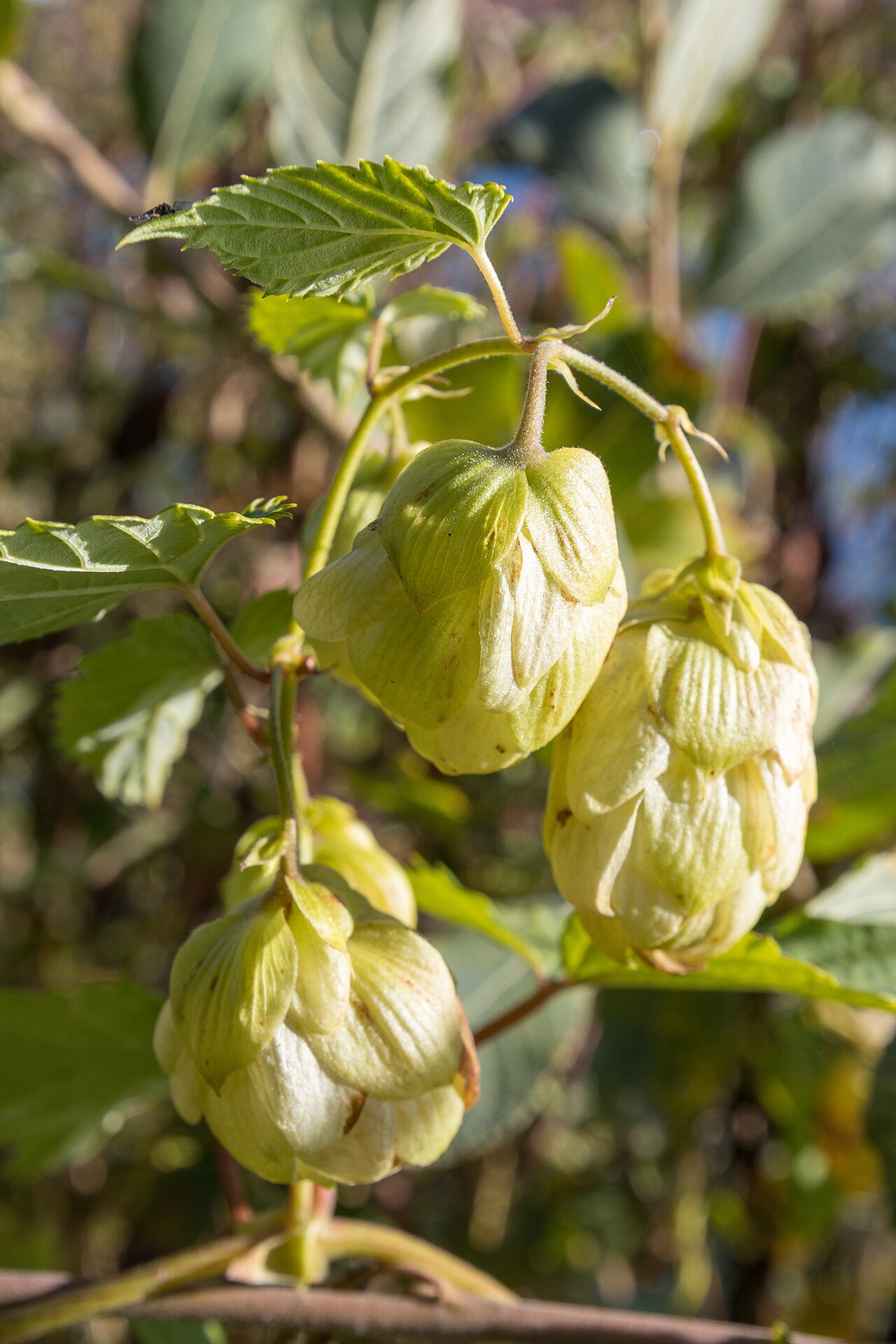
Hops are dioecious, meaning male and female flowers grow on separate plants, and only female plants produce the cones brewers want. Buy named female rhizomes (varieties like ‘Cascade’ or ‘Chinook’ for home brewing) and pull out any male plants that appear, since pollinated cones make inferior beer. Cut bines to the ground after frost; the crown regrows each spring, bigger than the year before.
USDA zones
Hops are generally grown in zones 4–8, where winters are cold enough to give the crowns their dormant rest. University of Florida trials have grown hops as far south as zone 9b, but with a catch: flowering is triggered by shortening days, and Florida’s shorter summer days make plants flower early and yield less than Pacific Northwest plants. In Florida, treat hops as a fun experiment rather than a reliable brewing supply, and choose varieties trialed in the South.
Water & feeding
Hops are thirsty, hungry plants in active growth: water deeply and regularly, mulch heavily to hold moisture, and feed with compost or worm castings in spring and again in early summer. Do not let them dry out during cone formation — drought then means small, papery cones with little aroma. Good air circulation around the bines matters as much as water in humid climates.
Common problems
- Downy mildew — the classic hops disease, worse in humid air. Space for airflow, water at soil level, and remove affected shoots promptly.
- Aphids and spider mites — cluster on undersides of leaves; wash off with water and encourage predators.
- Weak first-year growth — normal. Hops spend year one building a crown; judge them from year two onward.
Harvest
Cones are usually ready in late summer to early fall. A ripe cone feels papery and springy, smells strongly aromatic when squeezed, and shows golden lupulin glands inside when pulled apart. Pick by hand into a basket, then dry promptly in a warm, airy spot out of direct sun until cones feel crisp — undried cones mold fast. Store dried cones in sealed bags in the freezer until brew day.
Browse all plant & pest guides
Propagation
Start with the headline that saves you a wasted season: hops are dioecious, which is the botanical way of saying boys and girls live on separate plants. Only female plants make the cones, and only female plants make the cones anyone wants to brew with. A male plant’s entire contribution to your beer is pollen, and pollen is precisely what brewers do not want, because pollinated cones grow seeds, and seeded cones brew rougher and less cleanly than seedless ones. So the hop yard’s golden rule is simple: know your female, and clone her.
The honest workhorse method is rhizome division, done while the crown is still asleep in late winter or very early spring, before the new bines shoot. Dig around the crown, find the thick underground stems running sideways just under the soil, and cut a hand-length piece carrying at least one or two fat buds, using a clean sharp knife rather than tearing. Plant it shallowly, buds up, a finger or two under the soil, and water it in. Every piece taken from a confirmed female is that female, genetically identical, cone character and all — which is why named varieties like the ones in the Varieties section below are propagated this way and never, ever from a seed packet with the variety name on it. In Florida humidity, let cut surfaces dry for a few hours before replanting so a fresh wound does not sit wet and rot, and give divisions drainage that never leaves them standing in water.
Softwood cuttings are the second vegetative route: in spring, take basal shoots a few inches long, trim the lower leaves, and root them in a moist, airy mix in shade until they strike, then grow them on before planting out. Cuttings are slower than a rhizome piece and fussier about drying out, but they let you multiply a plant without digging up the crown, which your back will appreciate.
Seed, then, is the method for breeders and the incurably curious, not for anyone who wants a known hop next year. You need a male plant nearby for pollination, and the seedlings will be roughly half male and half female, with no way to tell which is which until they flower, usually in their second year. They will not grow true to either parent, so a seedling from a famous variety is a new hop with a new personality, not that variety. If that lottery sounds fun, collect the small seeds from fully ripe cones in fall, give them a moist cold spell in the refrigerator for a month or more to even out germination — sources disagree on exactly how much chill helps, so treat the longer chill as the safer bet — and sow shallowly in spring in warm soil. Rogue out the males once they flower if brewing cones are the goal, and keep only the females whose cones smell like something you would actually want to drink. Store any seed you keep dry, cool, and airtight, labelled with the mother plant and the year, and sow fresh seed first: this is a plant where the clone is the keeper and the seed is the experiment.
Varieties
Every named variety of Hops with its own growing guide:
- Cascade Hops — The classic American aroma hop — citrus and grapefruit notes, and the hop that built craft beer.
- Centennial Hops — The ‘Super Cascade’ — bigger citrus aroma, higher alpha acids, and a vigorous, productive bine.
- Chinook Hops — The bold American hop — pine and grapefruit character, high alpha acids, and a rugged bine.