
🌸 Indian Hawthorn
What it looks like
How to grow
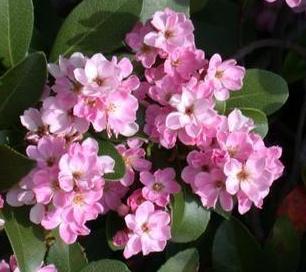
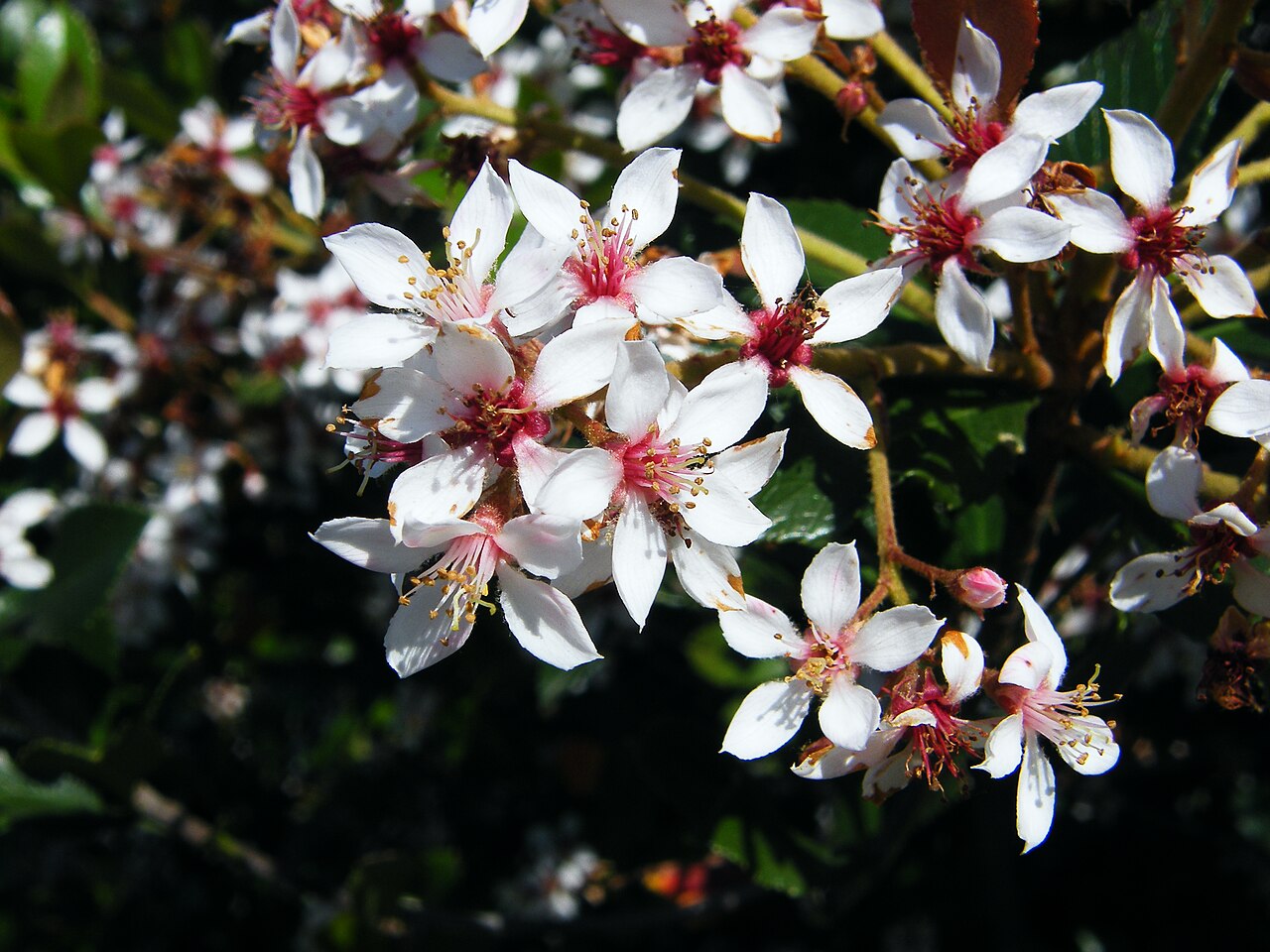
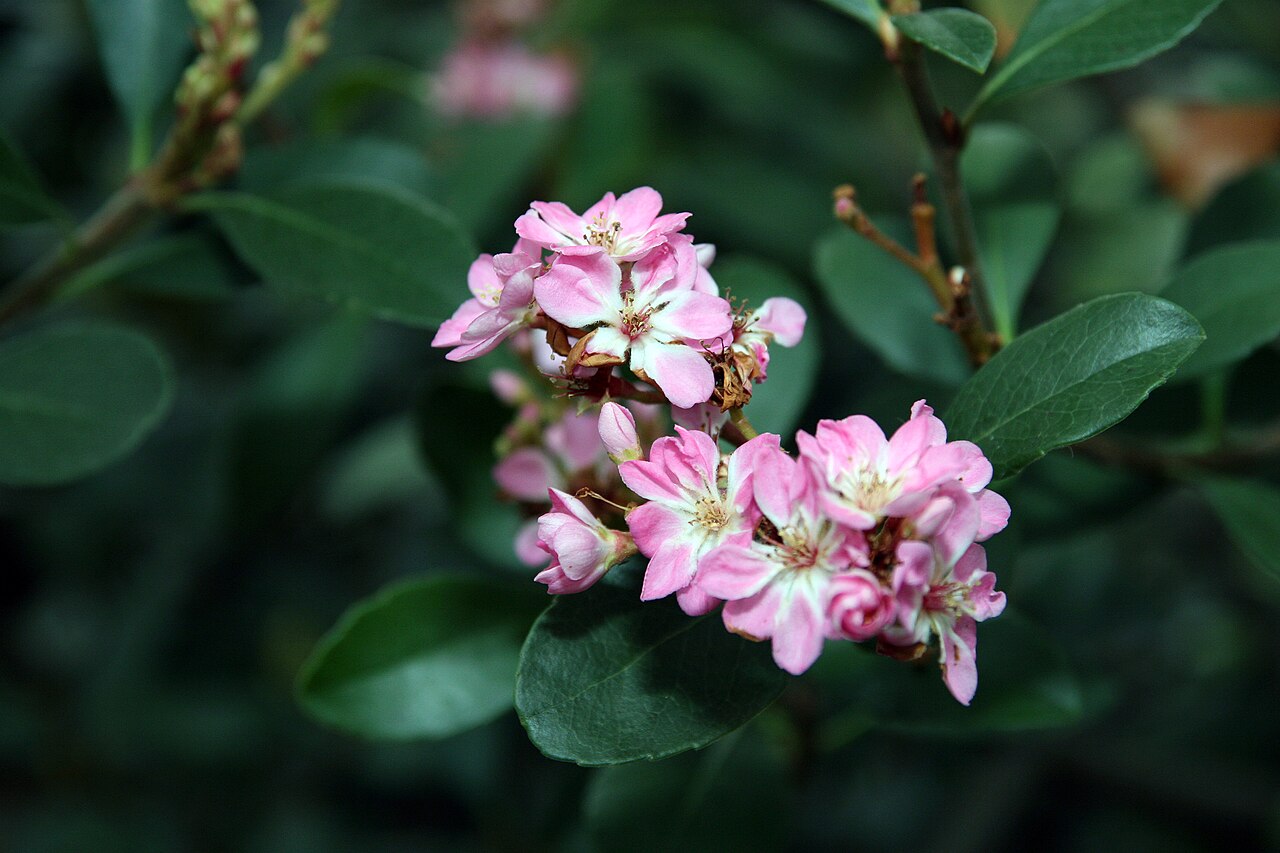
Indian hawthorn is a broadleaf evergreen shrub with glossy dark green leaves, clusters of pink or white flowers in spring, and small blue-black berries that birds enjoy. It grows 2-6 feet tall and wide depending on cultivar — dwarf forms make tidy foundation plantings, larger forms make low hedges. Plant in spring or fall in full sun for the heaviest bloom (part shade works, with fewer flowers) in well-drained soil. It is a staple of southern and coastal landscapes because it tolerates heat, humidity, salt spray, and poor soil better than most evergreens, though it dislikes cold winters and wet feet.
Water & feeding
Water regularly for the first season, then water during dry spells; established plants are moderately drought tolerant but look best with steady moisture. Mulch to hold moisture. Feed in spring with a balanced fertilizer or compost. Prune after flowering to shape — Indian hawthorn flowers on old wood, so late-winter pruning removes the spring bloom.
Common problems
- Entomosporium leaf spot — the classic Indian hawthorn problem: red spots, yellowing, and leaf drop, worst in wet, crowded plantings. Choose resistant cultivars, space for air flow, avoid overhead watering, and clean up fallen leaves.
- Root rot — wet, poorly drained soil; plant in raised beds or amended soil if drainage is poor.
- Winter damage — at the northern edge, plant in a sheltered spot and expect leaf burn in hard winters.
- Scale insects — treat with horticultural oil in the dormant season if needed.
Harvest
There is no harvest for the kitchen — the berries are ornamental bird food, not people food. Cut a few flowering branches for spring arrangements, and propagate by semi-hardwood cuttings in summer.
Browse all plant & pest guides
Saving seeds
Indian hawthorn seed is a slow-burn project, and the first thing to accept is that cuttings are the reliable route for named varieties. Semi-hardwood cuttings taken in summer preserve a cultivar’s exact flower color and habit; seed grows the species type, germinates slowly and unevenly, and will not reproduce hybrid selections exactly. So save seed if you want species plants, rootstocks, or a fun experiment — and take cuttings if you want another ‘Pinkie’ or ‘Rosalinda’ that looks like the parent.
Collect the berries when they are fully ripe, blue-to-black, in late summer into fall. The seeds ripen roughly August into September. Crush the berries gently, wash away the pulp, and clean the small seeds. Pulp left on the seed invites mold in storage, so rinse until the water runs clear, then dry the seed thoroughly on paper. Once dry, store it in a labeled envelope or an airtight jar with a desiccant packet, cool and dark — in Florida humidity, the desiccant is doing real work, not decorative work.
For sowing, sources disagree on the chill, so here is the range rather than a false certainty: some references give 6–8 weeks of cold-moist stratification in the fridge (damp peat or vermiculite in a sealed bag), others stretch it to 2–3 months, and one classic reference simply says sow fresh seed as soon as it is ripe in a warm greenhouse, or sow stored seed in late winter to spring. The practical approach is to sow fresh seed in fall and let nature do the chilling, or fridge-stratify stored seed for about two months and sow in spring. Either way, expect slow and variable germination — weeks to a few months — and do not throw the tray away early. Keep the mix consistently moist but never waterlogged, in bright indirect light at around 65–75°F, and prick seedlings out into individual pots once they are large enough to handle. Grow them on under cover for at least their first winter before planting out in late spring or early summer, and plant them where they will stay, since they resent root disturbance.
One more practical note: seed-grown plants take years to reach flowering size, and a seedling’s flowers may differ from its parent’s, so if flower color matters to you, this is a long and uncertain road. But for a species shrub, a hedge grown from your own seed, or a rootstock experiment, the method works — it just asks for the one thing gardeners are always short on, which is patience.
Varieties
Every named variety of Indian Hawthorn with its own growing guide:
- Snow White Indian Hawthorn — The white-flowered Indian hawthorn: crisp white spring clusters on glossy evergreen leaves, in a tidy, salt-tolerant mound.
- Clara Indian Hawthorn — The blush-pink Indian hawthorn bred for disease resistance: soft pink flowers, glossy leaves, and far less leaf spot.