
🍂 Septoria Leaf Spot
Signs and symptoms
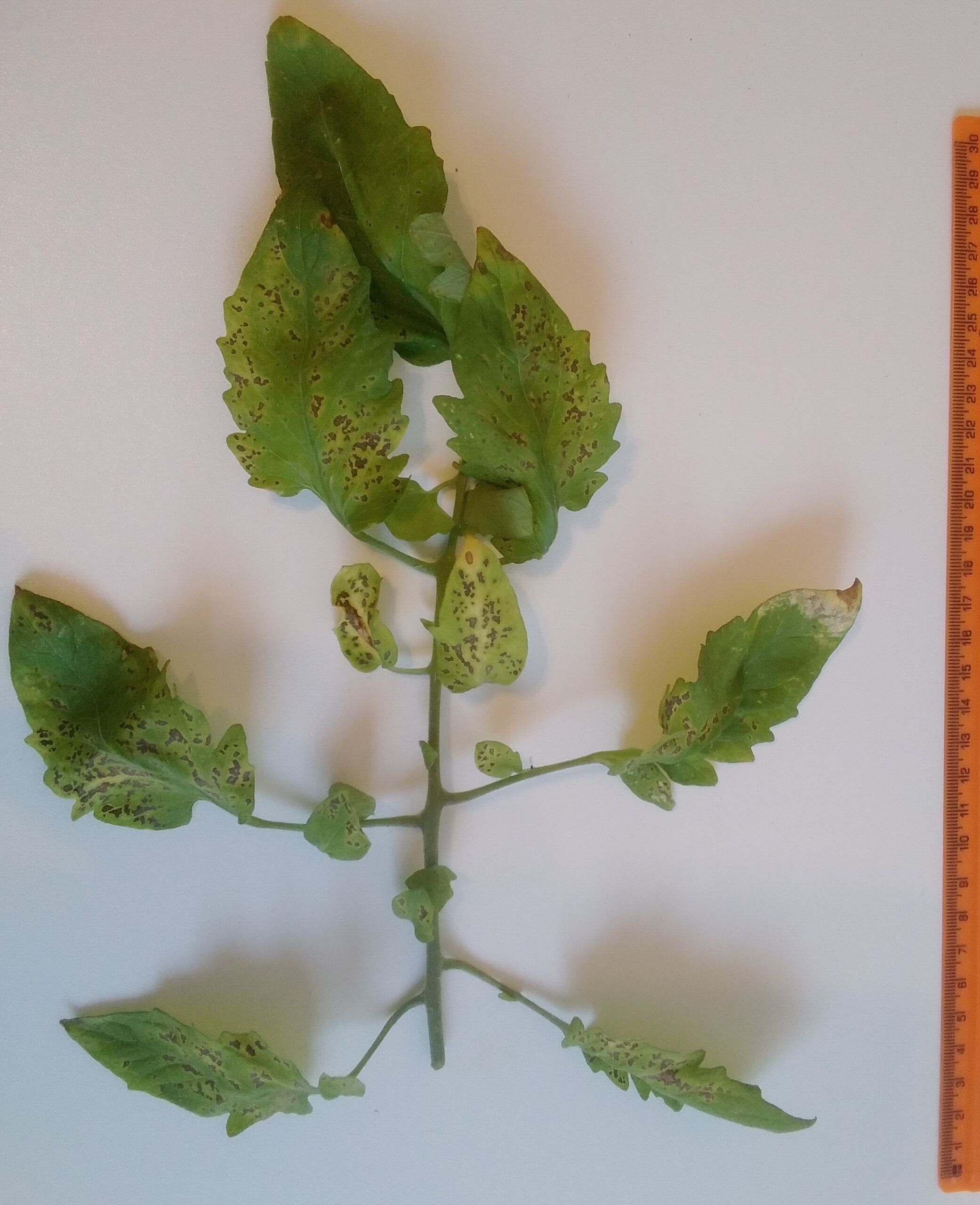
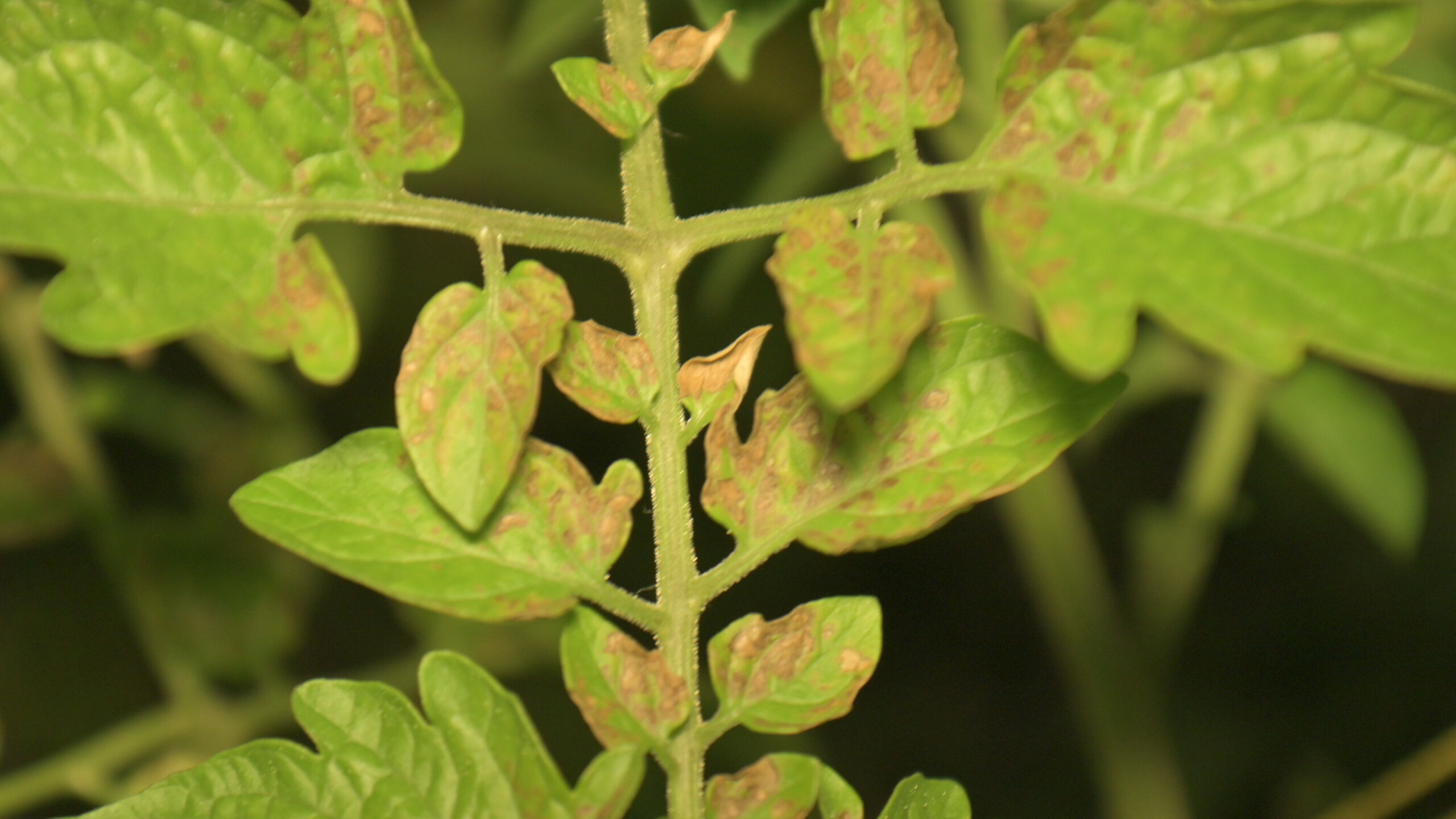
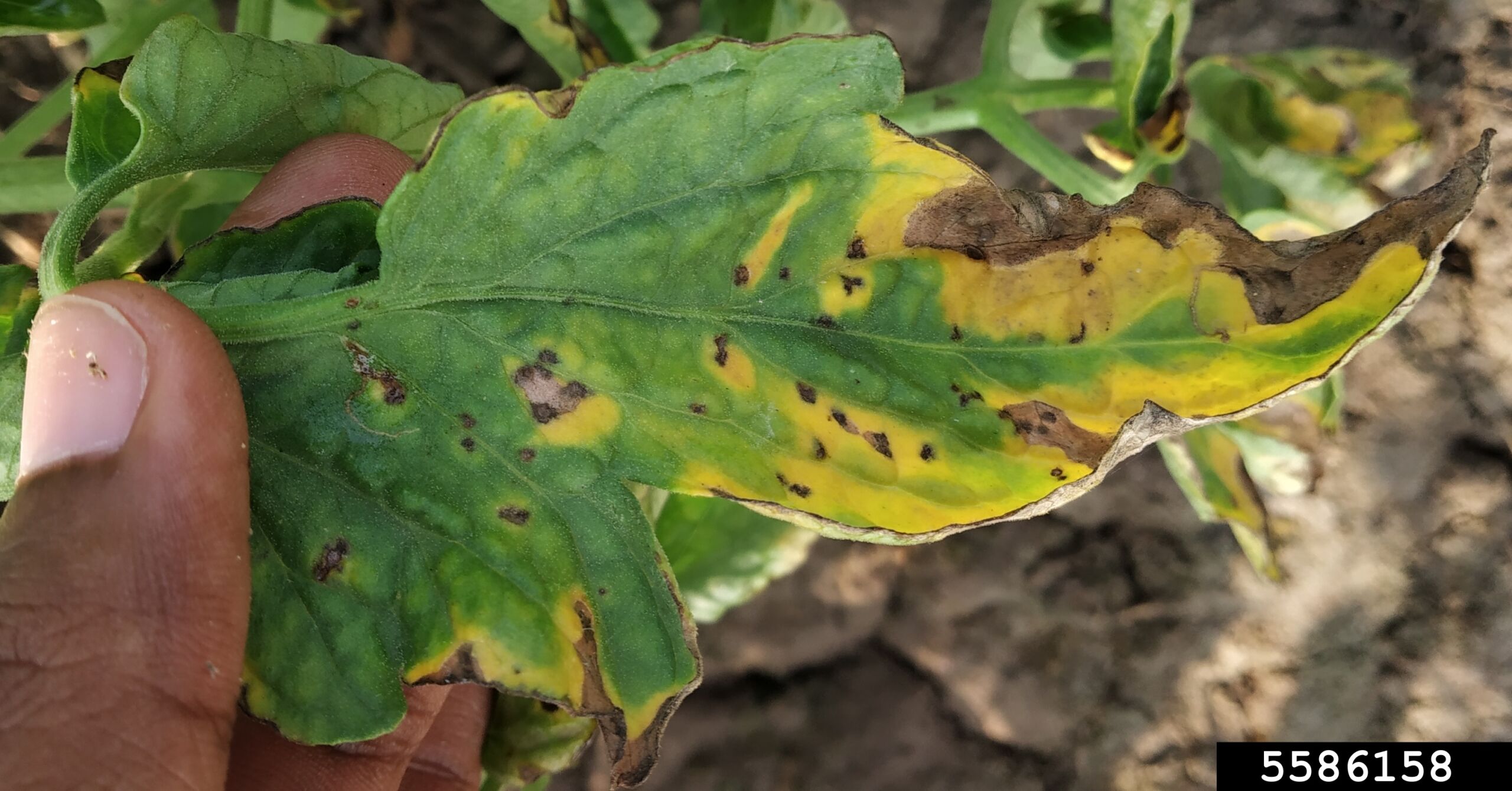
Small circular spots with dark brown margins and pale grey or tan centres, often with tiny black dots (pycnidia) in the middle and yellow halos around them. It starts on the lower leaves and climbs upward, and heavy infections strip leaves fast. Here is the handy distinction: the fruit is NOT spotted. If your tomatoes themselves are spotty, you are looking at something else — compare bacterial spot or early blight instead.
Plants it attacks
Tomato, first and foremost. Related Septoria species attack other crops, but this guide is the tomato disease — the one Florida tomato growers meet.
What to do
- Pull off the lower affected leaves as soon as you spot them, and bag them — do not compost diseased material.
- Mulch under the plants to cut soil splash, which is how the spores travel upward.
- Stake and prune for air flow so leaves dry faster after rain or watering.
- Rotate to a non-tomato crop next planting; do not put tomatoes back in the same spot.
- A labelled fungicide is a later option only, per the label — it protects new growth, it does not un-spot old leaves.
Prevention
Mulch, water at the base, give plants room to breathe, rotate crops, clean up debris at season’s end, and start with clean transplants. Septoria loves wet lower leaves, so anything that keeps the bottom of the plant drier is prevention.