
🏖️ Shore Juniper
What it looks like
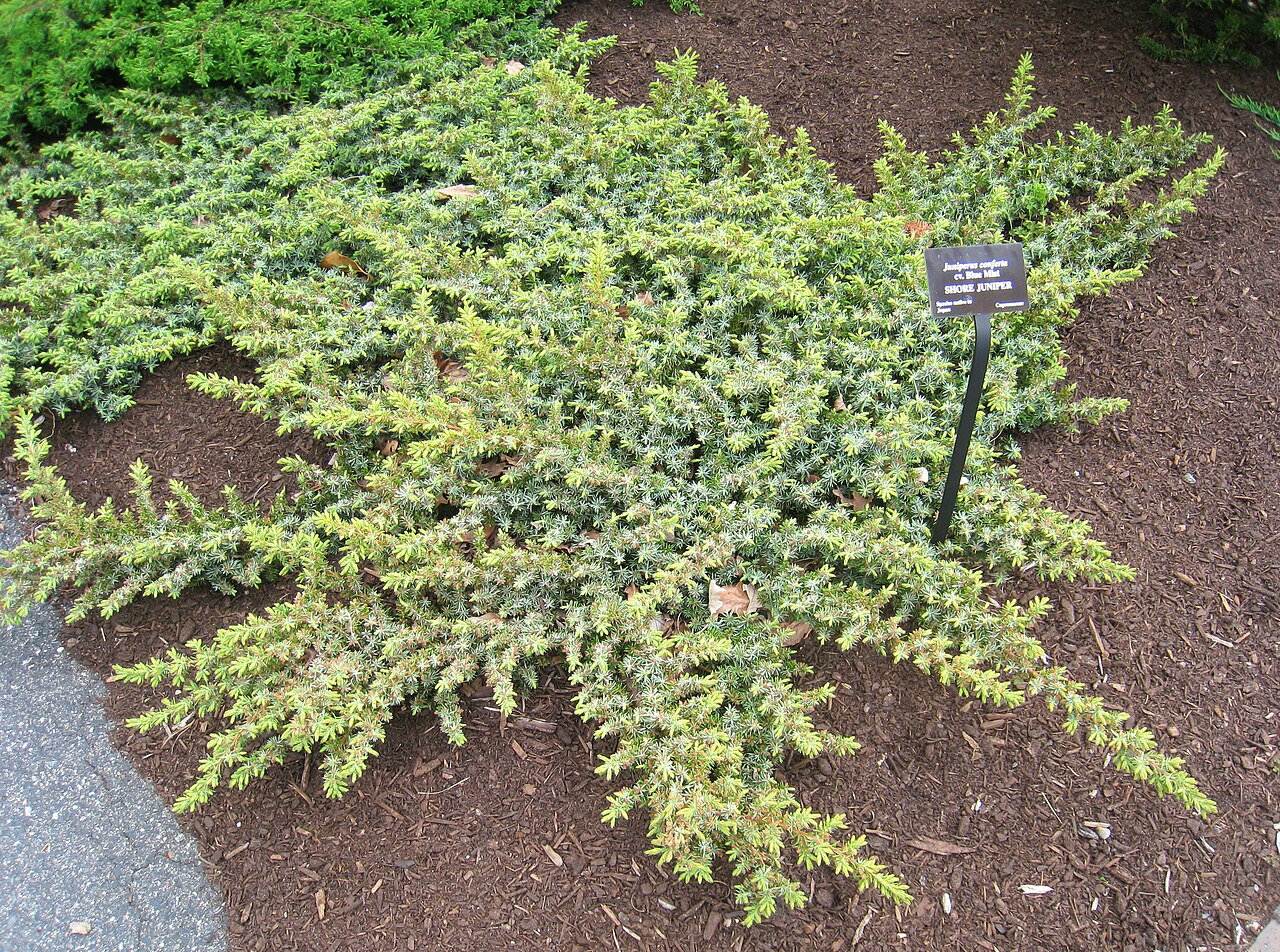
Quick facts
- Sun: Full sun
- Soil: Well-drained, sandy soil; tolerates poor, salty, coastal soils
- Spacing: 4–6 feet apart; it spreads widely over time
- Mature size: Typically 12–18 inches tall, spreading 6–8 feet or more wide
- Zones: USDA zones 5–9 (often listed 6–9)
- Florida: North Florida and coastal trial — its salt and sand tolerance are genuine Florida assets, but humidity and drainage still rule; see the honest Florida note below
What it is
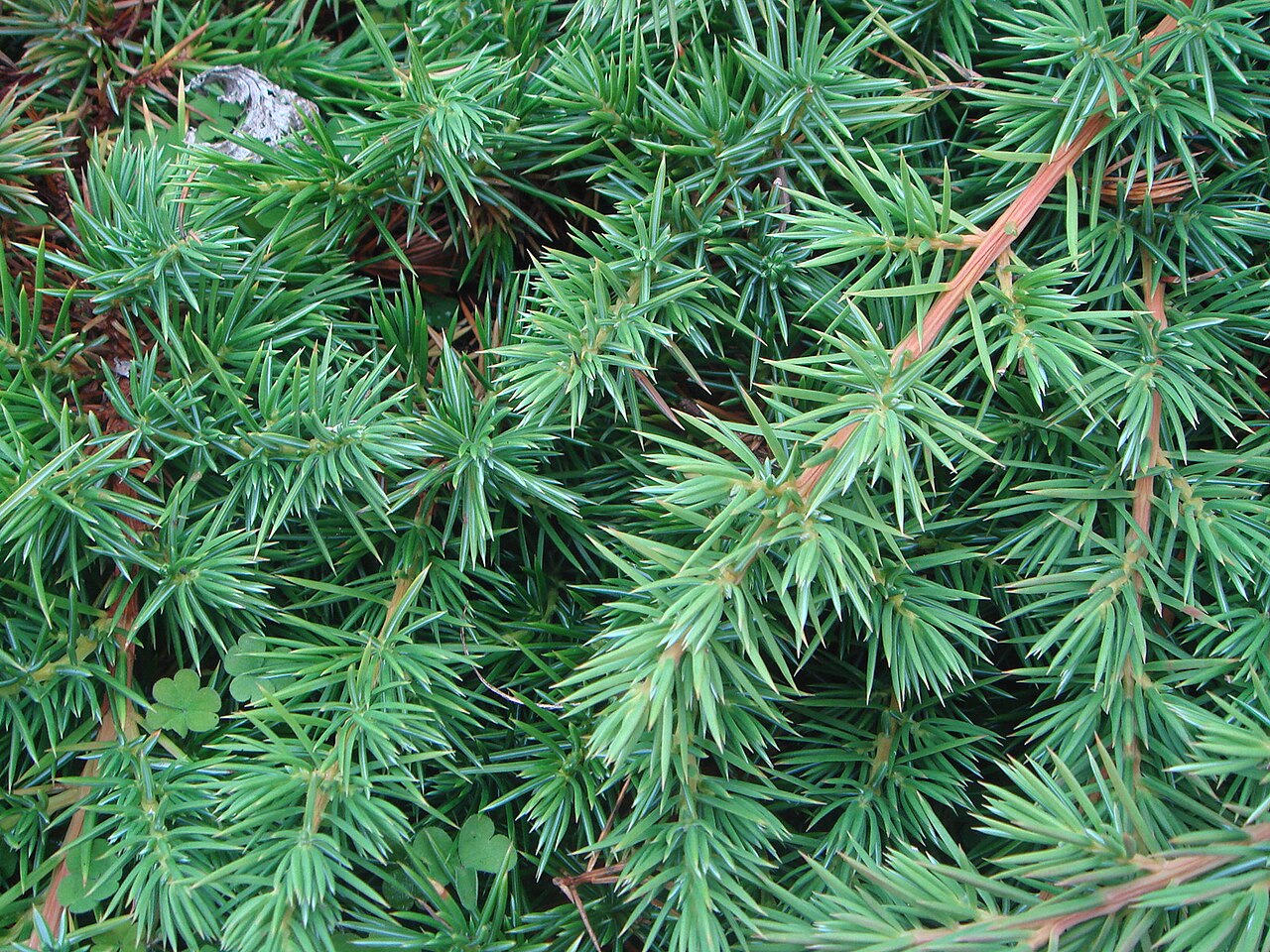
Shore juniper is the juniper that grew up on a beach and never left. Juniperus conferta is a dense, low-growing, spreading evergreen conifer native to the sea coasts of Japan and Sakhalin Island, where it grows on sand dunes, in salt wind, in poor sandy soil, and in conditions that would send most garden plants into a sulk. Its awl-shaped needles — sharp to the touch, about half an inch long — carry a distinctive blue-green cast, and its branches spread wide and low, rooting and layering into a thick, weed-suppressing mat.
A taxonomy footnote for the nerds: some references treat this plant as a variety or subspecies of Juniperus rigida (as J. rigida subsp. conferta), while most garden and extension references use Juniperus conferta as the species name. Both names point at the same dune plant; this guide uses J. conferta, the name nurseries and extension services most commonly sell and list it under. The specific epithet conferta comes from the Latin for “crowded” or “pressed together,” a nod to its dense foliage.
In gardens it is one of the best spreading junipers for warmer regions — extension references in the American South have called it the best spreading juniper for southern gardens — precisely because it tolerates heat, salt, wind, and sand better than its northern cousins. The most common nursery form is ‘Blue Pacific,’ a low, blue-foliaged selection that has been in the trade since the late 1960s.
How to grow
Plant in spring or autumn in full sun, in the sandiest, best-drained soil you have — or make it sandy. Shore juniper wants what the dunes gave it: sun, drainage, air movement, and lean soil. In heavy clay, raise the planting area or amend heavily with coarse sand and grit; in a coastal garden, it will happily take salt spray that burns other evergreens. Water to establish, then water sparingly: like creeping juniper, it declines faster from overwatering than from drought.
Space plants generously — 4 to 6 feet apart at least — because a mature plant spreads 6 to 8 feet or more, and crowding it invites the fungal problems junipers get in humid air. Pruning is minimal: remove dead wood and let it spread. Do not shear it into a mound; its beauty is in the low, flowing, dune-like mat, and shearing destroys the texture that makes it worth planting.
Water & feeding
Water during the first season, then back off sharply. Established shore juniper is drought-tolerant and salt-tolerant, and it needs no regular feeding — in fact, rich soil and frequent fertilizer produce soft growth that is more disease-prone. If you feed at all, a light spring application of a balanced, slow-release fertilizer in genuinely poor soil is the limit.
Common problems
As with other junipers, fungal blights and bagworms are the watch list, and the prevention is the same: sun, drainage, airflow, and no wet foliage overnight. Its sharp needles are a handling note, not a disease — wear gloves when working around it. Deer generally avoid it, and its salt tolerance is a genuine advantage, not marketing copy.
Seasonal interest
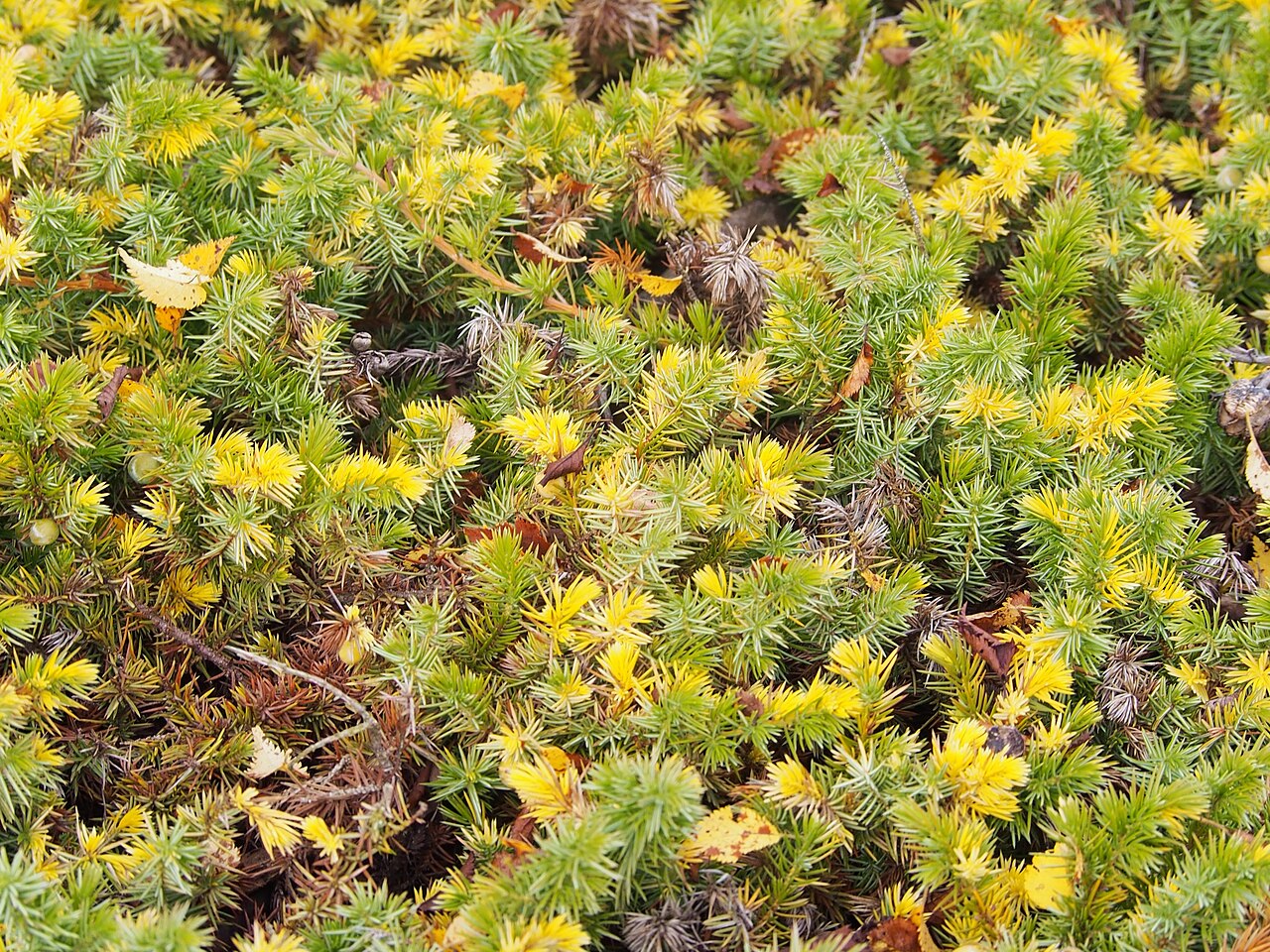
Evergreen, year-round, with blue-green foliage that holds its color better through winter than many junipers. It will not give you flowers or autumn color drama; it gives you a living, salt-proof carpet in a place where little else evergreen will grow, and that is a more useful gift in a coastal garden.
The honest Florida note
Shore juniper is the juniper in this set with the most honest Florida case — and it is still a trial, not a promise. Its dune origin gives it real assets for Florida: salt tolerance, sand tolerance, heat tolerance better than northern junipers, and a zone range reaching zone 9. A north Florida coastal garden with sandy, sharply drained soil, full sun, and good airflow is a reasonable place to try it, and it is a better juniper bet for Florida than its creeping cousin. But Florida’s humidity still brings fungal pressure that a Japanese dune never did, so drainage, spacing, and no overhead watering remain the rules. Central and south Florida should treat it as an experiment with modest expectations, and every Florida gardener should plant it for its groundcover toughness, not for a guaranteed evergreen lawn.
Nerdy fact: e juniper was introduced to the United States in 1915 by plant explorer E. H. Wilson, who collected plants across East Asia for Western gardens. It spent decades as a connoisseur’s plant before ‘Blue Pacific’ made it a mainstream groundcover — a century-long journey from a Japanese sand dune to a suburban slope, which is a respectable career for a shrub that never stands up.
Where it fits in the Living Root guides
This plant is also covered in our survey guide to the wider group — see Juniper: Growing Guide for how it compares with its relatives. Browse all the plant guides in the Plant Guides index.
Saving seeds
Juniper seed is a patience test, because it has double dormancy: it wants a warm spell and then a cold spell before it will even think about sprouting. Give the seed two to three months warm and moist, then two to three months cold and moist — the ranges vary by source, and some seed still waits a second year. The easy route is to sow in fall outdoors and let two winters do the work for you. Germination, when it comes, can take one to two years, so sow more than you need and do not give up on the tray.
Collect the blue-black berries when they are fully ripe — juniper berries take two seasons to ripen, so the berries you pick in fall formed the year before. Clean the pulp off the seed, because pulp inhibits germination, and sow fresh. Seed stored dry loses viability faster than seed sown right away.
Cuttings are the practical route for named cultivars — Blue Pacific, Blue Rug, and the rest come only from cuttings, never from seed. Seed is for the species itself and for the patient gardener. A seedling will be a shore juniper, but it will not be a named form.
In Florida, shore juniper is a coastal groundcover for zones 6 to 9, salt-tolerant and happiest in sharp drainage and full sun. In Florida it is a north and central plant; give it sand, sun, and room to run, and it will hold a slope or a dune edge the way only a juniper can.
Varieties
Every named variety of Shore Juniper with its own growing guide:
- Blue Pacific Shore Juniper — The heat-tolerant shore carpet: blue-green needles on the trade's favorite shore juniper.
- Emerald Sea Shore Juniper — The cold-hardy green mat: dense emerald needles with superior salt tolerance.
- Silver Mist Shore Juniper — The silvery carpet: silver-blue-green needles that stand out among evergreens.