
🌿 Short’s Aster
What it looks like
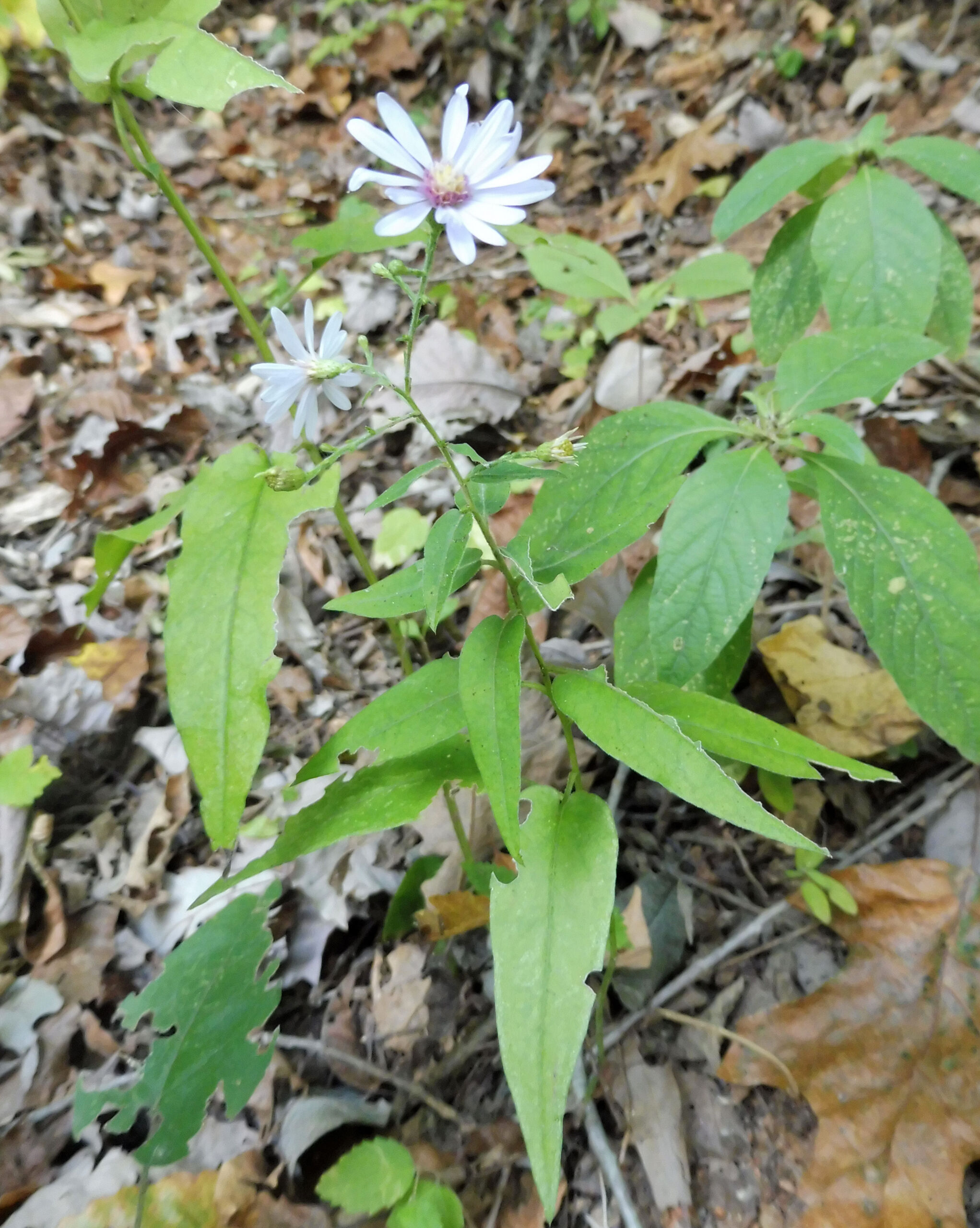
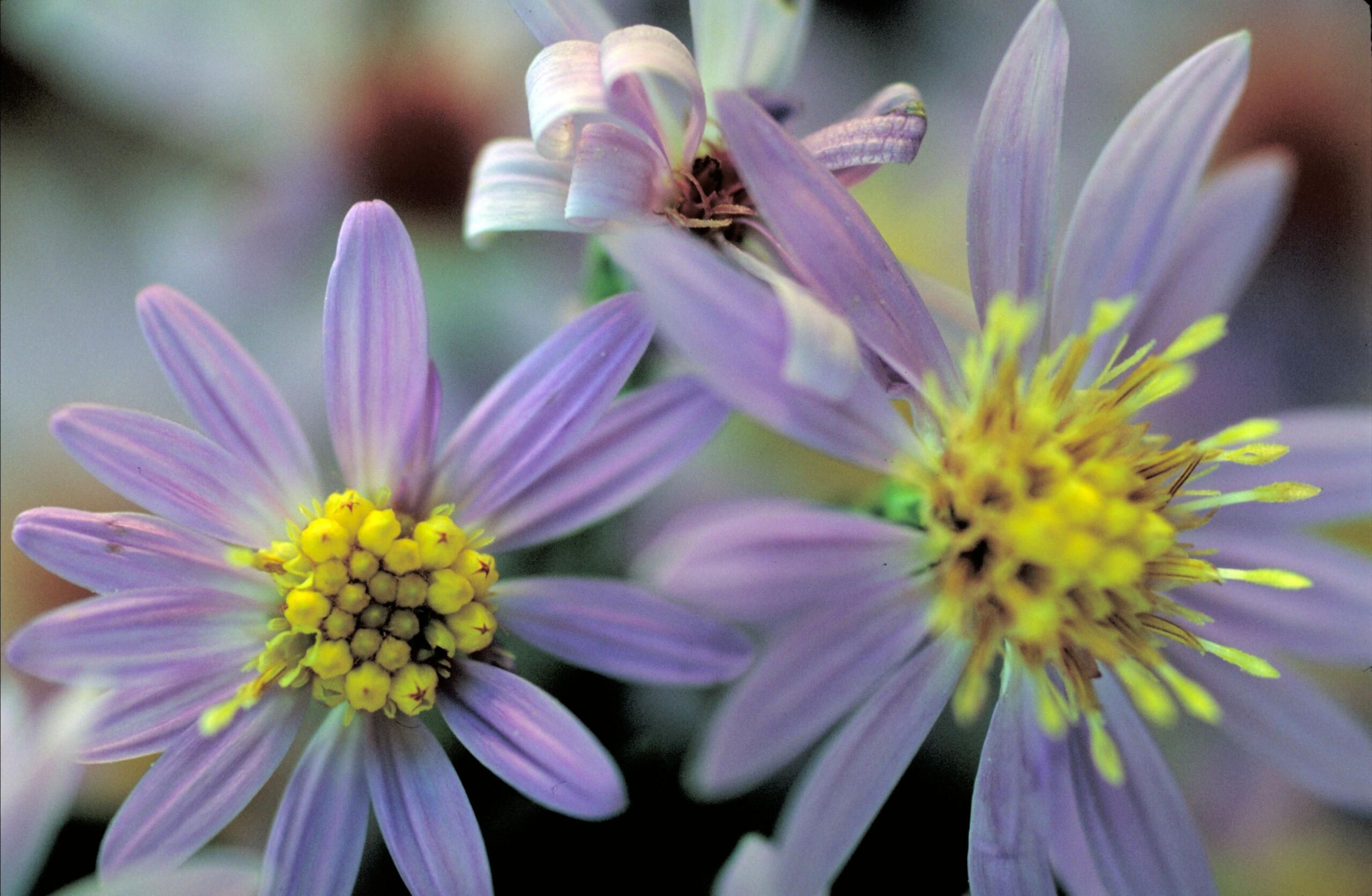
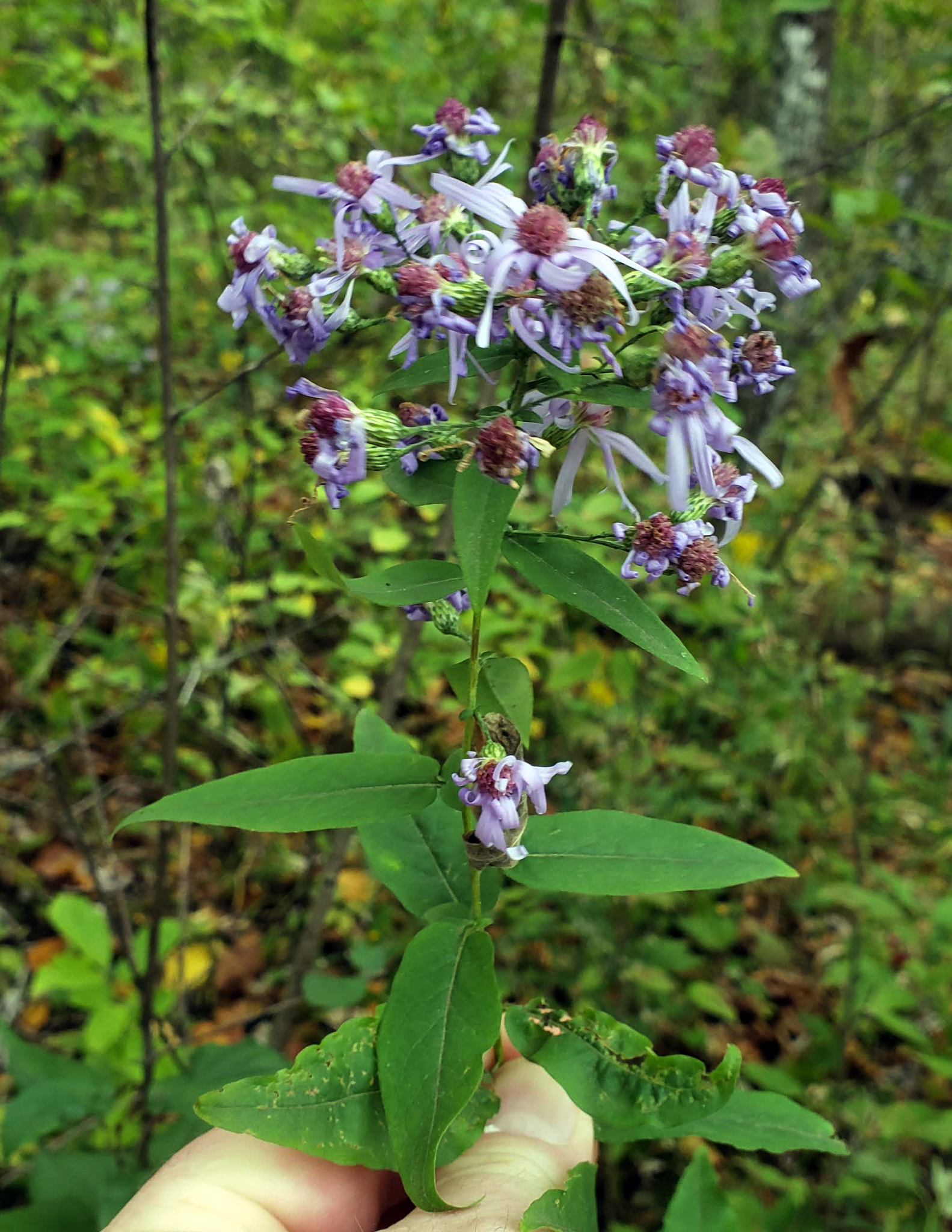
Short’s aster is a perennial, usually one to five feet tall, growing in loose clumps from short rhizomes or a woody base. The stems stand upright, smooth near the bottom and finely hairy toward the top. The leaves are thin with a slightly rough edge, and the lower ones are the giveaway: their bases are usually deeply heart-shaped, like a valentine with a point, on stalks that can be one to two times as long as the blade. The flowers open from August into October, and they are the reason the plant has fans across the eastern United States — thirteen to fifteen (sometimes up to twenty) ray florets, usually blue or purple-blue, rarely pinkish or white, each about half an inch long, around a center of disc florets that start light yellow and age reddish purple. That color change is the plant talking to pollinators: yellow means “fresh nectar here,” purple means “already visited, move along.”
The species name honors Charles Wilkins Short (1794–1863), a Kentucky doctor and botanist who catalogued his state’s plants and built a herbarium of more than 15,000 specimens. John Lindley formally described the plant in 1834, and it spent a century and a half as Aster shortii before DNA work moved the New World asters into Symphyotrichum. An older synonym, Aster camptosorus, is a clue to the leaves: botanist John Small thought the lower leaves resembled the walking fern, whose old name was Camptosorus.
How to tell it apart from its cousins
Short’s aster is the Florida aster you identify by its leaf bases, not its flowers. Plenty of asters make blue-purple daisies; only this one, in Florida, pairs them with basal leaves that are usually deeply heart-shaped at the base and lower stem leaves with heart-shaped, rounded, or squared-off (truncate) bases. That is the distinction Franck’s 2025 Flora of Florida key uses, and it is the one to check in the field.
- Wavyleaf aster (Symphyotrichum undulatum). Its leaves are also winged-stalked, but the wings widen abruptly at strongly ear-like, clasping stalk bases. Short’s aster’s leaf stalks are narrowly winged and the wings do not widen at the base.
- Smooth blue aster (Symphyotrichum laeve var. concinnum). Its leaf faces are smooth and hairless, and its basal leaf bases are only shallowly heart-shaped, rounded, or tapering — never the deep heart shape of Short’s aster.
- White arrowleaf aster (Symphyotrichum urophyllum). Its rays are white to pale pink, where Short’s aster is usually blue to purple-blue.
- Late purple aster (Symphyotrichum patens). Its leaves are stalkless with strongly heart-shaped, clasping bases that broaden just before the stalk. Short’s aster’s lower leaves are stalked, not stalkless-clasping.
- Azure aster (Symphyotrichum oolentangiense). Its leaf faces are rough and strongly bristly-hairy. It has no verified Florida record in Franck’s flora, so if your “Short’s aster” has sandpapery leaves, re-check the ID — and the county.
When in doubt, photograph the lowest leaves. The flowers will tempt you to guess; the leaf bases will tell you the truth.
Where it grows in Florida
Here is the whole Florida story, and it is short: Short’s aster grows in the Panhandle only, in Gadsden and Jackson counties, and nowhere else in the state. The Atlas of Florida Plants lists it as native, and the Flora of the Southeastern United States gives the same two counties. It was first found in Florida in Gadsden County, during surveys of the Apalachicola River bluffs in the early 1980s, and was thought to occur only there until a Jackson County population was documented in a limestone glade northwest of Marianna in 2005.
Its Florida habitat is specific enough to be a place, not just a soil type: upland glades. These are small, largely herbaceous openings — a fraction of an acre to about two acres — in otherwise forested country, sitting on thin soils over limestone on steep ground. The Gadsden County glades cluster around Chattahoochee, on the Chattahoochee Formation limestone; the Jackson County glades cluster northwest of Marianna, on Marianna Limestone. The plant grows on dry, rocky slopes, rock outcrops in wooded situations, and calcareous hammocks — always on the lime, always on thin soil, always where the ground drains fast. Across its whole range it is a plant of open, thin, rocky, well-drained soils in oak-hickory woods, woodland edges, thickets, and wooded stream banks and cliffs. In Florida it is a plant of the glade edge, and it is rare here: the Flora of North America notes the species is of conservation concern along the whole periphery of its range.
What that means for a Florida gardener is simple. Unless you garden in Gadsden or Jackson County on limestone ground, you will not meet this plant in the wild, and you should not try to. It is not a plant to dig, transplant, or collect — it is a plant to visit, photograph, and leave exactly where it is.
Grow it or leave it
Leave it — with one narrow exception. Short’s aster is a wildflower of intact limestone glades, not a garden plant, and no Florida nursery trade in it is documented. There are no published Florida garden trials to lean on, so the guidance below is habitat mimicry, not a tested recipe, and it applies only if you already garden on suitable ground in its two counties.
If that is you: give it part shade, thin rocky calcareous soil that drains fast, and nothing else. No fertilizer — this is a plant that evolved on soils other plants consider starvation rations, and rich soil grows floppy stems. No irrigation once established, and no mulch piled against the crown. It spreads slowly by short rhizomes and by seed, and it will not compete with aggressive groundcovers. Do not dig plants from glades or roadsides: besides being poor manners toward a rare-in-Florida plant, a dug-up aster almost never survives the move, because what you are really digging is a relationship with a particular patch of limestone.
For everyone else in Florida, the honest move is to grow one of the state’s widespread native asters instead — the ones that actually want your yard — and let Short’s aster keep its two counties.
Pollinators & wildlife
Short’s aster blooms late — August into October — which is exactly when the pollinator year is running on fumes. Its blue-purple rays and yellow-to-purple disc florets feed bees, butterflies, and other late-season insects, and its open flower heads are the right size for small native bees and syrphid flies. Asters as a group are caterpillar host plants for the Pearl Crescent butterfly, whose caterpillars feed on Symphyotrichum foliage, and a late aster patch is also a fuel stop for migrating monarchs passing through the Panhandle in fall. The seed heads that follow feed small birds, and the standing stems shelter overwintering insects — the usual aster bargain, delivered at the exact moment the garden needs it most.
Varieties
No varieties of Short’s aster are recognized. The Flora of North America notes two color forms — a rose-pink form (forma gronemannii) and a white form (forma candidus) — but explicitly does not recognize them as taxa: they are color variants of the normal blue or purple-blue plant, not separate varieties. There are no named garden varieties of the wild species, and none is claimed here. Where Short’s aster meets heartleaf aster (Symphyotrichum cordifolium) farther north, the two can hybridize as Symphyotrichum × finkii — but heartleaf aster has no Florida record, so that hybrid is not a Florida concern.
Frequently asked questions
Is Short’s aster native to Florida?
Yes — but only just. It is native to the eastern United States, and in Florida it occurs only in Gadsden and Jackson counties in the Panhandle, on limestone glades. The Atlas of Florida Plants lists it as native.
Why is it called Short’s aster?
It honors Charles Wilkins Short (1794–1863), a Kentucky physician and botanist who wrote an early catalogue of Kentucky’s plants. John Lindley named it Aster shortii in 1834; the genus later became Symphyotrichum.
How do I identify it for certain?
Look at the lowest leaves, not the flowers. The basal leaf bases are usually deeply heart-shaped, and the lower stem-leaf bases are heart-shaped, rounded, or squared-off. Blue-purple rays plus deep heart-shaped leaf bases is the combination. Photograph the leaf bases — that is the character the flora key uses.
What is the difference between Short’s aster and wavyleaf aster?
Wavyleaf aster’s leaf stalks have wings that widen abruptly at strongly ear-like, clasping bases. Short’s aster’s stalks are narrowly winged and the wings do not widen at the base.
Can I grow it in my Florida garden?
Only if you garden on thin, rocky, calcareous soil in part shade in Gadsden or Jackson County — its actual habitat. Everywhere else in Florida, grow a widespread native aster instead. Never dig wild plants.
Is it rare?
In Florida, yes — two counties, on scattered limestone glades, and the Flora of North America flags the species as a conservation concern at the edges of its range. Across its whole range it is commoner, but it is usually restricted to intact natural communities.
When does it bloom?
August through October, late in the aster season. That late bloom is part of its value: it feeds pollinators after most summer flowers are finished.
What pollinators use it?
Late-season bees, butterflies, and syrphid flies work the flowers, and asters as a group host Pearl Crescent caterpillars. The disc florets change from yellow to reddish purple after pollination, steering visitors toward the fresh flowers.
Does it spread?
Slowly, by short rhizomes and by seed. It forms loose clumps rather than aggressive colonies — one more reason it loses ground when its glade habitat is disturbed.
Where can I see it?
On upland limestone glades in Gadsden County (around Chattahoochee) and Jackson County (northwest of Marianna), at the edges of wooded slopes and outcrops. Go to look, take photos, and leave the plants standing.
Keep learning 🌱
Where to go next: