
🌱 Taro
What it looks like

How to grow
Taro is a tropical aroid grown for starchy corms (the underground stems) and, where properly cooked, for leaves used like spinach — and it comes with a rule that matters: taro must be cooked. Raw taro contains calcium oxalate crystals that irritate mouth and throat, and cooking destroys them completely. This is a crop to cook thoroughly, every time, no exceptions.
Plant corm pieces or ‘huli’ (the top of a corm with a bit of leaf stalk) in spring after frost, in rich, moisture-holding soil — taro loves water and tolerates wet ground that would drown most vegetables, including the edge of a pond or a boggy bed. In cooler zones, start indoors in large pots and transplant after frost, or grow in containers brought indoors for winter.
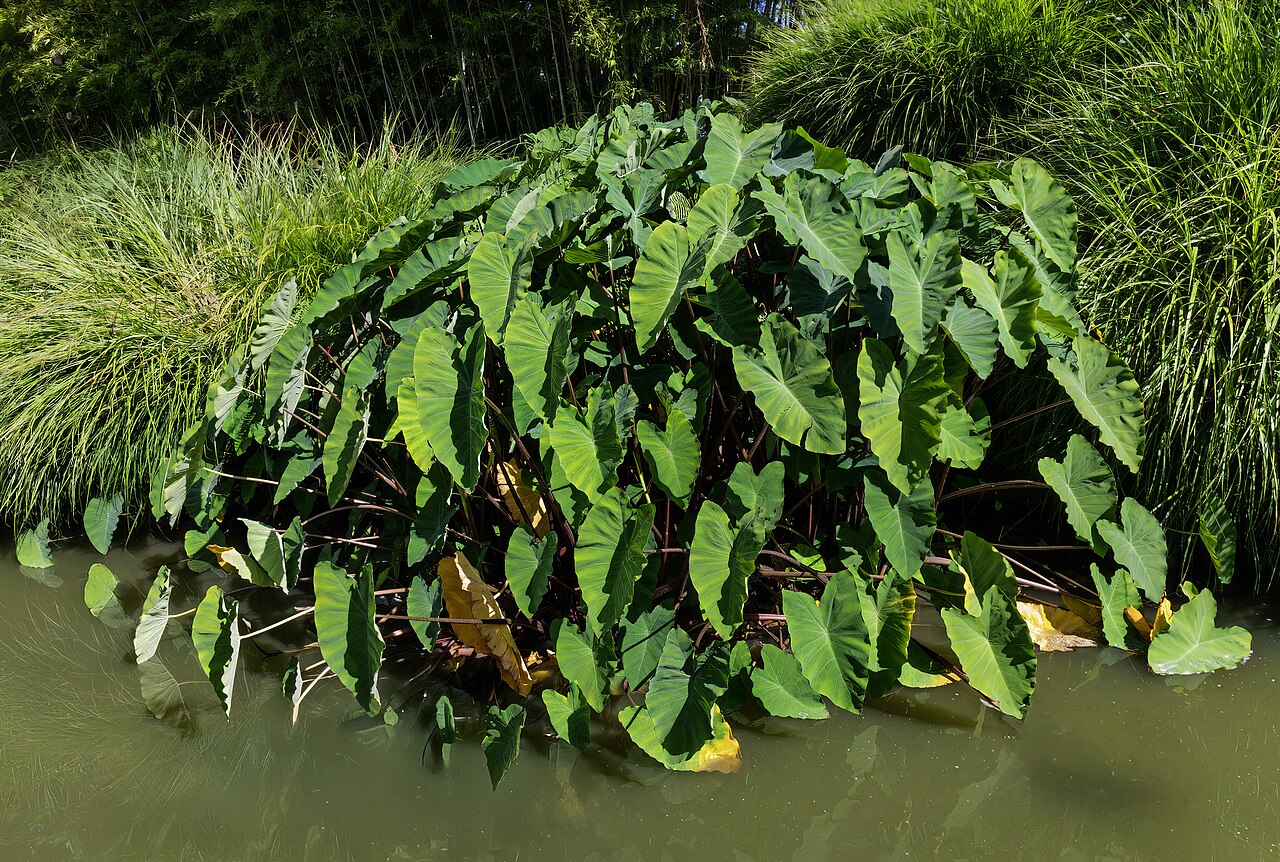
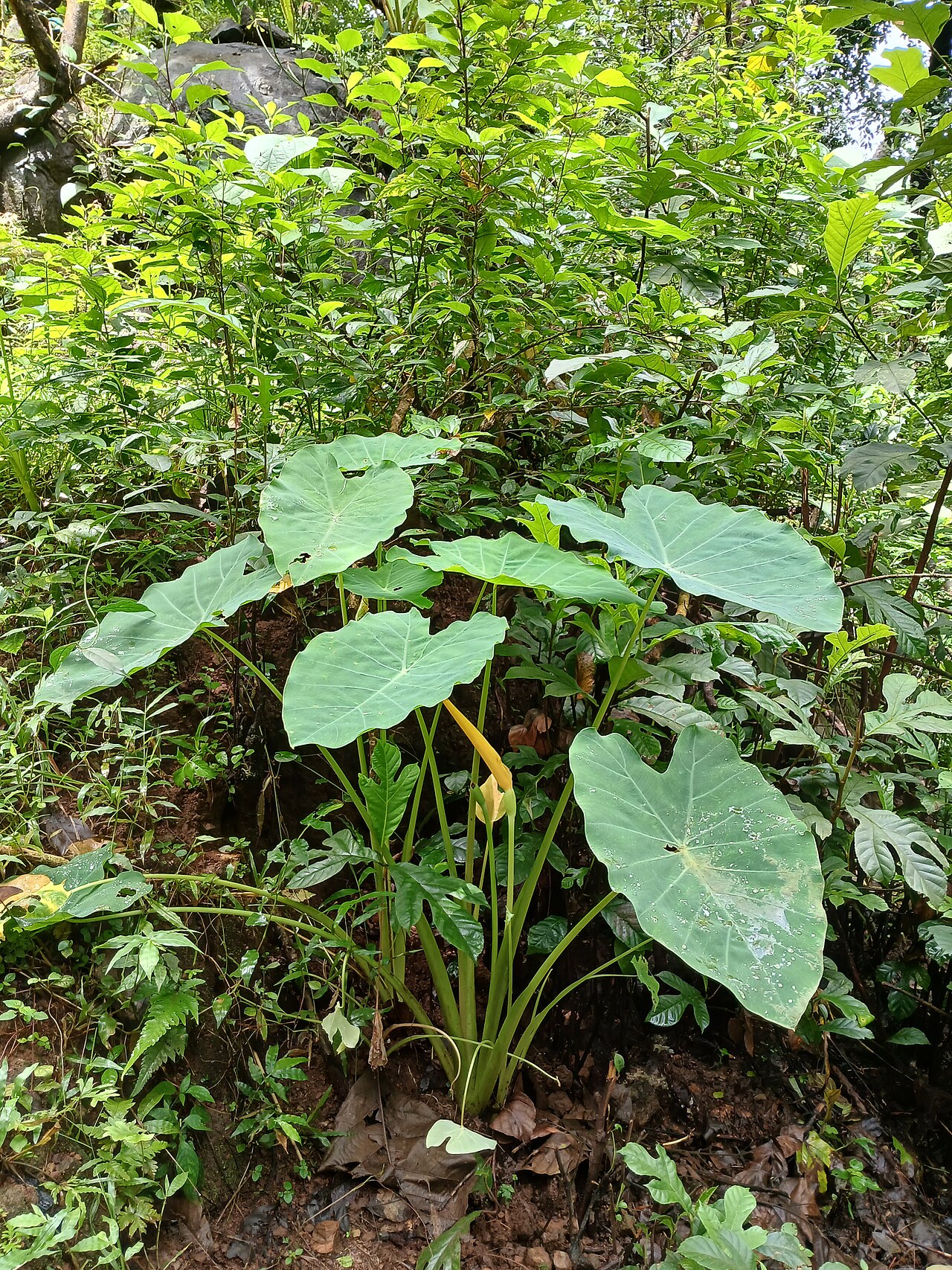
Plants grow slowly at first, then explode into huge, elephant-ear leaves in summer heat. Side corms (cormels) form around the main corm and are the usual eating size. In warm zones, plants are perennial and can be left to multiply; in cool zones, lift corms before frost like dahlias.
Water & feeding
Lots — taro is a water plant at heart. Keep soil consistently moist or even wet; drought stunts plants and shrinks corms. Work worm castings generously into the bed at planting and side-dress through the season; castings carry a low burn risk and add the organic matter that holds moisture in the root zone. Mulch thickly.
Common problems
- Small corms: short season, drought, or crowding — give taro the longest, wettest, warmest spot you have.
- Taro leaf blight (large leaf spots) in humid weather: remove affected leaves, improve airflow, and choose resistant varieties where blight is common.
- Aphids and spider mites on leaves: blast with water; plants usually outgrow minor damage.
- Frost kill: lift corms before frost in cool zones and store cool and barely moist, like dahlias.
Harvest
Dig when leaves yellow and die back, 7–12 months after planting — patience is the harvest skill. Lift the whole clump, keep the best corms for replanting, and cook the rest thoroughly: boil, steam, roast, or fry until completely tender. Young leaves (not old, tough ones) can be cooked like greens, but only after long cooking — never eat taro raw, leaves or corm.
Browse all plant & pest guides
Propagation
The honest headline: taro is not grown from seed. It flowers and sets seed in the wild, but in cultivation it is propagated entirely by corms — the starchy underground stems — because seed does not come true, germinates poorly, and takes years to become a corm worth eating. There is no seed to save, and no reason to try.
To propagate, lift the corms in fall or winter, save the best ones — the plumpest, the best-storing, the ones that grew well in your soil — and replant them in spring once the soil is warm. Each corm makes side corms, or cormels, and each cormel is a clone of the parent. A single corm gives you a whole patch, and a patch gives you a whole harvest.
Plant corms in spring in full sun and rich, moist soil, about a foot apart, and keep them watered — taro is a wetland plant and wants wet feet. Harvest in fall or winter, before the first frost, and cure the corms in a warm, dry place for a week or two so they store.
And a caution that matters in Florida: wild taro is a Category I invasive in Florida wetlands, escaping from gardens into marshes and ditches where it forms dense stands. Never plant taro near a wetland, a ditch, or a waterway, and never dump corms or cuttings where they can wash away. Grow it in a contained bed, harvest it all, and keep it out of the wild.
Varieties
Every named variety of Taro with its own growing guide:
- Bun Long Taro — The classic Chinese taro — elongated corms, light purple flesh, and the table taro for soups, stir-fries, and chips.
- Maui Lehua Taro — The famous poi taro — reddish-purple corms, the standard for poi, and the most widely grown taro of its home islands.
- Lehua Maoli Taro — The original poi taro — an old, red-fleshed taro, the parent of Maui Lehua and a staple for generations.
- Dasheen Taro — The Caribbean table taro — oval corms, nutty flavor, and the taro for stews, callaloo, and mashing.
- Eddoe Taro — The small-corm taro: many clementine-sized cormels instead of one giant corm — hardier, easier, and perfect for soups and roasting.
- Elepaio Taro — The mottled-leaf poi taro: green-and-white splashed leaves, white corms, and good gray poi — a Hawaiian native with a bird’s name.