
🌳 Walnut
What it looks like
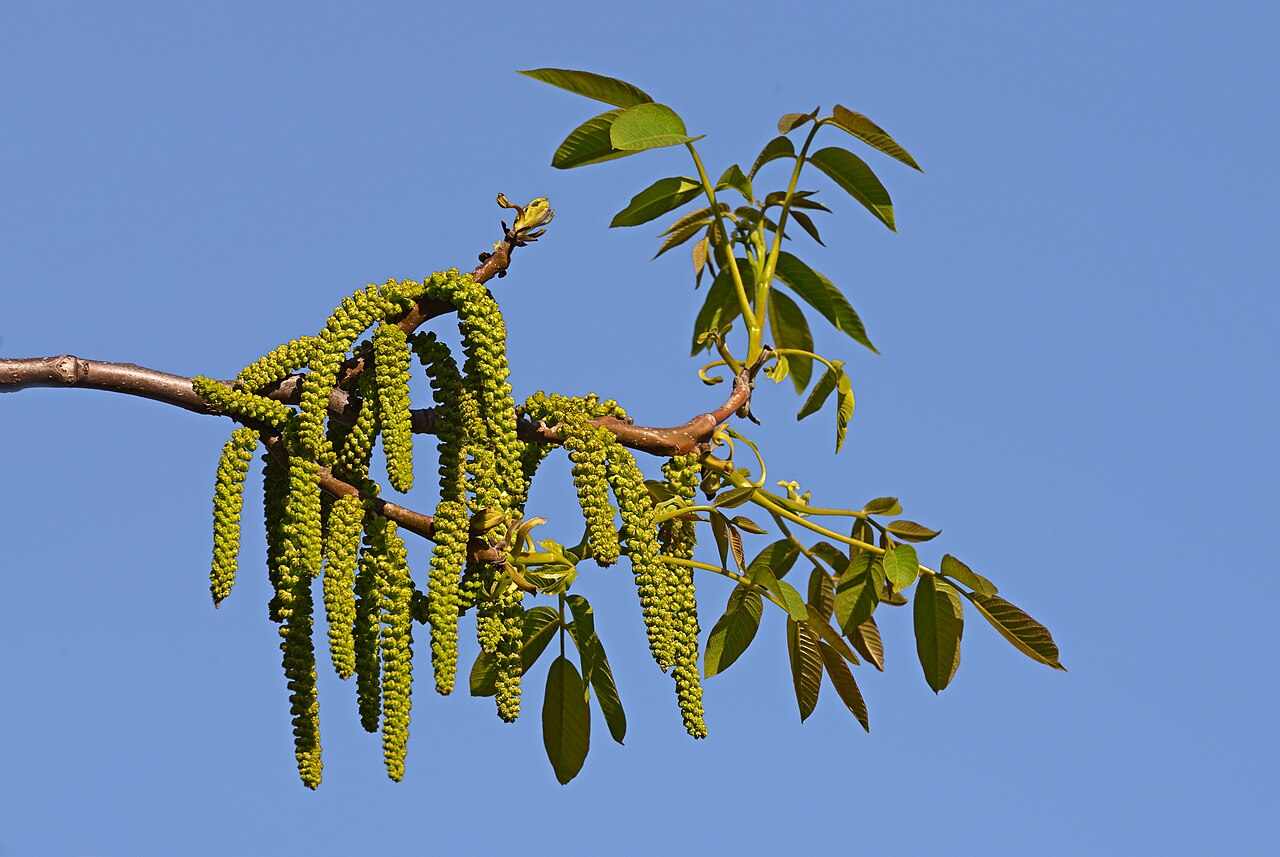
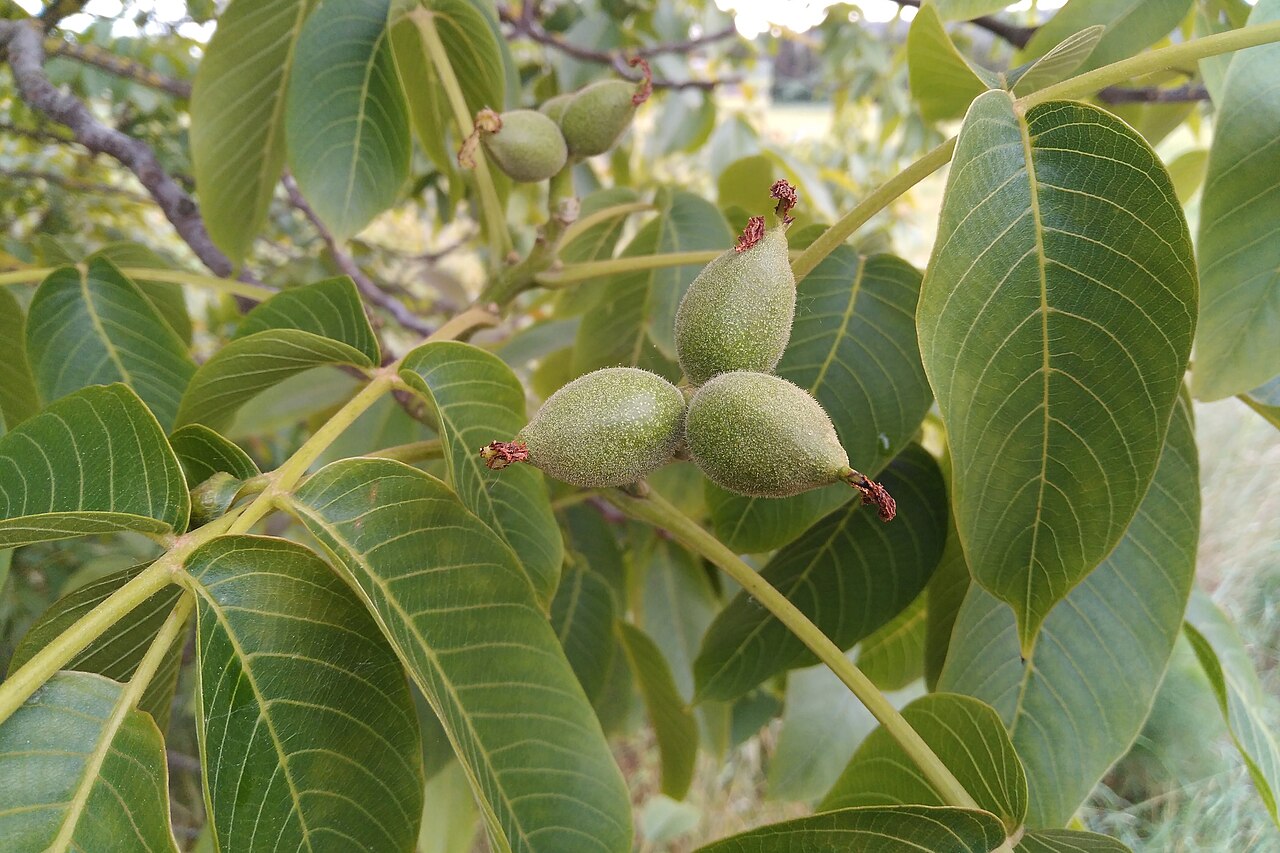
How to grow
Two walnuts matter to home growers. English (Persian) walnut (Juglans regia) is the grocery-store walnut: thinner shell, easy to crack, grafted cultivars like ‘Chandler’ and ‘Hartley’ for orchards. Black walnut (Juglans nigra) is the North American native: a massive timber and shade tree with intensely flavored nuts in famously hard shells. Both are large deciduous trees — black walnut can reach 75–100 feet tall and wide — so plant grafted trees in deep, fertile, well-drained soil and give them the space of a small house lot, not a garden bed.
Plant in late winter or early spring while dormant, with the graft union above soil level. Walnuts are wind-pollinated and mostly self-fertile, though a second variety improves set. Prune in fall or late summer, since spring pruning makes walnuts bleed sap heavily. And read the juglone warning below before you choose a spot — it decides everything else.
USDA zones
Black walnut is hardy in zones 4–9; English walnut is less cold-hardy and best in zones 5–9. Both need a real winter chill and a long growing season. In Florida, walnuts are a poor bet: the peninsula lacks the chill and adds heat and humidity the trees dislike, so this is a guide for gardeners north of Florida, not a Florida recommendation.
Water & feeding
Keep soil evenly moist, especially during nut fill in summer — drought then means small, poorly filled nuts. Mulch widely (not against the trunk) and feed annually with compost spread to the dripline. A top-dress of worm castings in spring suits walnuts well, since they prefer steady, gentle fertility over heavy fertilizer.
Common problems
- Juglone toxicity — walnut roots, leaves, and husks release juglone, which sickens or kills many nearby plants, including tomatoes, peppers, potatoes, blueberries, azaleas, and peonies. The affected zone can extend 50–60 feet from a mature black walnut. Do not plant a vegetable garden under or near one; use juglone-tolerant plants there instead.
- Walnut blight and anthracnose — wet springs bring leaf and nut spots. Choose resistant cultivars and clean up fallen leaves and husks to reduce overwintering disease.
- Staining husks — green husks stain skin, clothes, and concrete black-brown. Wear gloves for harvest and husk over a surface you do not care about.
Harvest
Nuts ripen in fall: harvest when green husks begin to split, or gather fallen nuts promptly before squirrels and mold get them. Husk wearing gloves, wash the nuts, and dry them thoroughly in a warm, airy spot for several weeks before storing — damp walnuts mold fast. Crack black walnuts with a heavy-duty cracker or a vise; English walnuts yield to an ordinary nutcracker.
Browse all plant & pest guides
Saving seeds
Walnut seed needs winter. Give the nuts a cold, moist chill — two to three months is the common figure — by burying them in damp sand in a pot and leaving it outside for winter, or by mixing them with damp sand in a bag and refrigerating them. Sow in spring, a few inches deep, in deep pots, and germination usually comes in a few weeks after chilling. Without the cold, the nuts sit there and do nothing.
Save nuts from the best tree — the biggest nuts, the thinnest shells, the healthiest canopy — and clean the husks off before stratifying, because husks inhibit germination and stain everything they touch. Wear gloves: the husk juice dyes skin brown for weeks. Sow more than you need, since germination is uneven, and give the seedlings deep pots — walnuts grow a taproot fast, and they resent being moved once it is established.
Seedlings will vary, and the named cultivars — the thin-shelled, big-kerneled walnuts you actually want to eat — come only from grafting. Seed is for rootstocks, for timber, and for the patient gardener. A seed-grown walnut takes ten years or more to bear, so this is the long game.
And the juglone warning: walnut roots and leaves release juglone, which stunts or kills many garden plants — tomatoes, peppers, and potatoes are especially sensitive. Do not plant a walnut over your vegetable bed, and do not compost walnut leaves into the garden without knowing what they will do to it.
Varieties
Every named variety of Walnut with its own growing guide:
- Chandler Walnut — The English walnut that orchards plant: thin-shelled, easy to crack, productive, and the grocery-store walnut grown at home.
- Hartley Walnut — The classic English walnut of California orchards: large, thin-shelled, light-kernelled nuts on a late-leafing tree that dodges spring frost.
- Thomas Walnut — The old black walnut standard: thin-shelled for a black walnut, with kernels that crack out in big, bold-flavored halves.