
🌼 Bulbine
What it looks like
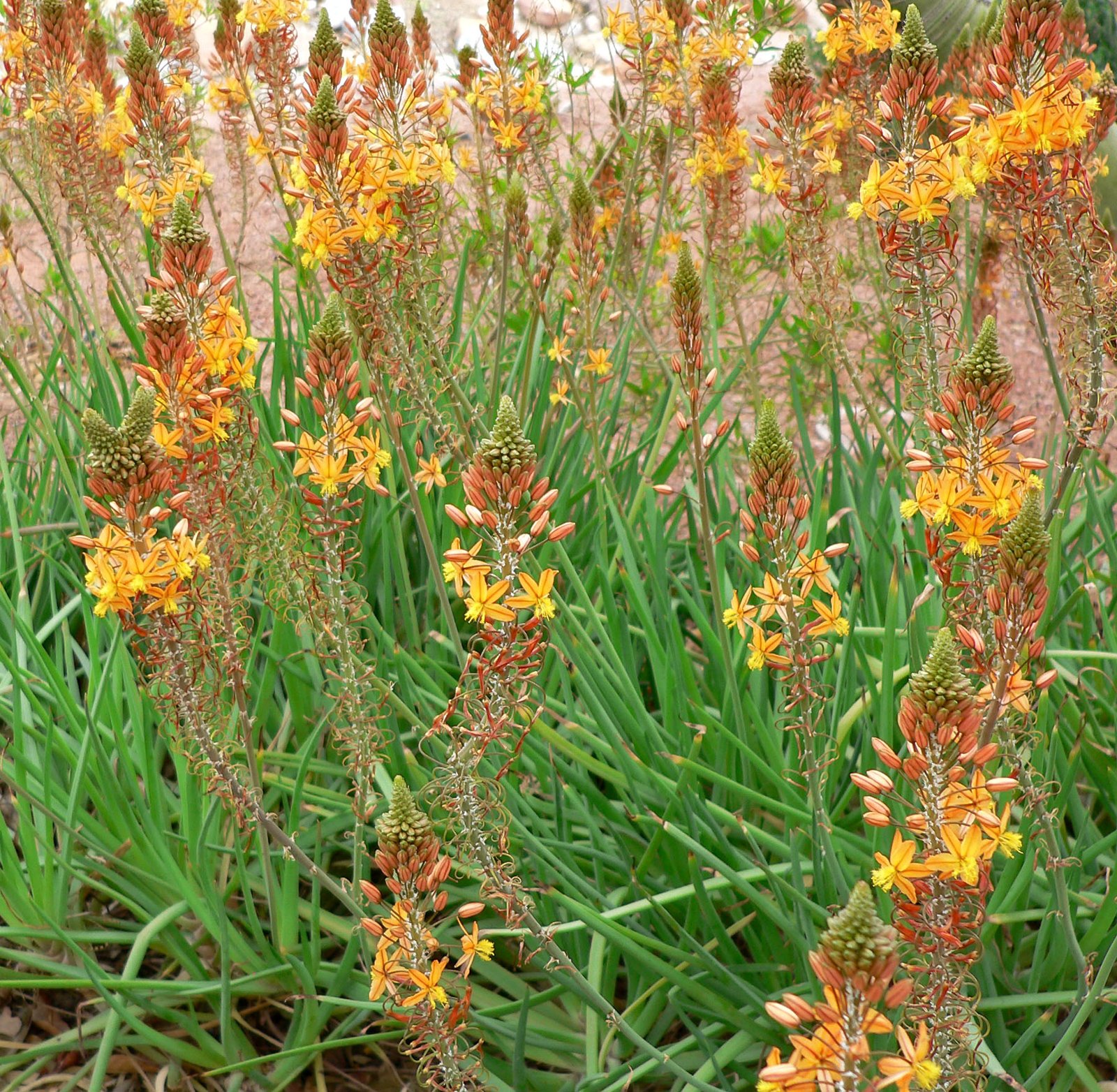
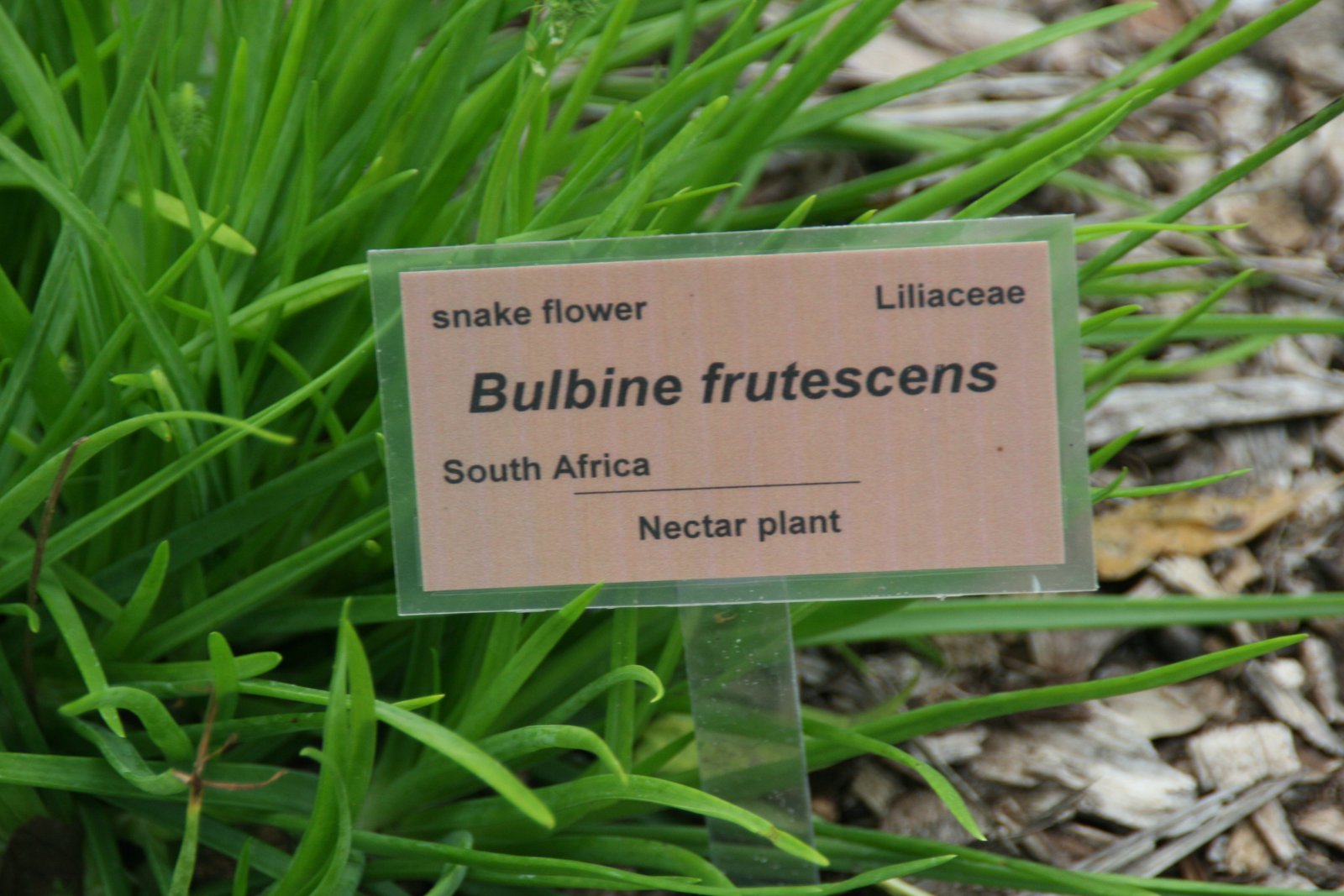
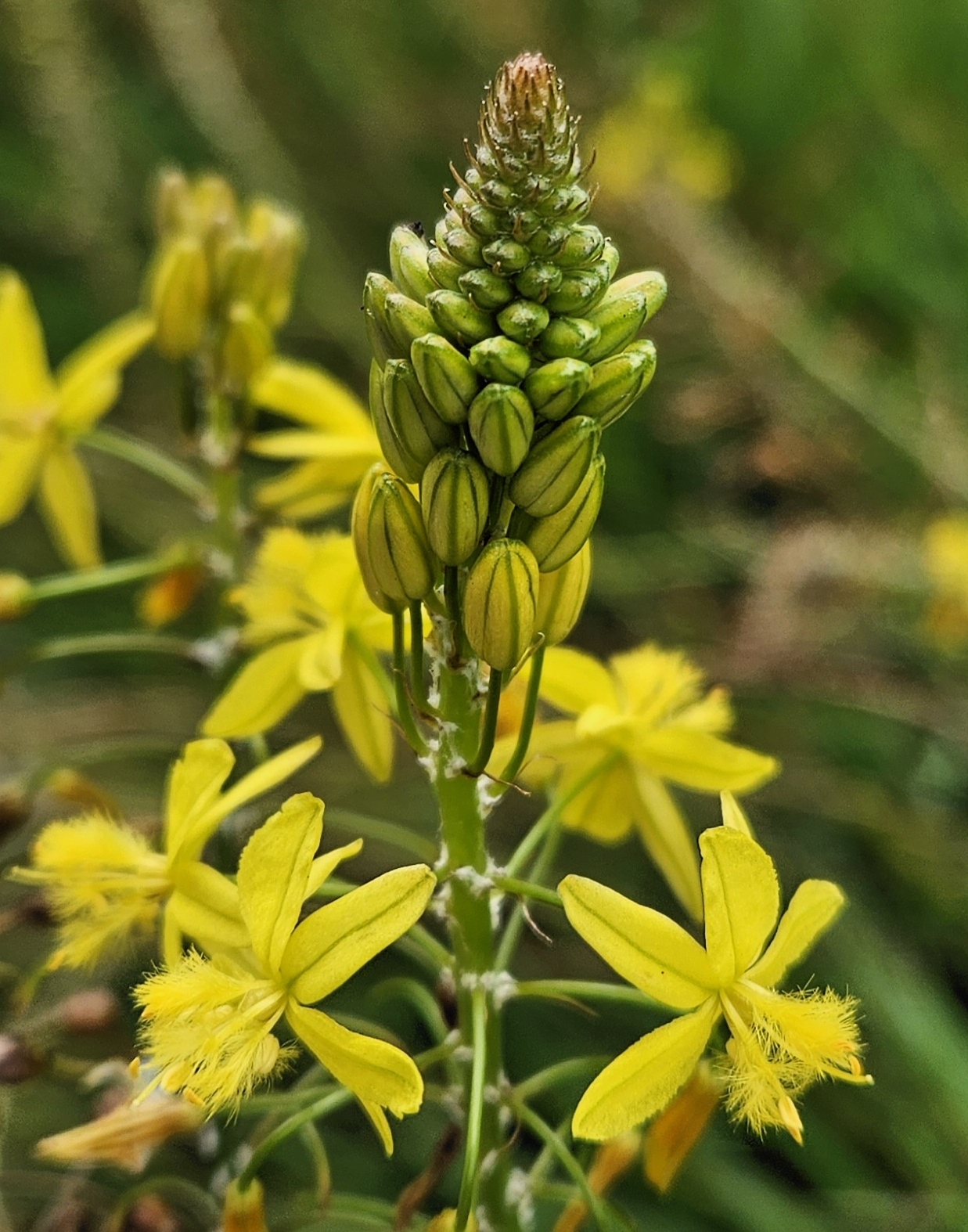
Bulbine looks like a clump of green fountain grass that got ambitious. Narrow, fleshy, finger-like leaves arch out from a central crown, and from spring through fall — nearly year-round in warm Florida — tall, wiry stalks rise above the leaves carrying clusters of small star-shaped flowers in yellow or orange. The flowers open a few at a time along each spike, so a single clump can be in bloom for months, and bees visit them constantly. It is one of those plants that makes a garden look tended even when nobody has done anything to it in weeks.
It comes from the dry grasslands and rocky slopes of South Africa, which tells you most of what you need to know: it wants sun, drainage, and benign neglect. It is a succulent, storing water in those fleshy leaves, and it belongs to the Asphodelaceae family — making it a close cousin of aloe vera, which explains why its leaves hold a similar clear, jelly-like sap. A mature clump reaches about 30–45 cm (12–18 in) tall and spreads to 60 cm (2 ft) wide or more, slowly widening into a colony of rosettes.
Two forms are commonly sold: the yellow-flowered type and the orange-flowered type, sometimes labelled ‘Hallmark’ for the orange one. They grow identically, so pick the colour you like — or plant both and let them argue it out in the border.
🌴 Florida notes — read this first: Bulbine is not really a houseplant, and this guide will not pretend it is. In Florida it grows outdoors year-round, in the ground or in pots on a sunny porch, patio, or balcony. Indoors it stretches toward the window, goes pale and leggy, and stops flowering, because no windowsill matches the South African sun it evolved under. Give it real sky. If you only have indoor space, bulbine is the wrong plant — and that is fine, because Florida gives most of us the outdoor space it wants.
Light: as much sun as Florida can offer
Full sun is non-negotiable. Six or more hours of direct sun a day keeps bulbine compact, upright, and flowering. In part shade it survives but sulks: fewer flowers, floppier leaves, and a looser clump that flops open in the middle. A south- or west-facing bed, a sunny porch, or the bright edge of a patio is ideal. The one exception is a brand-new transplant in high summer, which appreciates a week of afternoon shade while its roots settle — after that, throw it to the sun and let it work.
Florida’s summer sun is strong enough to scorch some succulents, but bulbine takes it in stride once established. If leaves look bleached or papery after a move from a shady nursery to a sunny bed, that is transplant sun-stress, not a permanent condition; shade it for a few days and the new growth will come in properly coloured.
Water & feeding: drought-tough, not drought-proof
Water a new plant regularly for the first few weeks until it is rooted, then back off sharply. An established bulbine in the ground usually needs no watering at all except in a real drought — Florida rain covers it. In a pot, water deeply when the soil is dry an inch or two down, then let it dry again; in summer that might be weekly, in winter far less. The leaves tell you when it is thirsty: they go slightly dull and less plump. A day after watering, they firm up again. That is the whole diagnostic system, and it works.
Overwatering is the only way most people kill bulbine. Soggy soil rots the crown, and crown rot in a clumping succulent spreads fast. If your bulbine sits in a low spot that puddles after rain, move it or mound it up. Never water on a schedule; water on the soil.
Feeding is almost optional. A thin top-dressing of worm castings in spring is plenty, and many growers feed nothing at all. Heavy fertilizer makes soft, floppy growth that flops and rots, which is the opposite of what you want from a plant whose entire charm is toughness. Skip the fertilizer in winter entirely.
🌴 Florida notes: Our summer rain is the main watering variable. A bulbine in a pot on an open patio can get rained on daily for weeks, which is too much even for a drought plant — keep pots where they drain fast, use a gritty mix, and never let a saucer hold water under the pot. In the ground, plant on a slight mound or in a raised bed if your soil is the heavy, grey, water-holding kind. Bulbine in a sandy Florida yard, on the other hand, is about as close to its native habitat as a garden plant gets.
Soil & pot: drainage, drainage, drainage
Bulbine wants lean, gritty, fast-draining soil. Florida’s sandy soil suits it well as long as the spot does not hold water; if your soil is heavy, mix in coarse sand, perlite, or fine gravel, or plant in a raised bed. A bagged cactus and succulent mix works straight from the bag in pots, and a handful of worm castings mixed in at planting gives the roots a gentle start without making the soil rich and soggy.
For pots, terracotta is the best friend of every succulent: it breathes and pulls moisture out of the mix. The pot must have drainage holes, and it should be wide rather than deep, since bulbine spreads sideways into a clump. Repotting is rarely needed — a clump that outgrows its pot is usually divided instead (see propagation), which gives you free plants and a rejuvenated mother clump in one job.
Common problems
Mushy leaves at the base, or a clump that collapses. Crown or root rot from wet soil. Dig up the plant, cut away every mushy part with a clean knife, let the healthy divisions dry for a day, and replant in grittier, drier soil. Prevention is the whole cure: drainage first, watering second.
No flowers. Almost always not enough sun, or a plant too young to bother. Move it to full sun and give it a season. A bulbine in shade will make leaves forever and flowers never.
Leggy, pale, stretched growth. Also light — usually a plant kept indoors or under a deep porch roof. Move it into real sun gradually over a week so it does not scorch, and the new growth will come in tight.
Snails and slugs. Florida’s damp-season regulars will chew the fleshy leaves, especially on young plants. Hand-pick them in the evening, keep mulch pulled back from the crown, and remember that a plant in full sun with dry soil is a much less attractive slug buffet than one in damp shade.
Frost damage. Bulbine is damaged by frost below about 28–32°F, with leaves turning mushy and translucent after a freeze. See the Florida notes below — this is the one real weather worry.
A note on the sap: Bulbine leaves hold a clear jelly that is traditionally used on skin in its native South Africa, much like aloe gel. Traditional use is not the same as tested medicine, so treat it as interesting plant lore, not a first-aid recommendation, and do not ingest any part of the plant.
🌴 Florida notes: Cold snaps are bulbine’s one Florida weakness. In zones 9b and warmer it usually comes through winter untouched; in north Florida, a hard freeze will knock the top growth back. Potted plants are the easiest to protect — move them under cover or against a warm wall on freeze nights. In-ground plants can be covered with frost cloth, and even a frozen-looking clump often resprouts from the base in spring, so do not dig it up in January; wait until March, cut away the mush, and watch for new rosettes.
Propagation: divide the clump, or snip a stem
Bulbine is generous about making more of itself, and division is the easiest way to get new plants that are identical to the parent. A mature clump is really a colony of rosettes joined at the base, and each rosette with roots is a new plant waiting to happen.
Division (the best method): In spring, dig up the clump — or tip it out of its pot — and gently pull or cut it into sections, each with several rosettes and some roots. A clean knife cut through the crown is fine; bulbine is not precious about it. Let the cut pieces sit in the shade for a day so the wounds dry, then replant each division in gritty mix or sandy soil, water once, and leave them alone. They usually root within a couple of weeks and flower the same year.
Stem cuttings: A fleshy stem section with a rosette at the tip will also root. Cut it cleanly, let the cut end callus for a day or two, then push it into gritty mix and water sparingly until new growth shows. This is handy when a clump has flopped and you want to tidy it — the trimmings become new plants instead of compost.
Seed: Bulbine sets seed readily after flowering, and it will self-sow lightly in a sunny bed. You can collect the small seed capsules once they dry and scatter them where you want more plants, but division is so easy that seed is mostly for the patient and the curious. Seedlings are variable and slow compared with a division that is already a small plant.
However you propagate it, the rule is the same as for growing it: dry the cut, gritty soil, bright sun, and no hovering with the watering can. Bulbine rewards neglect far more reliably than it rewards attention.
🌱 Keep learning
Three related guides worth reading next:
- Plants for Black Thumbs — Ten Florida-tough plants for beginners, ranked, for gardeners who want survivors, not divas.
- Habitat Gardening in Florida: One Tree, One Thicket — How sun-loving flowers like bulbine fit into a yard that feeds pollinators.
- Houseplant Guide — The general houseplant basics, for the plants that actually do belong on your windowsill.