
🍉 Watermelon
What it looks like
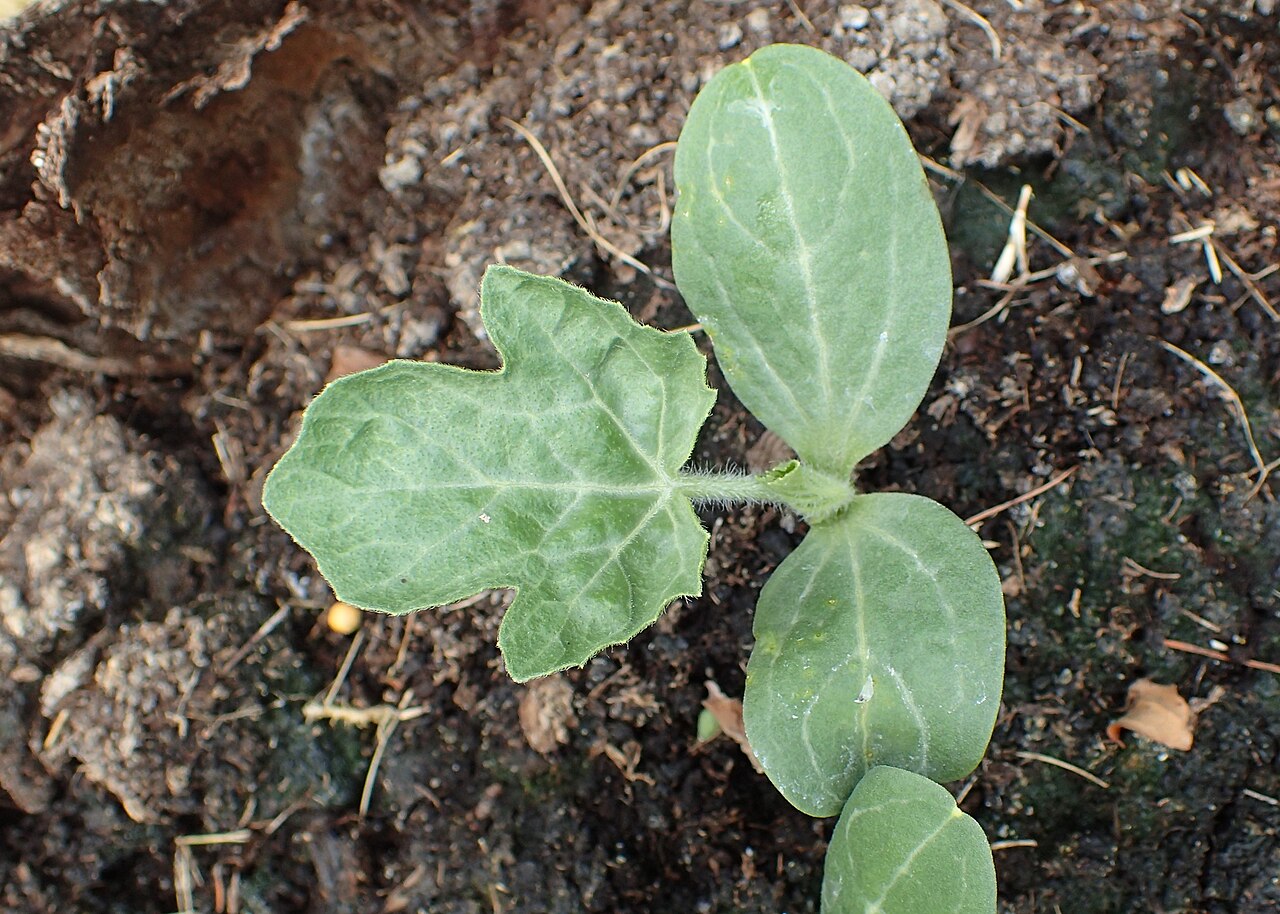
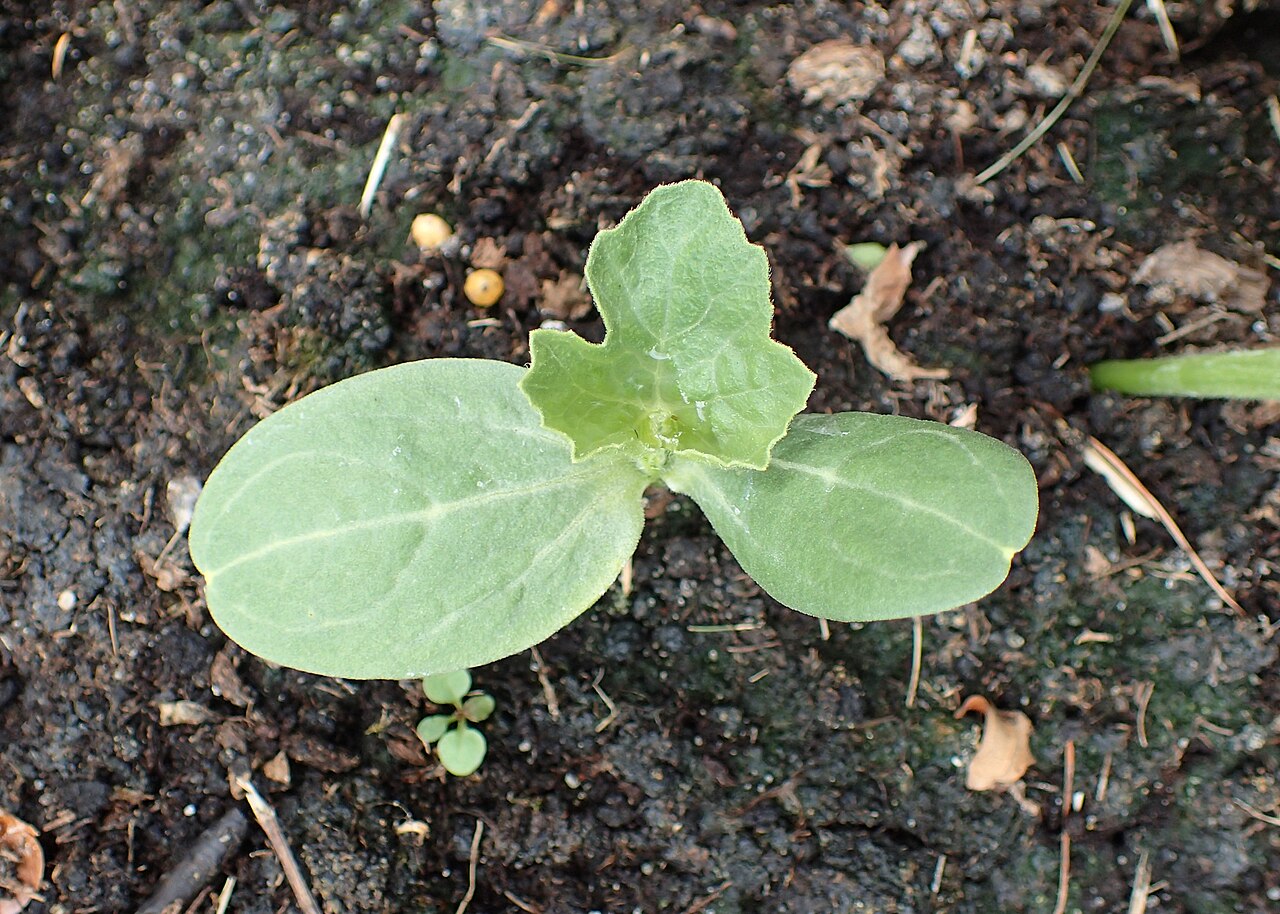
How to grow
Watermelon is not a melon in the cantaloupe sense — it is a different species from the melons in the existing guide, with its own sprawling habit and its own ripeness clues, so give it a guide (and a garden bed) of its own. Direct-sow after all frost danger, when soil is at least 70°F; watermelon seed sulks in cold soil and rotting seed is the usual cause of a blank hill.
Sow 1 inch deep, 3–4 seeds per hill, and thin to the 2 strongest plants. In short-season zones, start indoors 3–4 weeks before last frost in peat pots — watermelon roots resent disturbance — and choose an early variety (under 80 days) plus black plastic mulch to bank extra heat. In warm zones, direct sowing into warmed soil beats a leggy transplant every time.
Vines run 6–15 feet, so plan for sprawl or train them up a very sturdy trellis (fruit in slings if you go vertical). Bees do the pollination, and a watermelon flower that is not visited simply drops, so plant flowers nearby and skip row cover once bloom starts. One plant typically carries 2–4 good fruit; pinch off extra fruit late in the season so the plant finishes what it started.
Water & feeding
Deep, regular water — 1–2 inches a week — while vines grow and fruit sizes up, then taper off as fruit approaches ripeness, exactly as with other melons: heavy late watering dilutes sugars. Work worm castings into each hill at planting and side-dress at flowering; castings carry a low burn risk and feed steadily without the nitrogen surge that grows vines at the expense of fruit. Mulch heavily once soil is warm to hold moisture and keep fruit clean.
Common problems
- Poor fruit set: usually missing pollinators or cold nights — hand-pollinate morning flowers (male to female; females carry a tiny melon behind the petals) and be patient in cool weather.
- Cucumber beetles: row cover until flowering; they spread bacterial wilt, which has no cure once established.
- Blossom end rot (black, sunken blossom end): uneven watering interrupting calcium movement — mulch and water evenly rather than reaching for a calcium spray.
- Hollow heart or cracked fruit: sudden water after drought, or over-ripe fruit left on the vine — keep moisture even and harvest on time.
Harvest
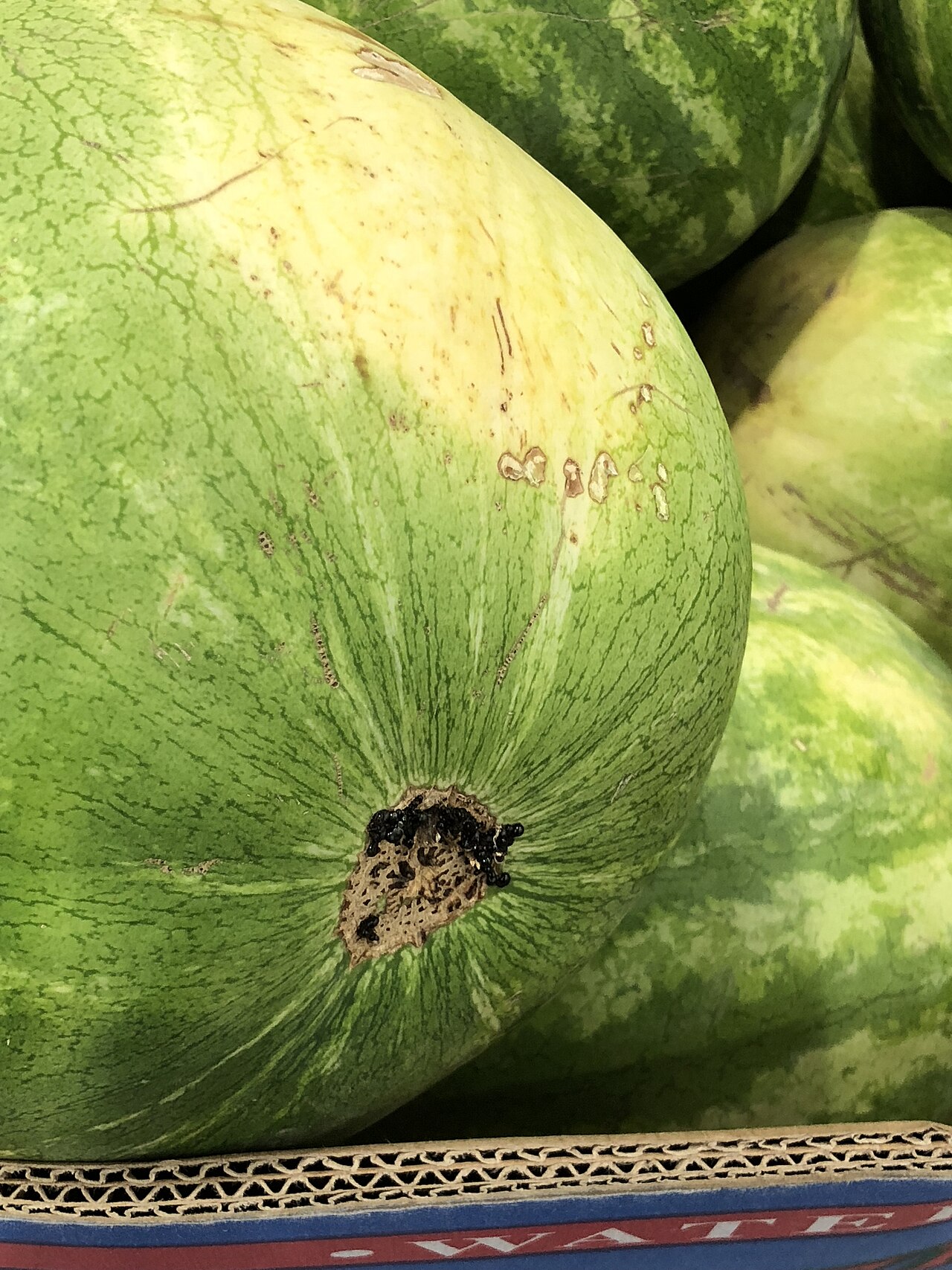
Thump, look, and check the tendril: a ripe watermelon sounds dull and hollow (not high-pitched), the underside spot where it sat on the ground has turned from white to creamy yellow, and the curly tendril nearest the fruit stem has dried and browned. Cut, don’t pull, the stem, and chill promptly. A watermelon picked early will not sweeten off the vine, so the patience test is real.
Browse all plant & pest guides
Saving seeds
Watermelon seed saving is gloriously simple, with one hard rule at the start: only seeded varieties produce viable seed. Seedless watermelons are bred to be sterile, and their pale, soft seed traces will never sprout, no matter how carefully you dry them. Save from a proper seeded variety and the rest is mostly scooping and patience.
Watermelons (Citrullus lanatus) are insect-pollinated and cross readily with other watermelon varieties, so purity takes a little planning. References often cite around a quarter mile of isolation for seed purity, and some go to a half mile — distances no home garden can offer. The practical home answers are the usual three: grow only one watermelon variety in a season for seed, hand-pollinate a bagged female flower the way you would for squash, or simply accept that next year’s melons may be a surprise blend. Note that watermelon will not cross with cucumbers or other melons — those are different species — so only other watermelons matter.
Pick a fully ripe fruit from a healthy, vigorous, true-to-type plant — not the runt of the patch and not a diseased vine. You want the usual ripeness signs: a creamy yellow ground spot where the melon sat, a tendril nearest the fruit dried and brown, a dull rather than shiny rind, and a deep hollow thump when you tap it. For seed, fully ripe or even slightly overripe is ideal; the seeds inside keep maturing as the fruit overripens.
Cut the melon open and scoop the seeds out of the flesh. Rinse them in a strainer under clean water, rubbing gently to remove pulp and sugars — a short soak in cool water loosens any stubborn bits. Unlike tomato or cucumber seed, watermelon seed has no gelatinous coat that needs fermenting off, so a good wash is all it takes. Discard any seeds that are pale, thin, or obviously immature; keep the plump, dark, fully formed ones. And do not save seed from a melon that sat rotting on damp ground — harvest promptly and rinse right away, since soil pathogens on a decaying rind are not something you want travelling into next year’s seed.
Spread the washed seed in a single layer on a screen or paper towel in a warm, dry spot out of direct sunlight, stirring daily so it dries evenly. Give it a good week or more — the seed should feel completely dry and hard, not cool or flexible, before it goes anywhere near a jar. Then store it labelled with variety and year in an airtight container with a desiccant packet, somewhere cool and dark.
Florida note: our humidity is the recurring villain of this whole series, and watermelon is no exception: if your drying spot is a humid garage, the seed will take longer and may reabsorb moisture overnight. Dry indoors with moving air, and be honest with the snap test before sealing the jar. Well-stored watermelon seed generally keeps for several years. And as with every crop, the variety rule holds: seed from an open-pollinated or heirloom variety grows true if it was not crossed, but seed from an F1 or hybrid will not.
Varieties
Every named variety of Watermelon with its own growing guide:
- Blacktail Mountain — The mountain-bred early melon: dark rind, sweet red flesh, and a 70-day season that laughs at short summers.
- Charleston Gray — The Southern heirloom: long, gray-green, incredibly sweet, and bred in South Carolina for exactly this climate.
- Crimson Sweet — The classic picnic melon: striped, 20-plus pounds, crisp, sweet, and the watermelon most people picture when they hear the word.
- Dixie Queen — The white-seeded heirloom: sweet, crisp, beautiful, and a Florida favorite since before air conditioning.
- Jubilee — The big one: oblong, striped, up to 40 pounds, and the melon that turns a garden into a neighborhood event.
- Sugar Baby — The icebox classic: small, round, dark green, and sweet enough to end arguments about which melon is best.
- Moon and Stars — The heirloom with constellations on its rind: dark green, yellow-spotted, sweet red flesh, and a story as good as the melon.
- Allsweet — The disease-resistant Southern classic: striped, sweet, and bred to keep producing where other melons quit.
- Yellow Doll — The early yellow icebox melon: small, fast, sweet, and golden inside — the melon for impatient gardeners and small gardens.
- Georgia Rattlesnake — The Southern heirloom with snake-skin stripes: long, oblong, 20- to 30-pound melons with sweet, crisp pink-red flesh — a Georgia classic since at least 1870.
- Congo — The USDA Southern classic: long, dark-green, 20- to 35-pound melons with sweet red flesh and anthracnose resistance — bred in Charleston for the Southeast.
- Kleckley Sweet — The 1897 Alabama legend: huge, oblong, thin-rinded melons with intensely sweet red flesh — the watermelon old-timers still measure all others against.
- Orangeglo — The orange-fleshed showstopper: oblong, striped melons with fiery orange, super-sweet, crisp flesh — the watermelon that makes guests ask what it is before they ask for a second slice.
- Tendersweet Orange — The big orange classic: light-green, dark-striped melons with deep orange, white-seeded flesh — a large, tender, old-fashioned watermelon for serious summer eating.
- Royal Sweet — The Allsweet-type workhorse: blocky-oval, light-green striped melons of 20 to 25 pounds with bright red, sweet flesh — a mid- to late-season standard for Southern gardens.
- Sangria — The gold-standard Allsweet hybrid: long, blocky-oval, dark-striped melons of 20 to 24 pounds with dark red flesh — the eating-quality benchmark for its class.
- Mickylee — The compact early watermelon: round, light-green, 8- to 12-pound melons with sweet red flesh — an early, fusarium-resistant icebox melon that fits smaller gardens.