
🌼 Honeysuckle
What it looks like
How to grow
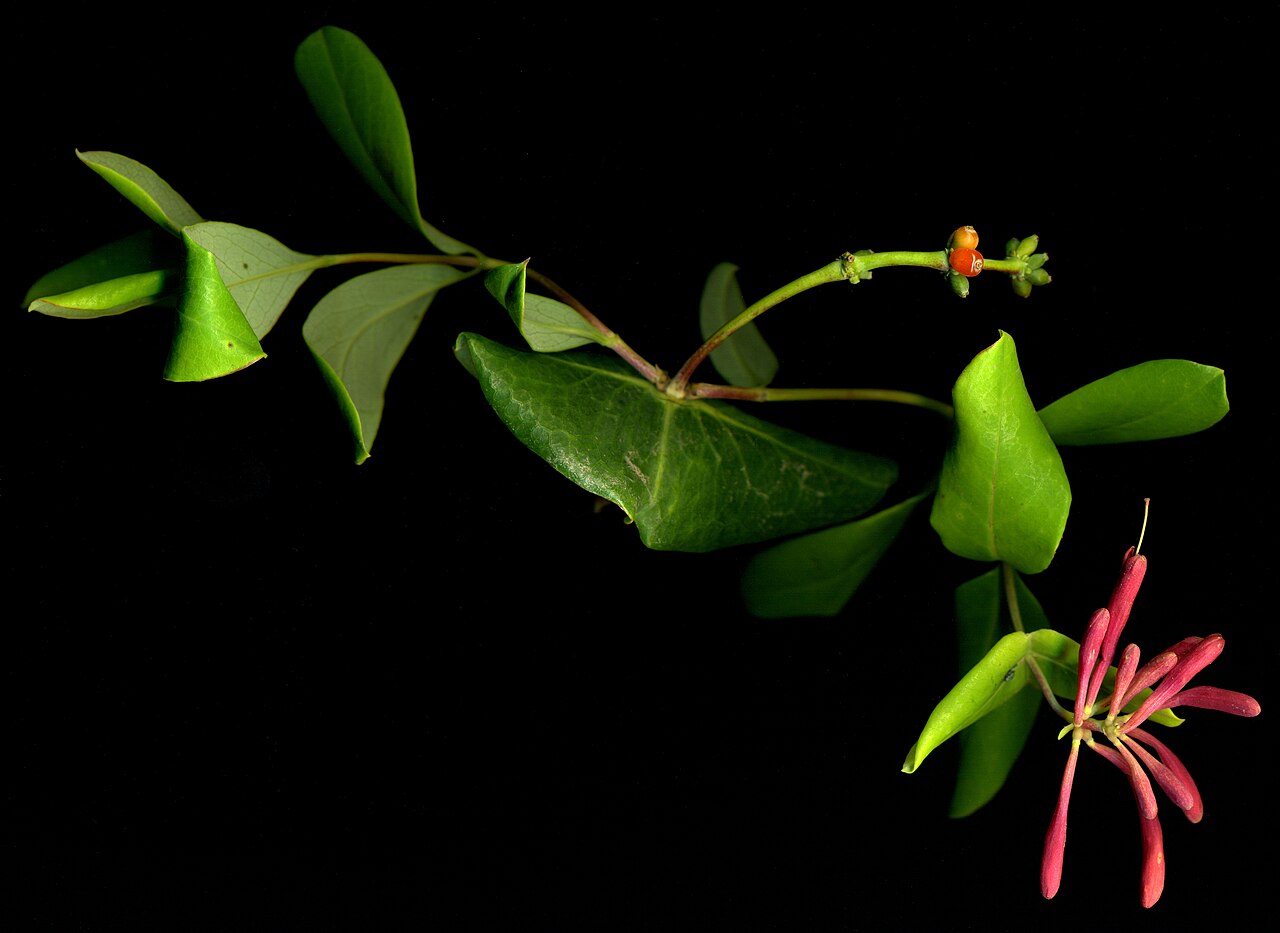
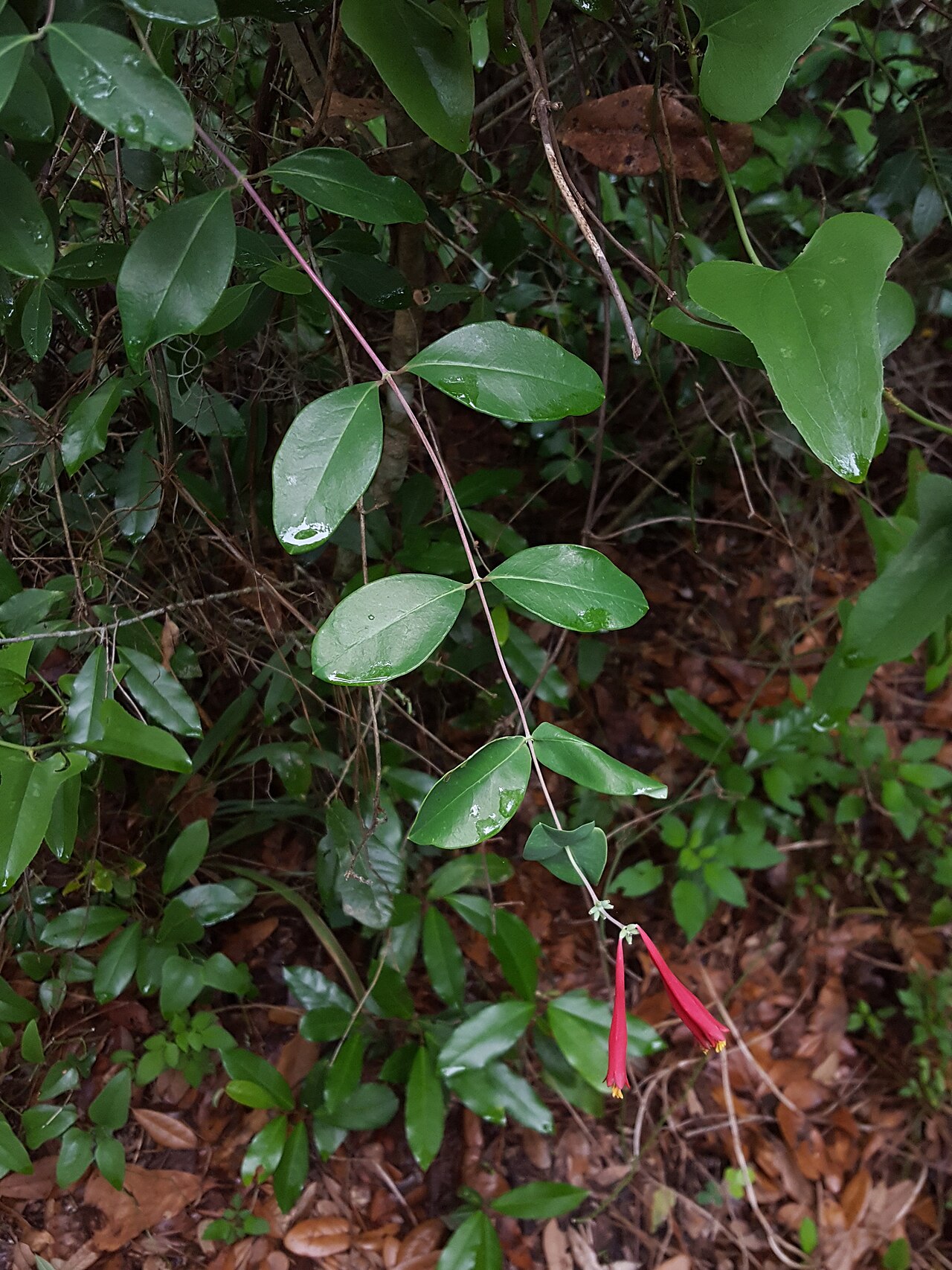
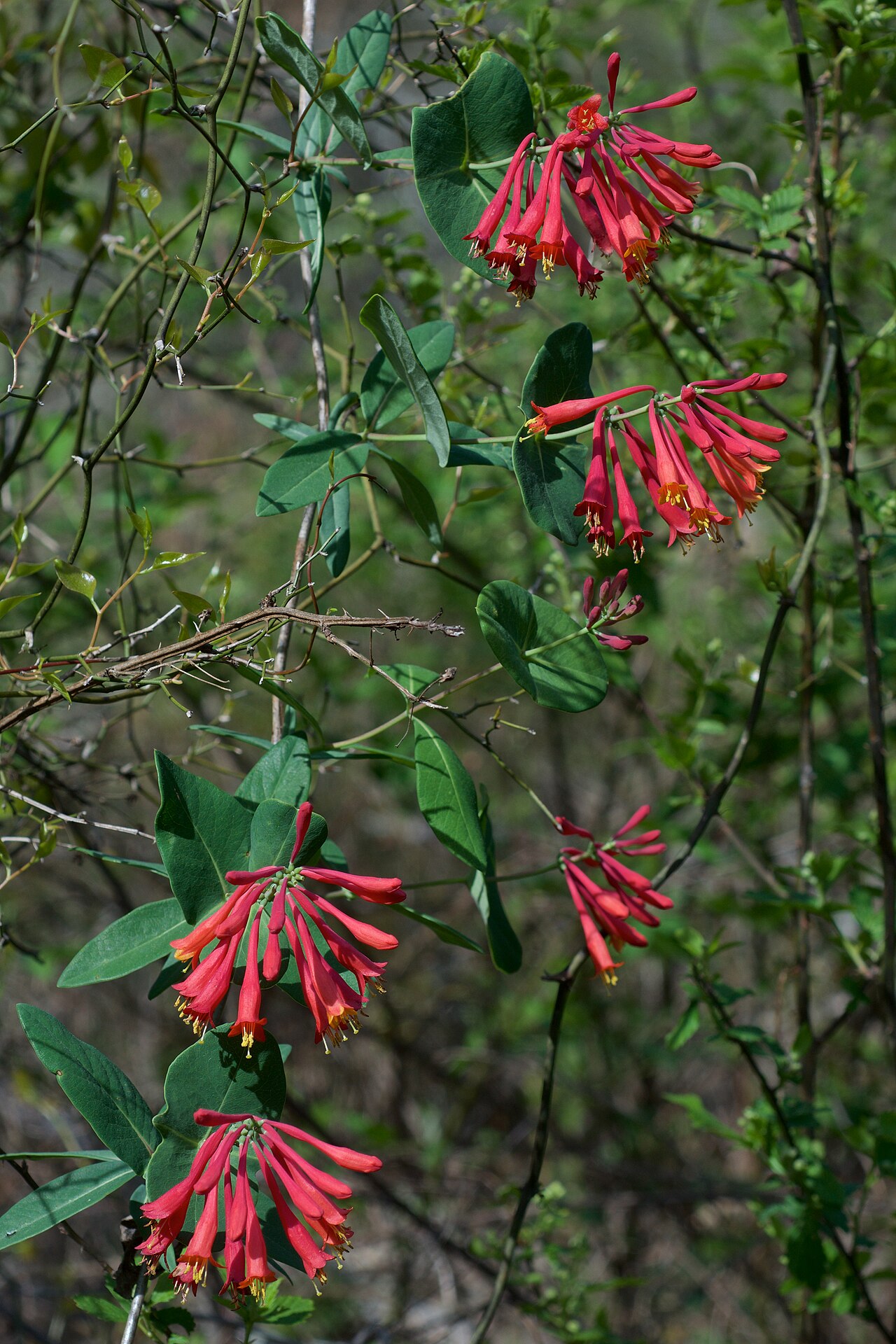
Plant native coral honeysuckle (L. sempervirens, ‘Major Wheeler’ is the showiest cultivar) — it blooms red-orange trumpets from spring to frost, feeds hummingbirds, and behaves itself. Do NOT plant Japanese honeysuckle (L. japonica): it is invasive across much of the eastern US, smothers native plants, and is listed in many states. Coral honeysuckle wants sun for best bloom, tolerates part shade, and climbs by twining — give it a trellis, fence, or shrub to wind through, and it will not damage structures the way rootlet-climbers do.
Water & feeding
Water to establish; mature plants are moderately drought-tolerant but bloom longest with consistent moisture. Mulch to hold soil moisture.
Common problems
- Japanese honeysuckle confusion — check the tag; ‘Hall’s’ honeysuckle is the invasive one
- Aphids on new growth in spring
- Leaf blight on some cultivars in humid summers (usually cosmetic)
Harvest
Prune lightly after a flush of bloom to encourage rebloom, and cut back tangled growth in late winter. Coral honeysuckle blooms on new growth, so spring pruning does not cost the season.
Browse all plant & pest guides
Saving seeds
Invasiveness first, because with honeysuckle it is the whole story: Japanese honeysuckle (Lonicera japonica) is invasive in Florida and across much of the eastern United States, smothering native plants with fast, sprawling growth, and this section does not encourage saving, sowing, or spreading it. Save seed only from native or non-invasive honeysuckles — coral honeysuckle (Lonicera sempervirens) is the native star of this guide — and if you are not sure which vine you have, identify it before you collect anything, because a seed packet labelled ‘honeysuckle’ from the wrong vine is how an invasive plant gets a free ride into a new garden. This is a genus-level method for Lonicera: the cleaning, chilling, and sowing steps below hold across the genus, but the decision about whether to save at all depends entirely on the species in your hand.
Collect berries in fall, when they are fully coloured — deep blue-black in Japanese honeysuckle, red in coral honeysuckle — and soft and ripe. A caution for the whole genus: honeysuckle berries are mildly toxic and should not be eaten, so wear gloves while you mash them, keep your hands away from your eyes and mouth, and keep the bowl away from children and pets. Press the berries in water, rub away the pulp, and rinse the small seeds clean; pulp left on seed invites mould, and mouldy seed is dead seed. Dry the cleaned seed for a day or so before stratification, and label it with the species, because one batch of small honeysuckle seed looks exactly like another by spring.
Honeysuckle seed needs a cold, moist winter to wake up. Sources vary on the exact prescription — roughly sixty days at minimum, with many references giving two to three months — and that range is honest rather than sloppy: different species, and different seed lots, wake on slightly different schedules. Mix the cleaned seed with damp peat moss or sand in a sealed, labelled bag, refrigerate it, and check weekly that the mix stays damp but not sodden. Florida gardeners should use the refrigerator, not the garden: a Florida winter is often too mild and short to deliver the sustained chill honeysuckle seed waits for, and unchilled seed may simply sit dormant until it rots. After stratification, sow shallowly — about an eighth of an inch deep, or pressed onto the surface and dusted over — in a well-drained seed mix, keep it consistently moist, and give it bright, indirect light at mild temperatures; seedlings typically appear within a few weeks, though some lots are slower, so give a tray a full season before declaring it a failure.
Will seedlings grow true? For a wild native species grown on its own, generally yes, with the usual insect-pollinated caveat: bees move pollen between honeysuckles, so seed from a garden with several species flowering together may produce hybrids and surprises rather than copies of the parent. Named cultivars, especially hybrids, will not reliably repeat from seed; cuttings are the honest route for an exact cultivar. For storage, dry seed thoroughly, then keep it in an airtight container with a desiccant packet, cool and dark, and use fresh seed first, since viability fades with age. And the stewardship note, because it bears repeating: a native coral honeysuckle grown from your own saved seed, feeding hummingbirds on a fence you chose, is a small act of gardening virtue; the same effort spent on Japanese honeysuckle is how a garden plant becomes a neighbourhood problem. Save the right vine, and save it well.
Varieties
Every named variety of Honeysuckle with its own growing guide:
- Blanche Sandman Honeysuckle — The disease-resistant coral: orange-red trumpets with yellow throats, free-flowering and disease-resistant, the coral honeysuckle for hummingbirds.
- Cedar Lane Honeysuckle — The narrow-leaf coral: orange-red trumpets over unusually narrow, blue-green foliage, the coral honeysuckle with the softest texture.
- Magnifica Honeysuckle — The vigorous coral: masses of sweetly scented orange-red trumpets on a vigorous native vine, the honeysuckle for a big fence.
- Superba Honeysuckle — The showy native coral: larger, red-orange trumpets on the same well-behaved native vine — the coral honeysuckle for the biggest hummingbird show.
- Dropmore Scarlet Honeysuckle — The scarlet hybrid honeysuckle: masses of flaming scarlet trumpets with orange throats, hardy and vigorous — the honeysuckle for a big fence, north or south.
- Goldflame Honeysuckle — The sunset honeysuckle: purple-pink buds opening to sweetly fragrant golden-yellow trumpets all summer — the honeysuckle for fragrance and colour together.