
🫘 Chickpea
What it looks like
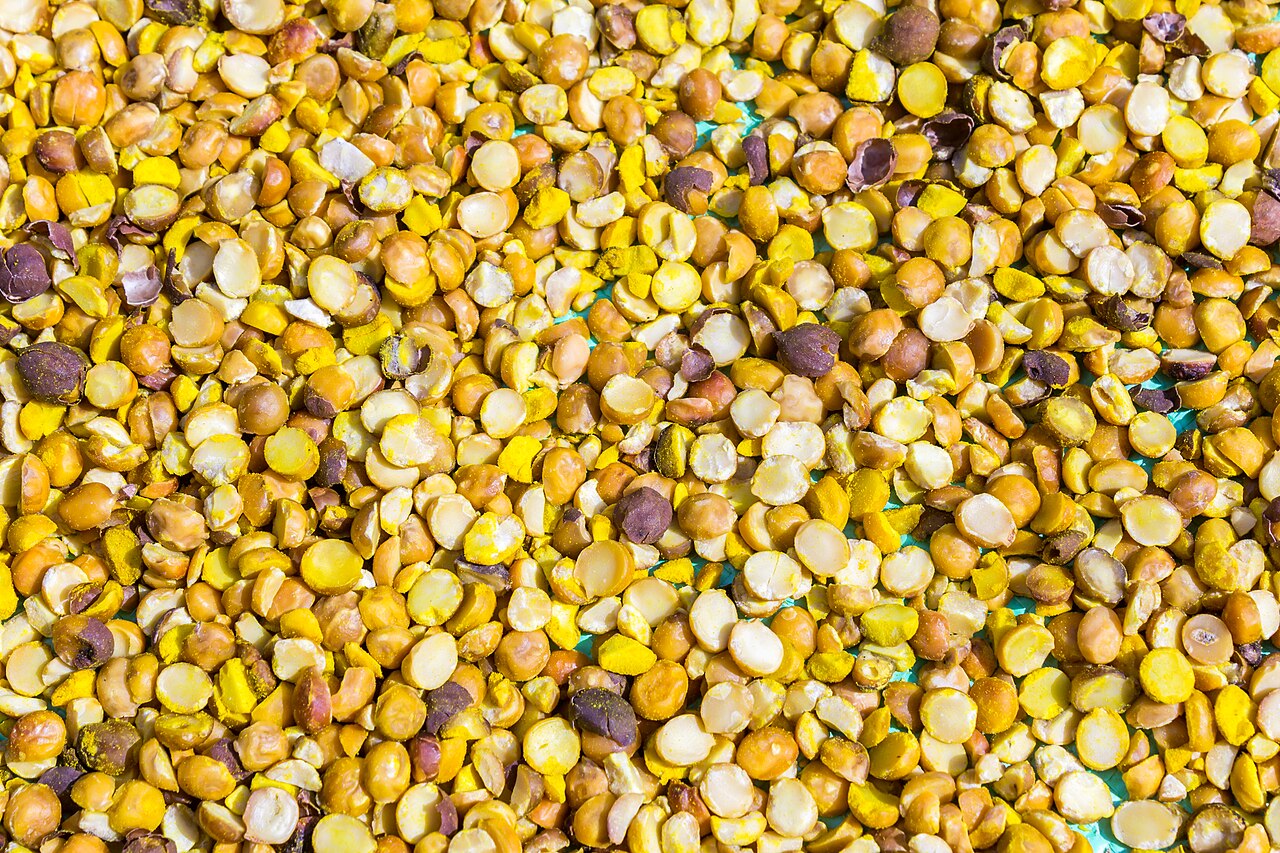
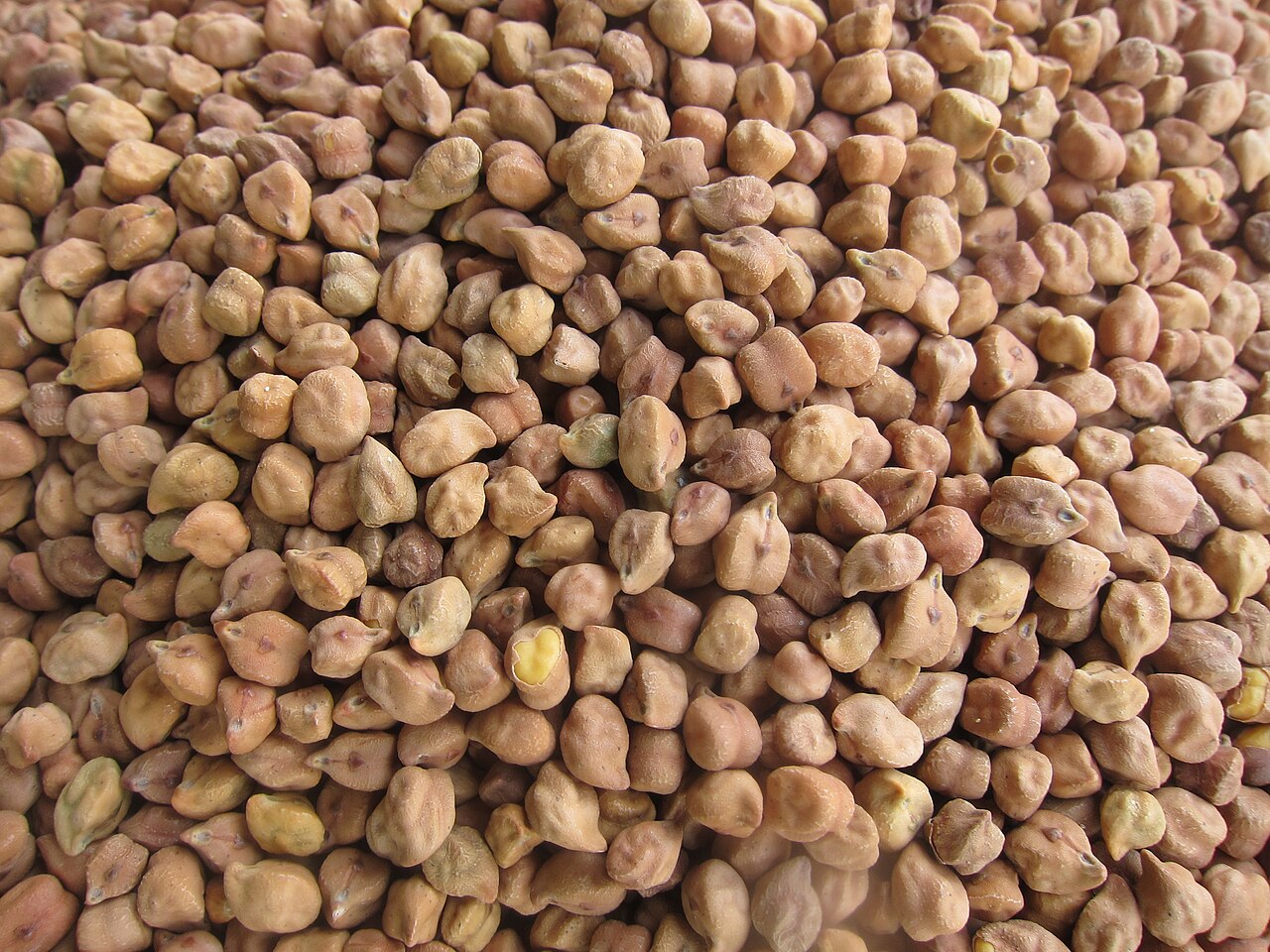
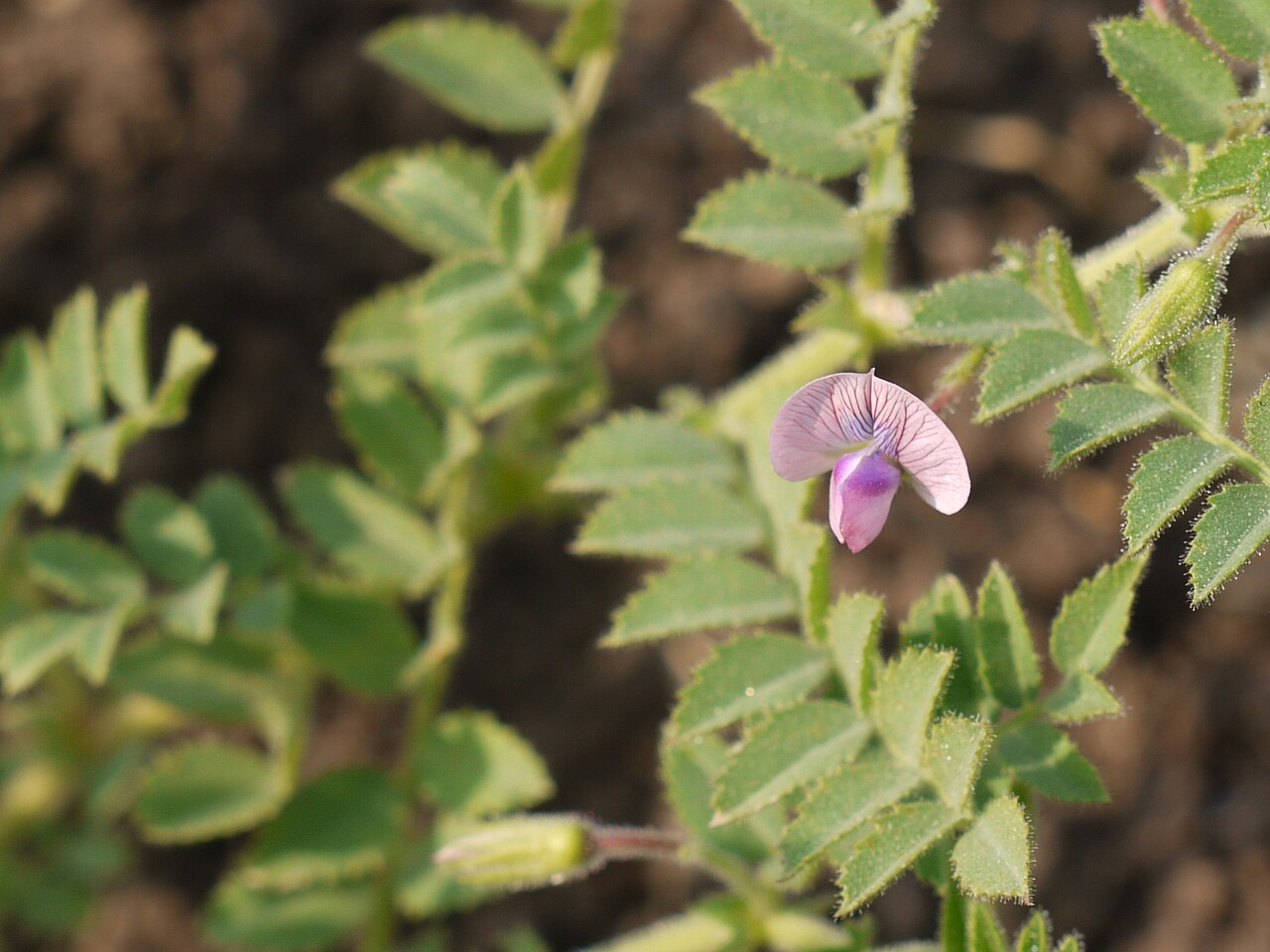
How to grow
Chickpeas, also called garbanzo beans, are bushy annual legumes grown for dry seeds — and for the sweet, pea-like green pods that almost never reach a grocery store. Sow 2–3 weeks before the last spring frost, or after frost where springs are cold, planting seeds 1–2 inches deep in loose, well-drained sandy loam. Plants grow 12–18 inches wide and up to about 3 feet tall, and close spacing lets them support each other without a trellis. Chickpeas suit warm, semi-arid conditions and tolerate drought thanks to deep taproots, but they dislike humidity and wet foliage. In the humid Southeast, choose resistant varieties, space widely, water at the base, and expect Ascochyta blight to be the main battle.
Water & feeding
Water about an inch a week, more during flowering and pod fill, then reduce watering two weeks before harvest so pods dry cleanly. Use drip or base watering — wet leaves invite blight. Skip heavy fertilizer; chickpeas fix nitrogen, and a little compost at planting plus phosphorus and potassium for pod development is enough.
Common problems
- Ascochyta blight in wet weather — rotate crops, space widely, avoid overhead watering, and remove affected plants.
- Fusarium wilt — no cure; rotate for several years and choose resistant varieties.
- Aphids and leafminers — row cover early and blast aphids with water.
- Poor pod set — usually heat, drought at flowering, or poor pollination; water steadily at bloom.
Harvest
For fresh green chickpeas, pick plump green pods at about 60–90 days and eat the peas raw, steamed, or sautéed — the window is only a week or two. For dry chickpeas, wait until pods and plants are fully dry, about 90–120 days, pull plants, dry for a few more days, then shell. Dry seeds completely — they should be rock-hard with no give under a fingernail — before sealing in airtight jars. Plan on several plants per person: each plant makes only about 50 pods with one or two seeds each.
Browse all plant & pest guides
Saving seeds
Chickpea is one of the kindest crops a seed saver can meet, because it mostly pollinates itself before a bee ever gets a look in. The flowers fertilize themselves, which means the seeds you save from a plant you loved will overwhelmingly grow into plants just like it, with no isolation distances, no bagging blossoms, and no anxious counting of neighboring gardens. If you grew an open-pollinated variety, saved seed comes true. The one exception is a hybrid, or F1, variety: if your packet said F1, the next generation will shuffle the deck and give you a mixed bag, so save seed from open-pollinated types when you want predictability.
Start by choosing your seed plants early and marking them, then resist the urge to snack from them. Pick your healthiest, most productive plants — the ones that shrugged off disease and set pods generously — and let their pods stay on the vine long past the green, fresh-eating stage. You are waiting for the whole plant to yellow and wither and the pods to turn tan and papery, rattling when you shake them. In a dry spell this happens obligingly on the plant; in a wet one, pull the whole plant once most pods are brown and finish drying it under cover, hung or spread where air moves freely. Pods that stay damp will mold, and moldy seed is compost, not next year’s crop.
Threshing is satisfyingly low-tech: crumble the dry pods by hand over a bowl or stomp them gently in a cloth sack, then winnow away the papery chaff by pouring the seeds slowly between two bowls in a light breeze. Pick out anything shriveled, cracked, or insect-damaged, and keep only the fattest, hardest seeds. Then dry them thoroughly — this is the step Florida gardeners must not rush. In our humidity, seed that feels dry on a rainy afternoon may not be dry at all. Spread the seeds in a thin layer indoors for a week or two past the point you think they are done, until a test seed shatters rather than dents when bitten, then seal them in an airtight jar with a desiccant packet and store them cool and dark.
Stored that way, chickpea seed generally stays vigorous for a couple of years, with germination tapering after that, so date your jar and do a simple germination test on a damp paper towel before sowing an old batch. And one warning that saves real disappointment: the chickpeas in your pantry are not seed. Canned, cooked, roasted, or long-stored grocery chickpeas have been processed past the point of germination. Save from your own garden plants, and the circle closes neatly — dinner this year, seed for next year, and a variety that gets a little better adapted to your soil every season you keep it going.
Varieties
Every named variety of Chickpea with its own growing guide:
- Black Kabouli Chickpea — The black-seeded heritage chickpea from Kabul — dramatic, nutty, and about 100 days to dry pods.
- Sierra Chickpea — The large-seeded kabuli field chickpea — big, cream-colored seeds for classic hummus and roasting.
- CDC Frontier Chickpea — The large kabuli standard: big, cream-colored seeds for classic hummus, from one of the most widely trialed chickpeas.
- CDC Anna Chickpea — The desi difference: small, dark, nutty seeds that mature a touch earlier and shrug off blight better than the big kabulis.
- Dylan Chickpea — The big-seeded kabuli: large, smooth seeds and steady yields from a widely trialed northern field chickpea.
- CDC Luna Chickpea — The large-seeded kabuli chickpea — slightly earlier than CDC Frontier, with good yield and fair blight resistance.