
🌻 Goldenrod
What it looks like
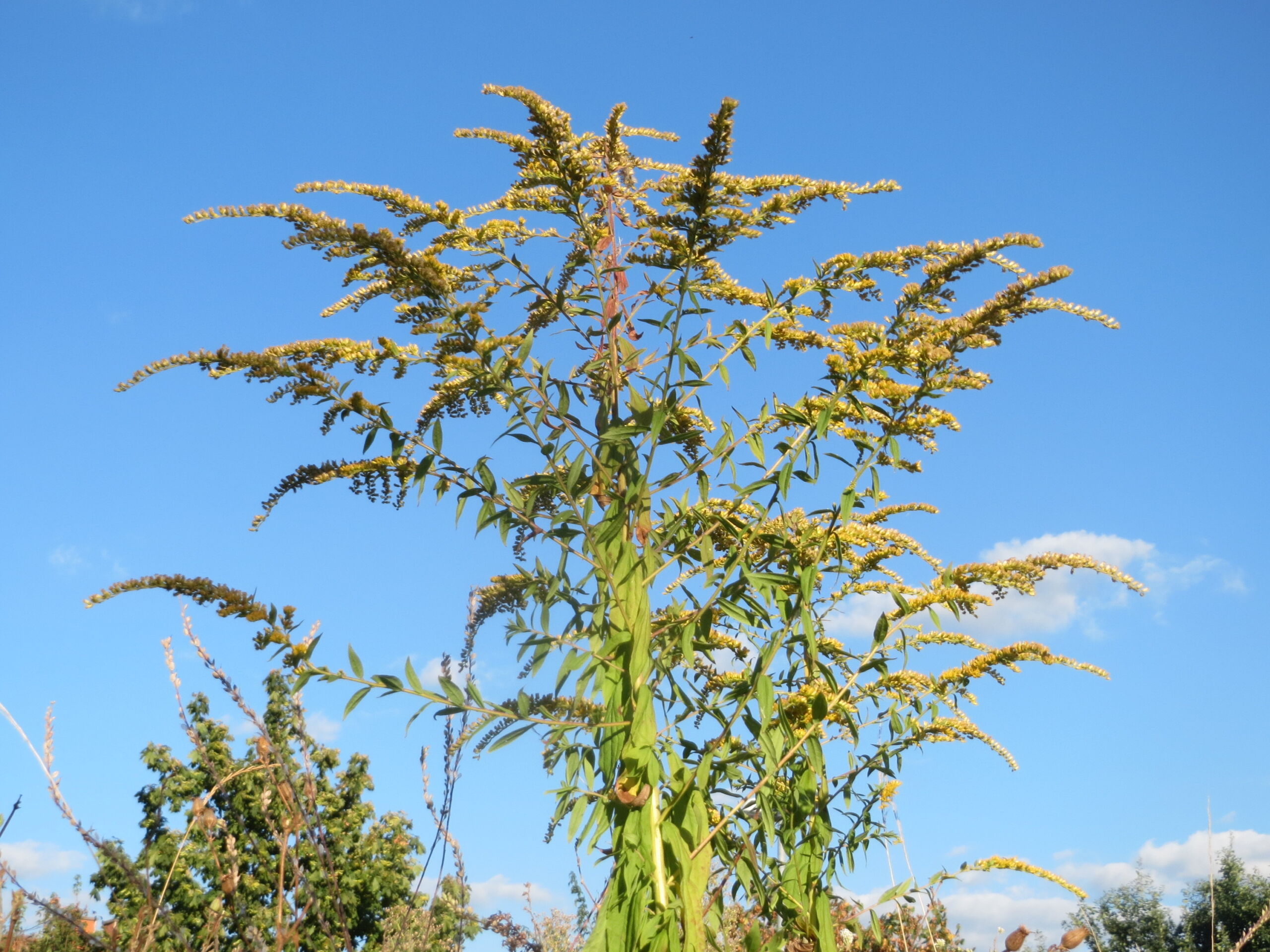
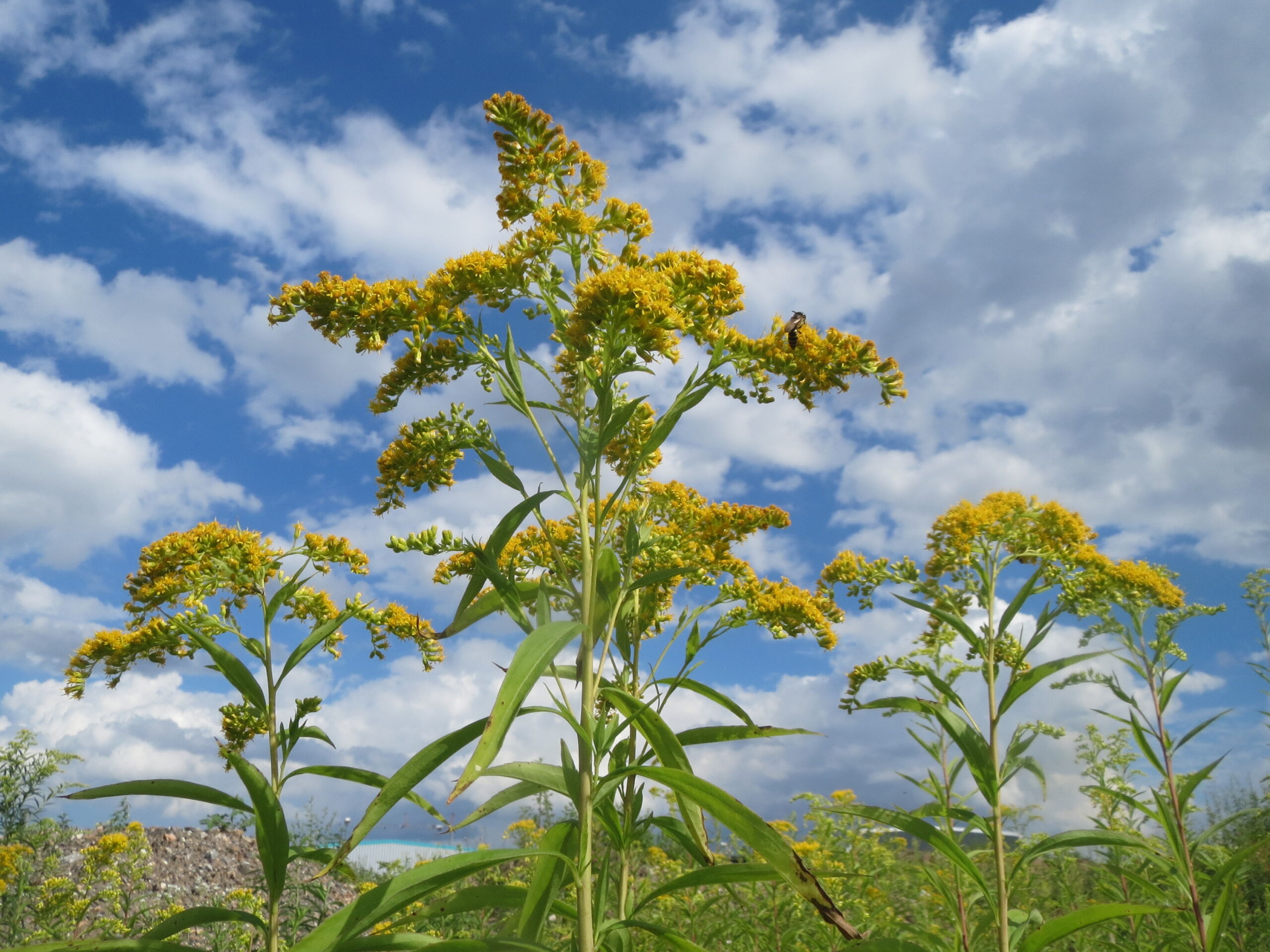
Goldenrod is a genus of herbaceous perennials in the aster family (Asteraceae) — roughly a hundred species, mostly North American — and in late summer and fall it turns whole fields, roadsides, and meadows into sheets of gold. Plants range from about 2 feet to 8 feet tall depending on species, with lance-shaped leaves and flower heads made of hundreds of tiny yellow florets packed into plumes, wands, or arching sprays. The display is unmistakable, and so is the plant’s reputation — unfairly, as we will get to in a moment.
What goldenrod is, ecologically, is a late-season lifeline. When most summer flowers are finished, goldenrod is just getting started, and its nectar and pollen feed an enormous cast: butterflies, native bees (including goldenrod specialist bees), wasps, beetles, and flies, plus migrating monarchs fueling up on seaside goldenrod along the coasts. Goldenrods are also host plants for the caterpillars of well over a hundred butterfly and moth species. And then there are the seeds: fluffy, wind-borne, and eaten by songbirds into winter. A patch of goldenrod in fall is not a weed lot. It is a restaurant, a nursery, and a bird feeder wearing a yellow dress.
Now, the myth-busting, because it matters and because goldenrod has been wrongly accused for generations: goldenrod does NOT cause hay fever. The culprit is ragweed (Ambrosia species), a wind-pollinated plant with small, inconspicuous green flowers that blooms at exactly the same time and releases millions of tiny, lightweight pollen grains into the air. Goldenrod’s pollen is heavy, sticky, and designed to be carried by insects from flower to flower — it does not become airborne in any meaningful amount. As the University of Illinois Extension puts it, the correlation between goldenrod’s bloom time and allergy season is strong, but correlation is not causation: goldenrod is not to blame, ragweed is. So if you sneeze in September, look past the golden flowers to the weedy green plant hiding behind them. Goldenrod is innocent, and it has the pollen physics to prove it.
How to grow
Goldenrod is one of the easiest native perennials to grow, and its main requirement is that you do not overthink it. Give it full sun for the best flowering — it tolerates light shade, but blooms will be thinner — and average, well-drained soil. It is not fussy about soil type and tolerates clay, poor, and rocky soils, and many species tolerate both drought and occasional wet feet once established. Plant in spring or fall, space plants 18–24 inches apart (wider for the big, spreading species), and water until established. After that, it largely takes care of itself.
The one real management question is spreading. Some goldenrods, notably Canada goldenrod, spread vigorously by underground rhizomes and will happily take over a border if you let them. Others, like the cultivar ‘Fireworks’, are clump-forming and polite. Choose accordingly: put the runners in meadows, wild areas, and big beds where they can roam, and put the clumpers in formal borders and small gardens. If a running type starts to wander, divide it every few years in spring or fall, and cut the clump back hard — or simply enjoy the drift, because a goldenrod drift in full bloom is one of the great sights of the fall garden.
For the best show and the tidiest plant, cut goldenrod back by about a third in early summer (the classic “Chelsea chop” timing) to encourage bushier growth and more flowers, or leave it unpruned for maximum height. Deadheading after flowering prevents self-seeding if you do not want volunteers, but leaving the seed heads standing feeds birds and gives winter structure — the fluffy seed heads catch frost beautifully. Cut the whole plant down in early spring before new growth starts, and leave some hollow stems standing at 12–24 inches if you can: native bees nest in dead, hollow stems, and a goldenrod patch is a bee hotel as well as a restaurant.
Florida note: seaside goldenrod (Solidago sempervirens) is a genuine Florida native, found along the coasts of the Panhandle and most peninsular counties, growing on dunes, in swales and brackish marshes, and on sandy coastal soils, and it is the most commercially available of Florida’s native goldenrods. It is salt-tolerant, handles salt spray and occasional saltwater inundation once established, and is an important nectar source for coastal migrating monarchs. Inland Florida gardeners can grow it too, but give it sun and sandy, well-drained soil, and expect it to spread by rhizomes — site it where a golden drift is welcome.
Water & feeding
Goldenrod is admirably low-maintenance about water. Once established, most species need little supplemental watering and tolerate drought, though they flower best with average moisture — “average” being the key word. Constantly wet soil is fine for a few species (giant goldenrod likes moist ground), but soggy, waterlogged soil will rot most goldenrods. In a normal garden with normal rainfall, you can largely ignore the hose. In a drought, a deep soak now and then keeps the bloom show going, but goldenrod will not punish you for forgetting.
Feeding: do not bother, or barely bother. Goldenrod thrives on average to poor soil and needs no fertilizer program. Rich soil and heavy feeding produce taller, floppier plants that need staking and spread more aggressively — the opposite of what you want. A light topdressing of compost in spring is more than enough, and in many gardens even that is unnecessary. This is a plant that evolved to turn neglected ground into gold, and it resents being treated like a prima donna.
Soil science note: goldenrod’s late-season abundance is a soil-building event. All that biomass — stems, leaves, roots — returns to the soil as organic matter when the plant dies back, feeding microbes and earthworms through winter. And its deep roots pull nutrients from lower soil layers up into the plant, which then become topsoil when the plant decomposes. Goldenrod is not just decorating your fall; it is composting in place.
Common problems
- Aggressive spreading. The big issue, especially with Canada goldenrod. Choose clump-forming species and cultivars for small beds, divide runners regularly, and site vigorous types where they can roam.
- Flopping. Tall species in rich soil or shade grow leggy and fall over. Give them full sun, lean soil, and a midsummer cut-back for bushier, sturdier plants.
- Powdery mildew and rust. Goldenrods can get fungal leaf spots, mildew, and occasional rust, especially in humid, crowded plantings. Improve air circulation, avoid overhead watering, and accept some cosmetic leaf damage in fall — it rarely harms the plant.
- The hay fever accusation. Not a plant problem, a people problem. Goldenrod’s insect-carried pollen does not cause hay fever; ragweed does. Plant goldenrod with confidence and correct the record at every opportunity.
- Very few pests. Goldenrod has no serious insect problems in most gardens. The insects on it are mostly the pollinators and caterpillars you planted it for.
Harvest
Goldenrod’s harvest is flowers, seeds, and goodwill. Cut stems for bouquets in late summer and fall — the arching sprays of ‘Fireworks’ and the tall plumes of Canada and giant goldenrod make spectacular, long-lasting cut flowers, and cutting encourages no harm to the plant. Leave some flowers to set seed, and you will get both bird food and the occasional volunteer seedling (a gift, unless it lands in the vegetable bed). If you want to save seed, collect the fluffy heads after flowering and sow in fall or spring. And the simplest harvest of all: stand in the garden on a September afternoon and watch the pollinators work a goldenrod patch. That is the crop, and it is a bumper one.
Saving seeds
Read this first, because it changes how you save the seed: goldenrod wants to take over. Most goldenrods are North American natives, so a native spreading in its own home range is vigorous, not invasive. But goldenrod spreads two ways at once: by underground rhizomes that creep outward into thick mats, and by seed, each tiny seed wearing a silky parachute built for wind travel, produced by the thousand on every plume. If you save seed without a plan for where the seedlings go, you will have a goldenrod meadow where your border used to be. That is a wonderful thing in a meadow and a management job in a small garden, so decide which one you are running before you cut a single head. Deadheading before seed ripens is the simplest control; a clump-forming cultivar or a container is the tidy version.
Scope note: this is a genus-level method for Solidago, roughly a hundred species; the pattern holds across the genus though individual species differ.
Collect in mid to late fall, when the plumes have faded and the seed heads have dried and begun to fluff. The seed ripens from the bottom of a plume toward the top, so wait until most of the seed at the top has dried and started to show its down before you cut. Strip the heads into a paper bag and let them finish drying indoors for a week or two until the stems are brittle. The seed is almost dust-sized, so work over a tray indoors; outdoors, one gust sows your whole harvest across the county — exactly the dispersal strategy the plant evolved.
Cleaning is optional in the best sense: you can rub the dried heads through a sieve to separate seed from fluff and stems, but goldenrod seed germinates perfectly well with its parachute still attached, so do not spend an afternoon chasing cosmetic purity. The step that actually matters is the cold. Seed of many goldenrod species needs one to two months of cold, moist stratification before it will germinate, which is simply winter doing its job. Sow outdoors in fall and let the season handle it, or mix the seed with barely damp sand or vermiculite in a sealed bag and refrigerate it for a month or two before spring sowing. Then surface-sow: goldenrod seed needs light, so press it onto the surface of a moist, well-drained mix and do not cover it with soil or leaf litter. Kept moist, it germinates readily the first spring after treatment, and seedlings grow fast.
For keeping an exact plant, seed is the wrong tool. A named cultivar — the clump-forming ‘Fireworks’ is the famous example — will not come true from seed, and its seedlings will revert toward wilder, more spreading habits. Divide the clump in spring or fall if you want ‘Fireworks’ to stay ‘Fireworks’. Seed from a wild species, on the other hand, generally resembles its parents, with the normal variation of open-pollinated stock, and if several goldenrod species are flowering together, some crossing is possible.
For storage, dry the seed thoroughly and keep it in a labelled envelope inside an airtight jar in a cool, dark place. Sow fresh seed when you can: aster-family seed loses vigour fast, so test older seed on damp paper before trusting a whole sowing to it. In Florida’s humidity the drying step is everything — seed that goes into a jar even slightly damp will mold rather than wait — so dry until papery and add a desiccant packet to the jar. And a final consolation: goldenrod pollen is heavy and insect-carried and does not cause hay fever — the culprit behind those golden plumes is ragweed, flowering at the same time with wind-borne pollen.
Varieties
Named goldenrod species and varieties with their own growing guides:
- Seaside Goldenrod: Growing Guide — The coastal goldenrod: salt-tolerant, fleshy-leaved, and boldly gold in fall, the monarch migration nectar plant for beachfront and windy gardens.
- Fireworks Goldenrod: Growing Guide — The garden-star goldenrod: arching sprays of yellow that really do look like fireworks, on a clump-forming plant that stays where you put it.
- Golden Fleece Goldenrod: Growing Guide — The groundcover goldenrod: a dwarf, clump-forming selection that makes goldenrod possible in small gardens and containers.
- Little Lemon Goldenrod: Growing Guide — The lemon-drop goldenrod: an exceptionally compact native cultivar that turns into a dense ball of lemon-yellow blooms from midsummer through late summer.
- Anise-Scented Goldenrod: Growing Guide — The licorice goldenrod: airy yellow sprays and crushed leaves that smell faintly of anise, on a well-behaved clump that will not take over.
- Leavenworth’s Goldenrod: Growing Guide — The Florida original: a true Florida native of wet prairies that blooms from fall into early winter, one of the last wildflowers still going when the garden has quit.
- Wrinkleleaf Goldenrod: Growing Guide — The wild parent of Fireworks: a tall, wrinkled-leaf goldenrod of moist ground, with arching golden sprays and a garden star for a child.
Browse all plant & pest guides
Species in this group
Alpine goldenrod (Solidago multiradiata) — a low, northern and mountain goldenrod of alpine and arctic ground, compact where its lowland cousins are tall.
Canada goldenrod (Solidago canadensis) — the classic tall goldenrod: vigorous, rhizomatous, and widespread, with tall plumes of yellow flowers; magnificent in meadows, a thug in small borders.
Giant goldenrod (Solidago gigantea) — a tall, smooth-stemmed goldenrod of moist ground, with arching plumes; big, bold, and happy with wetter feet than most.
Gray goldenrod (Solidago nemoralis) — a smaller, well-behaved goldenrod of dry, open ground and old fields, with wand-like flower clusters; one of the politest goldenrods for gardens.
Seaside goldenrod (Solidago sempervirens) — the coastal specialist: salt-tolerant, fleshy-leaved, and native along Florida’s coasts and the Atlantic and Gulf shores; a monarch migration nectar plant.
Sweet goldenrod (Solidago odora) — the anise-scented one: crush a leaf and smell licorice; a garden-friendly goldenrod of open woods and sandy soils.
Wrinkleleaf goldenrod (Solidago rugosa) ‘Fireworks’ — the garden star: a clump-forming cultivar, 2 to 4 feet tall, with dark green wrinkled leaves and long, arching sprays of yellow flowers in late summer and fall that really do look like fireworks; not aggressive, unlike its wilder cousins.