
🥬 Tatsoi
What it looks like
How to grow
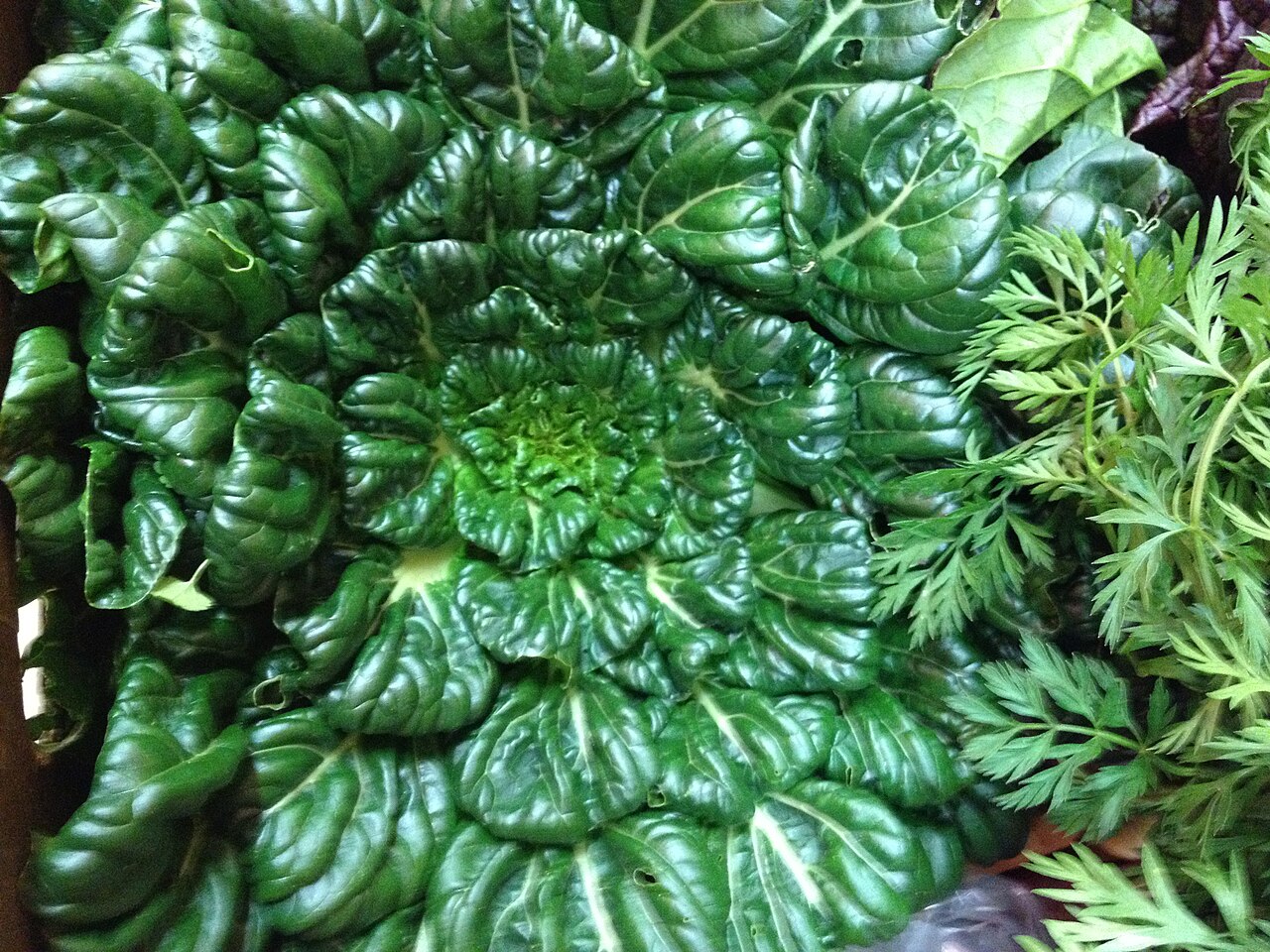
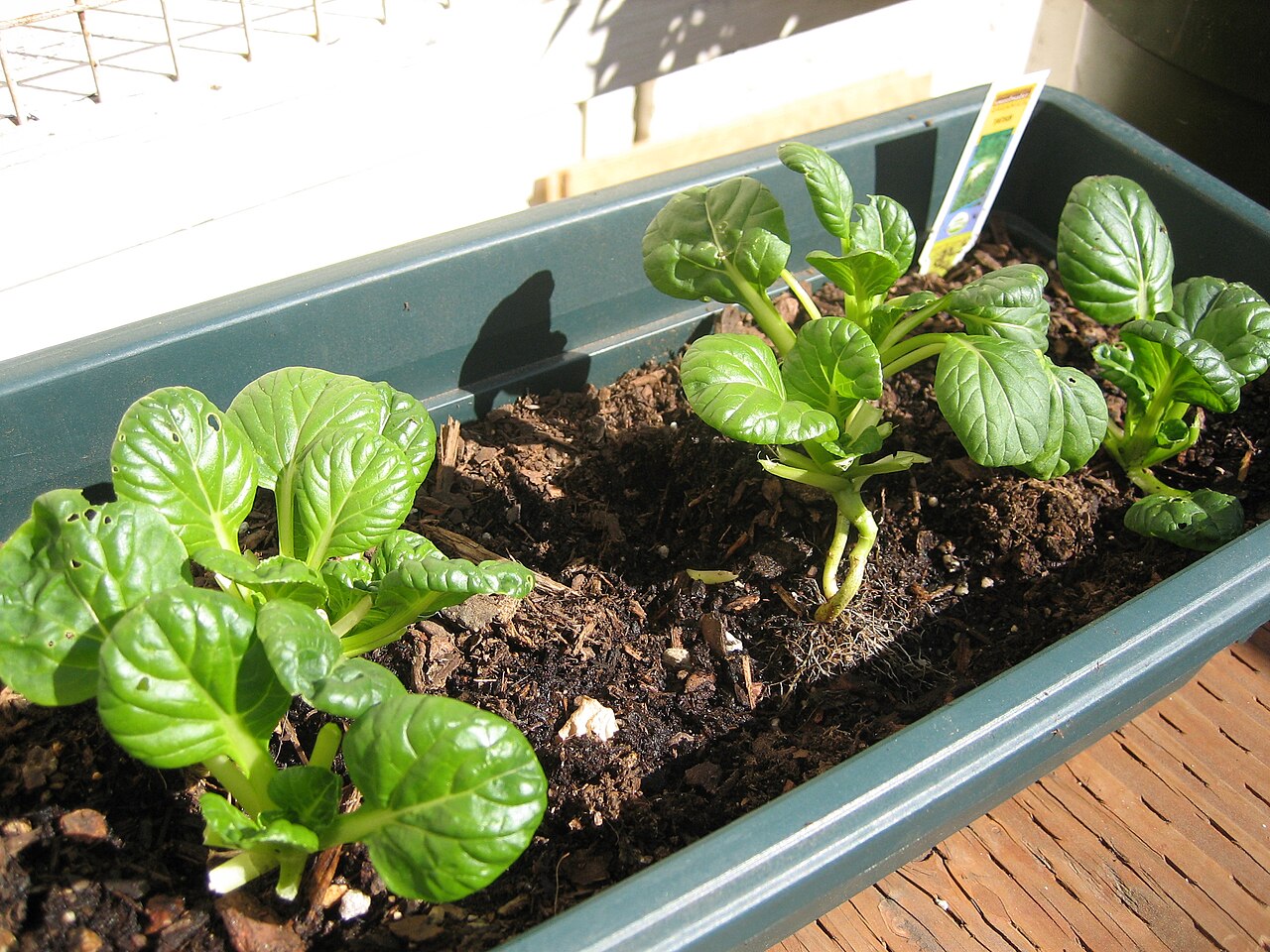
Tatsoi is a cool-season Asian green that forms a flat, dark-green rosette of spoon-shaped leaves with a mild, mustardy bite — gentler than mustard greens and sturdier than lettuce. Direct-sow seeds about 1/4 inch deep as soon as soil can be worked in spring, or sow in late summer for a fall crop; it germinates in 7–14 days. Thin seedlings to 6–8 inches apart for full rosettes, or sow thickly and thin for baby leaves. Tatsoi tolerates light frost and even tastes sweeter after a chill, but it bolts in sustained heat, so in warm climates grow it in fall through spring and give it afternoon shade. It is a brassica, so rotate it away from cabbage, kale, and broccoli beds for a season or two.
Water & feeding
Keep soil consistently moist — about an inch of water a week — and mulch to hold moisture. Dry soil turns tatsoi bitter and hurries it to bolt. Work compost or worm castings into the bed before sowing; tatsoi is a quick crop and usually needs no extra feeding, though a light side-dress helps a long cut-and-come-again harvest.
Common problems
- Bolting in heat — sow for spring and fall, shade in hot weather, and harvest promptly.
- Flea beetles chewing tiny holes — cover with insect netting from sowing; the leaves need no pollination.
- Cabbage worms and aphids — hand-pick, blast aphids with water, and check leaf undersides.
- Clubroot in brassica-tired soil — rotate crops and keep pH near neutral.
Harvest
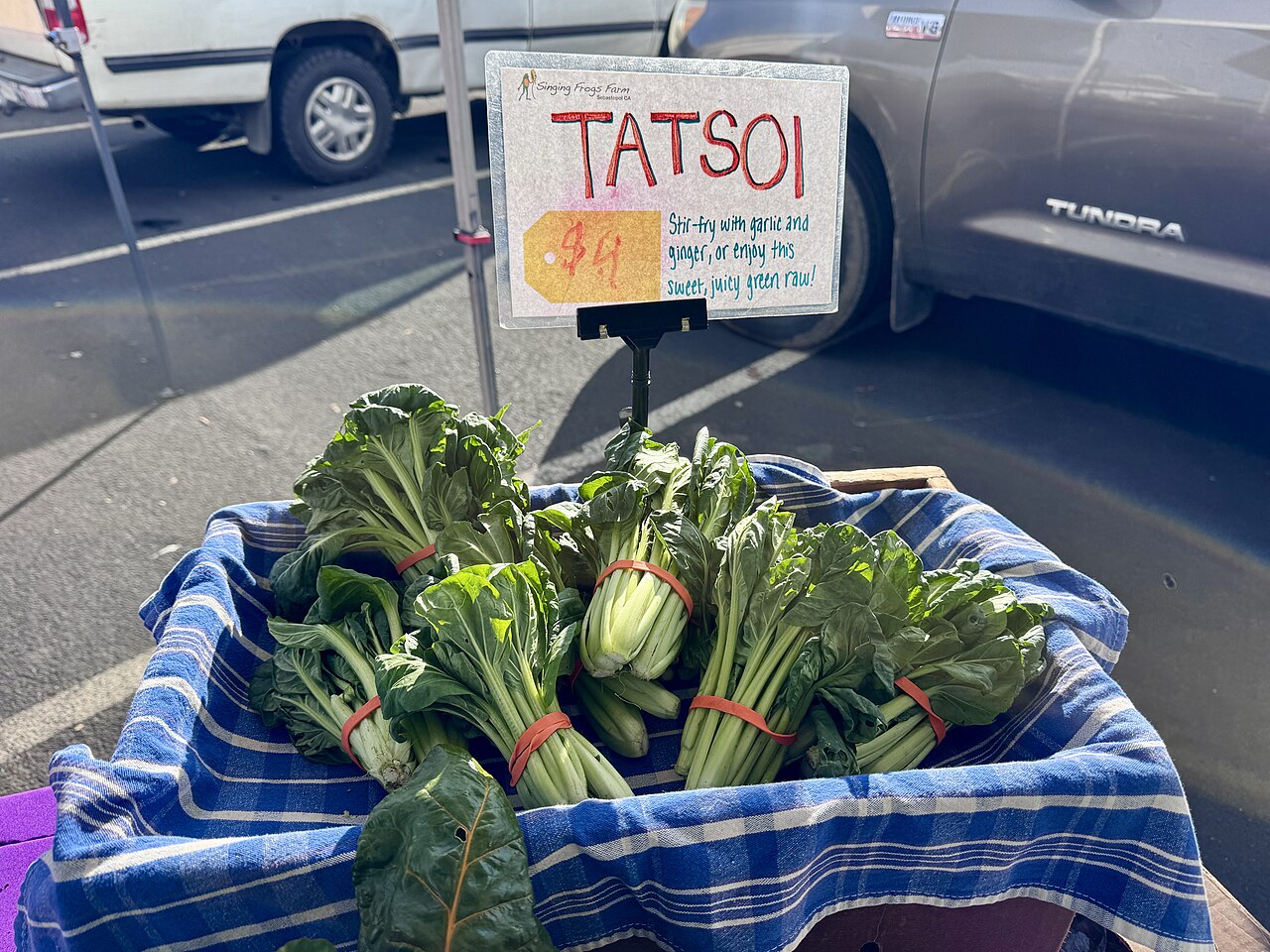
Pick outer leaves as needed once plants are a few inches across, letting the center keep growing, or cut the whole rosette at soil level when it is 4–6 inches wide, usually around day 45–50. Baby leaves can be snipped much earlier for salads. Use tatsoi raw in salads, wilted into soups, or stir-fried like bok choy — it holds up better in heat than lettuce does.
Browse all plant & pest guides
Saving seeds
Tatsoi is a Brassica rapa — the same species as turnip, bok choy, and mizuna — and its seed playbook is the brassica playbook. Let a few plants bolt and flower in spring, and do not pick from them; the seed plants are working, not feeding you. The seed pods ripen over several weeks, so harvest the whole plant when most of the pods are dry and brown, and finish drying it in a paper bag.
Tatsoi is a biennial, which means it needs a cold winter to flower — in Florida, that means a fall sowing that bolts in spring. Isolation matters: tatsoi crosses freely with other Brassica rapa — turnip, bok choy, mizuna, and their cousins — so grow only one Brassica rapa type for seed at a time, or accept the hybrids. The distance that counts is the bees’, so a few hundred feet is the honest minimum, and a quarter mile is better.
Dry the seed thoroughly before storing; it keeps four to five years in a cool, dry jar, and germination stays good if it is kept dry. Sow in fall in Florida, in moist soil, about a quarter inch deep; germination comes in one to two weeks in cool soil.
In Florida, tatsoi is a fall-through-spring green, happiest in north and central Florida with rich, moist soil and part shade. It bolts fast in the heat, so sow in fall for the longest harvest, and let the spring bolters go to seed — that is the crop paying you back.
Varieties
Every named variety of Tatsoi with its own growing guide:
- Black Summer Tatsoi — The dark tatsoi — almost black-green leaves, strong cold tolerance, and the fall green that holds into winter.
- Ching-Chiang Tatsoi — The quick dwarf tatsoi — fast, compact, and able to handle early spring weather that stops other greens.
- Rosette Tatsoi — The classic rosette tatsoi — uniform, low-growing rosettes, tender texture, and the standard for raised beds.
- Yukina Savoy Tatsoi — The savoyed tatsoi — thicker stems, semi-savoy leaves, and a sturdier rosette for cooking.
- Tah Tsai Tatsoi — The tender tatsoi: upright, mild, and fast — the baby-leaf tatsoi that fills salad mixes first.
- Misome Tatsoi — The tatsoi-komatsuna cross: glossy leaves, steady spring growth, and regrowth that keeps on giving.