
🌿 White Oldfield Aster
What it looks like
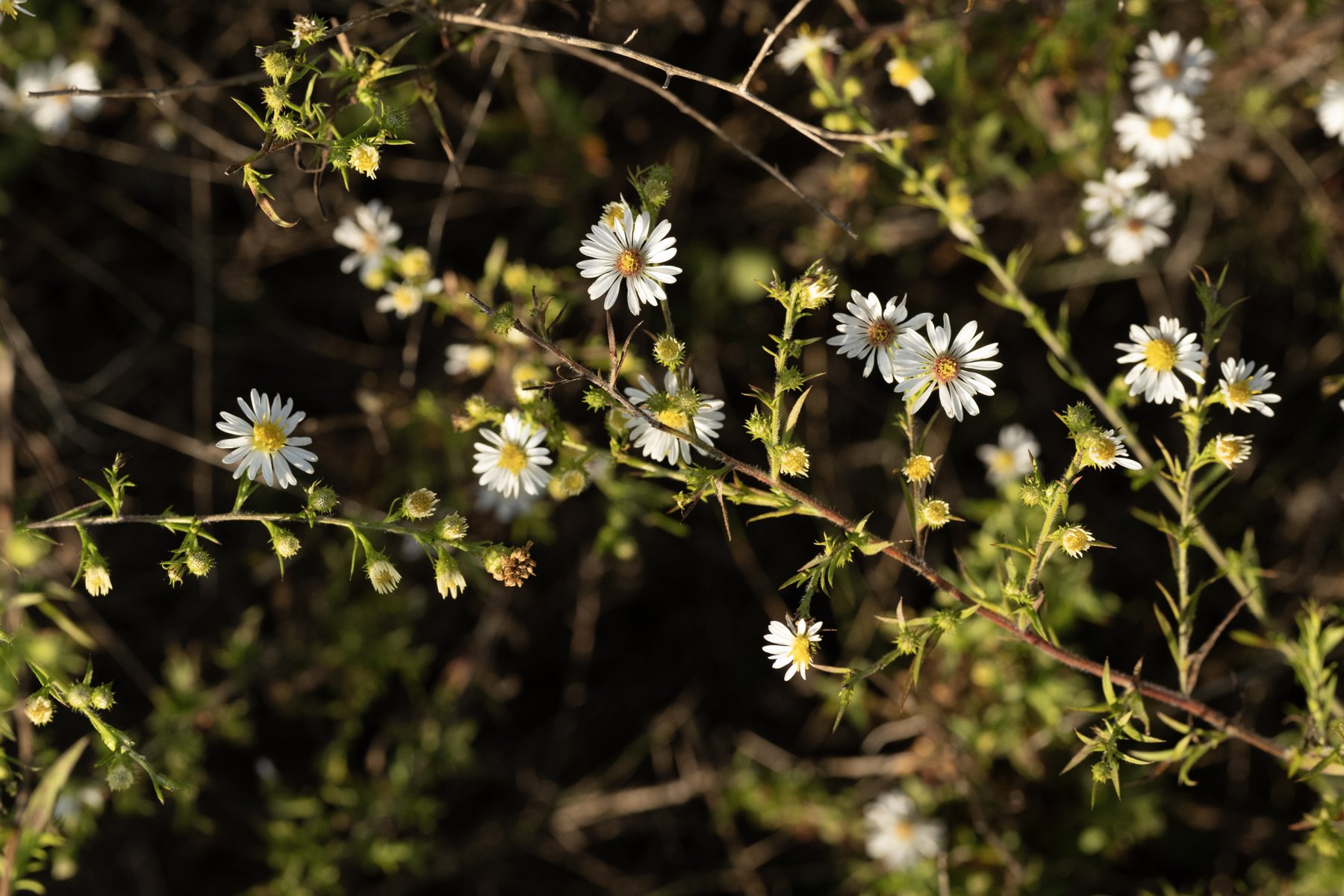
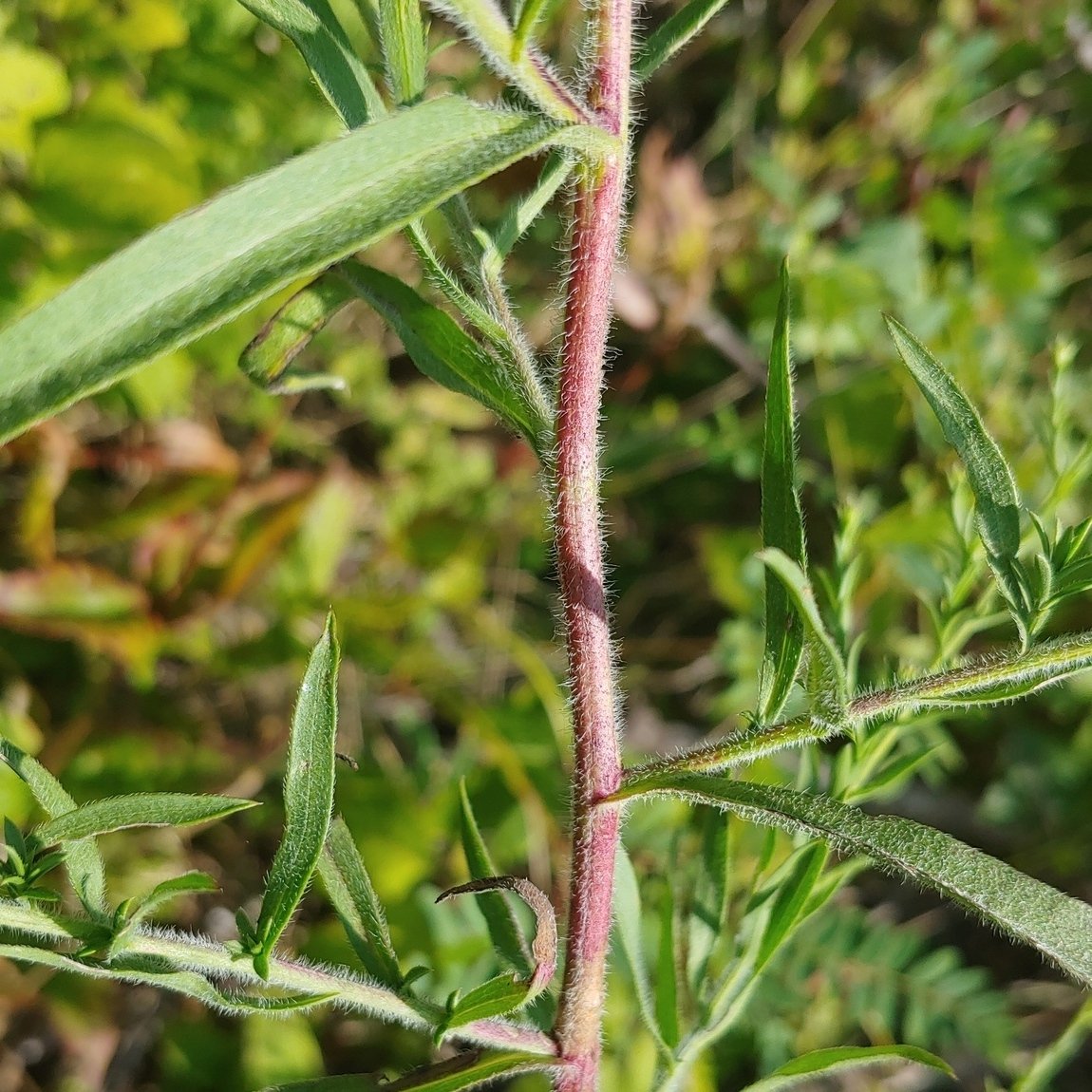
White oldfield aster is a perennial, usually eight inches to four feet tall (sometimes five), growing in tufts from a stout, branched base, sometimes with long rhizomes. The stems are ascending to erect, straight and stout, and — here is the whole identification in one word — hairy. Densely pilose or hirsute: covered in spreading hairs long enough to see, the kind of fuzz that looks like frost on the stem in morning light. That is where the other common name, frost aster, comes from, and it is also the first thing Franck’s Flora of Florida key asks about. Stems densely pilose or hirsute? You are looking at white oldfield aster. Everything else in the key goes the other way.
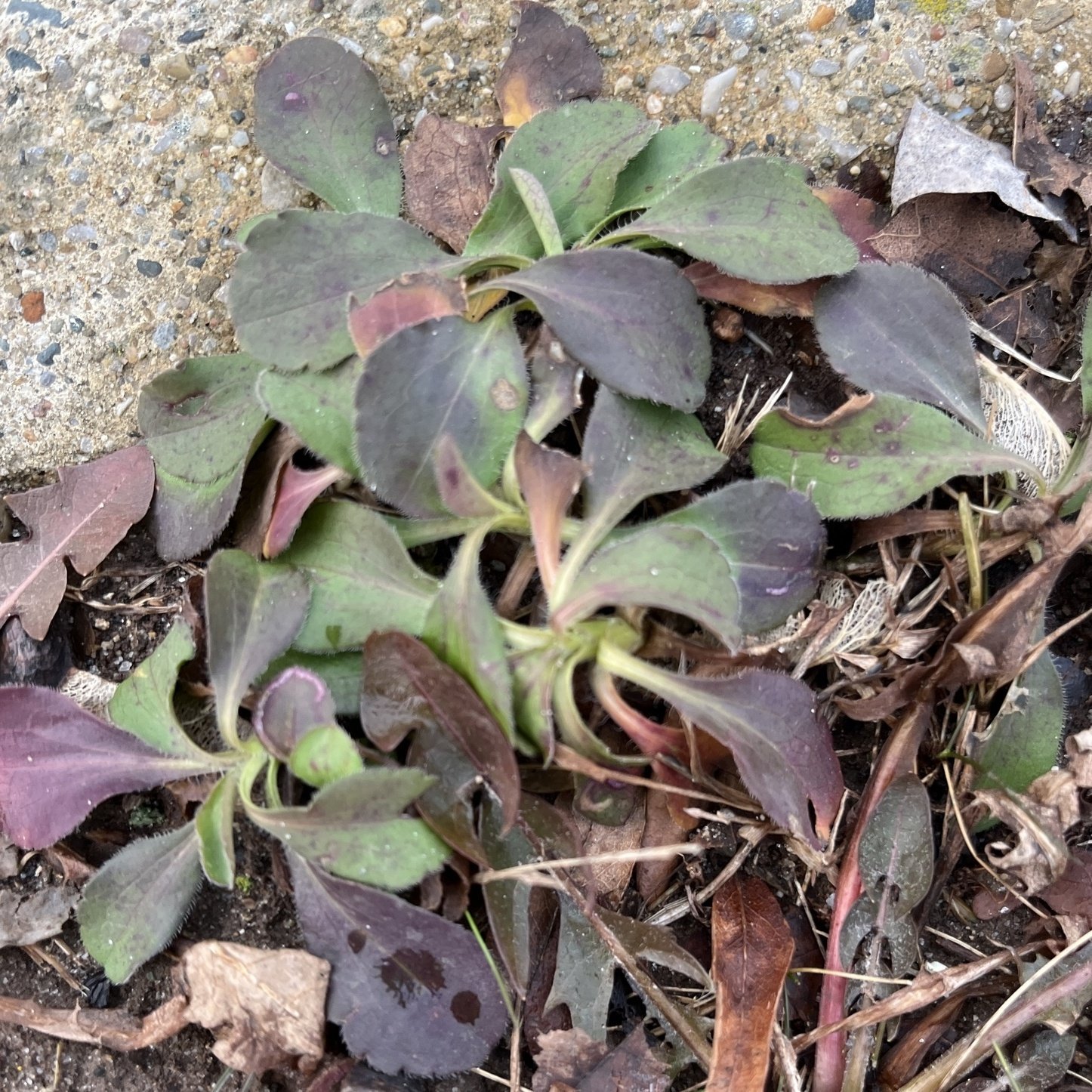
The leaves start as a basal rosette — broad, spoon-shaped leaves that wither by flowering time, with fresh rosettes already developing as the plant blooms — and climb the stem as progressively smaller, narrower leaves. The lower stem leaves are elliptic to oblong, 1.5 to 4 inches long, on winged stalks that clasp the stem a little; the upper leaves are sessile, linear to lance-shaped, down to a fraction of an inch, with tiny bristle tips. The leaf edges are softly hairy, and the faces are smooth or a bit hairy along the midvein underneath.
The flowers are the spectacle, and the spectacle is quantity. The heads sit in open, leafy, often pyramidal, panicle-shaped arrays with spreading or arching branches, and a single plant can carry hundreds of them. Each head is small — about half to three-quarters of an inch across — with 16 to 28 (sometimes up to 38) white ray florets, rarely pinkish or bluish, around 17 to 39 yellow disc florets that age reddish-purple or brown. The involucre is small, 3.5 to 5.1 mm tall, with phyllaries in four to six series, their tips pointed and bristly. It blooms late summer to late fall — September into November further north, and into December in the far south, which in Florida means it can still be flowering when the rest of the garden has gone to seed. The seeds are whitish or gray, tiny (1 to 1.5 mm), with a white pappus for wind travel, and the plant makes so many of them that it self-seeds with cheerful abandon.
The name is a biography. Pilosum is Latin for hairy. The common names pile up — hairy white oldfield aster, frost aster, hairy aster, awl aster, oldfield aster — because this is the white aster of old fields, roadsides, and vacant lots across eastern North America, the one that colonizes bare ground and blooms after everything else has quit. It was Aster pilosus when Willdenow named it in 1803, before the great aster split moved it to Symphyotrichum.
Lookalikes: check before you decide
The white asters are a famously confusing crowd, and this species is the one most often mixed up with its neighbors. Two separations matter, and both are documented in the sources.
Heath aster (Symphyotrichum ericoides) is the classic confusion — Flora of North America says so outright: the species “is often confused with S. ericoides, which inhabits the same kinds of open, prairie-like habitats.” The split is the flower head. Heath aster has smaller heads with spine-tipped phyllary apices — the little green bracts under the flower come to a sharp spine point. White oldfield aster has larger heads (half to three-quarters of an inch across) and its phyllaries end in a small bristle, not a spine. And the stem test helps: white oldfield aster’s stem is densely hairy; heath aster’s is much less so. Because of this confusion, the name Aster ericoides has been misapplied to white oldfield aster in floras and in the nursery trade for generations — buy by Latin name, and check the heads. Our heath aster guide covers the other half of the pair.
Smooth white oldfield aster (Symphyotrichum racemosum) is the other white oldfield aster in Florida, and its name gives the split away: smooth. Its stems are not densely hairy, its ray florets are narrower (laminae 0.5 to 1.2 mm wide, against 0.8 to 1.3 mm here — a fine difference, so use the stem first), and its seeds are 1 to 1.8 mm long and only faintly nerved. Hairy stem, white flowers, profusion of small heads: white oldfield aster. Smooth stem, same white flowers: go check smooth white oldfield aster instead.
Calico aster (Symphyotrichum lateriflorum) also throws small white heads in fall, but its disc florets are whitish to cream with lobes that bend sharply back (strongly reflexed), and its heads sit in a more one-sided array. Our calico aster guide covers it. The practical field test for white oldfield aster, in one sentence: a tall, much-branched plant covered in small white daisies with yellow centers, on a stem so hairy it looks frosted. If the stem is smooth, you have the wrong aster.
Where it grows in Florida
White oldfield aster is native across central and eastern North America, east of the Rockies, and the Atlas of Florida Plants lists it as native in Florida. It is a plant of open, disturbed ground: old fields, pastures, roadsides, prairies, open woodlands, glades, gravel bars, and waste ground — anywhere with bare soil and sun. It likes dry to medium soils, sandy loam to clay loam or even rocky and gravelly ground, and full sun to part shade. The Atlas gives it a FAC wetland indicator rating in its Florida listing, which is a reminder that it tolerates a range of moisture, but its heart is in dry, open, sunny ground.
In Florida it is a plant of the northern part of the state far more than the deep peninsula, and it blooms later the further south you go — into December in the far south of its range. It is a colonizer by nature: give it bare ground and it will arrive on its own, which is both its charm and, in a tidy garden, its warning.
How to grow it — or leave it
This one you can actually grow, and the guidance is well documented — but read the warning first.
Grow it if: you want a tough, no-maintenance, late-season native for a meadow, a wild corner, a roadside strip, or a naturalized bed. Full sun is best (at least six hours), part shade is tolerated; dry to medium, well-drained soil; sandy loam, clay loam, or gravel all work. It is hardy in USDA zones 4 to 8, drought-tolerant once established, and needs no fertilizer — feeding it just makes more leaf and fewer flowers. Water the first season until established, then leave it alone. The two real chores are the Chelsea Chop — cutting it back by a third in late June or July so it grows shorter and bushier instead of tall and floppy — and pulling unwanted seedlings, because it self-seeds aggressively. Deadhead after bloom if you do not want volunteers everywhere, but remember the seed you leave standing feeds birds through winter.
Leave it if: you want a tidy, well-behaved border plant. This is a traveler. It will seed itself into every open patch of soil, pop up in paths and beds, and bloom happily at ankle height if you mow it — it adapts to cutting and flowers anyway. In a small garden, grow it where it can roam, or grow it in a pot, or admire it on the roadside and let it be. Do not plant it in wet soil — it rots — and do not expect it to stay where you put it.
Seed: it practically grows itself. The tiny seeds need light to germinate, so surface sow — press into moist soil, barely cover — and they germinate readily without stratification. Fall sowing outdoors works well; so does spring sowing. Or do nothing: leave a few heads standing and the plant will sow itself. If you want an exact copy of a particular plant, divide a clump in spring or fall, because seedlings from a mixed aster border are crosses, not clones.
Wildlife value
White oldfield aster is a late-season workhorse. It blooms for about six weeks in autumn, producing numerous small white flowers right when pollinators are stocking up for winter — bees and butterflies work it hard, and one grower’s description calls it “a common late-season nectar source for pollinators,” which is exactly right. Its value is timing and abundance: not one big flower, but hundreds of small ones, open for weeks, in the season when little else is flowering.
The caterpillar side is a genus story. True asters are among the host plants of the Pearl Crescent butterfly — our Pearl Crescent guide lists true asters among its caterpillar hosts — and a dense, many-stemmed patch of white oldfield aster is a whole apartment block of leaves for them. Leave the stems standing through winter and you are also leaving seed for goldfinches and shelter for overwintering insects. It is moderately deer-resistant, which in Florida is a genuine selling point.
Varieties
Flora of North America recognizes two varieties, and they differ in one obvious character: hair. Variety pilosum is the hairy form — densely pilose or hirsute stems — and it is the widespread form, the one found in Florida. Variety pringlei, Pringle’s aster, is the nearly hairless form: stems glabrous or hairy only in lines, a more northern variety. If you find a smooth-stemmed plant that otherwise looks exactly like white oldfield aster, check Pringle’s aster — and then check smooth white oldfield aster too, because the smooth white asters travel in a pack. No named garden varieties of the wild species were verified, and none is claimed here. This guide covers Symphyotrichum pilosum only — variety pilosum is the one you will meet in Florida.
Frequently asked questions
Is white oldfield aster the same as frost aster?
Yes — frost aster is one of the common names for Symphyotrichum pilosum, along with hairy white oldfield aster, hairy aster, oldfield aster, and awl aster. All of them are the same plant. Buy by the Latin name, since “frost aster” and “heath aster” get swapped around in the trade.
How do I tell it from heath aster?
Check the flower heads and the stem. White oldfield aster has larger heads (half to three-quarters of an inch across) and a densely hairy stem. Heath aster has smaller heads with spine-tipped phyllaries — the little green bracts under the flower come to a sharp spine point — and a much less hairy stem. Flora of North America calls this the classic confusion between the two.
What is the one field mark to remember?
The hairy stem. Franck’s Florida key splits on it first: stems densely pilose or hirsute means white oldfield aster. Run a finger along the stem — if it feels like frost, you have it.
When does it bloom in Florida?
Late summer to late fall, and into December in the far south of its range. In most of Florida expect September through November, with the peak in October — one of the last white flowers of the year.
Will it take over my garden?
It will certainly try. It self-seeds aggressively in open, disturbed soil, and it can bloom even after mowing. Deadhead after bloom if you do not want volunteers, pull seedlings where you do not want them, and give it a wild corner or a meadow rather than a tidy border. In the right place its enthusiasm is a feature.
Can I grow it in a pot?
Yes, and a pot is actually a sensible way to enjoy it in a small garden — it keeps the self-seeding contained. Use well-drained mix, full sun, water until established, and cut it back in early summer (the Chelsea Chop) to keep it bushy.
Does it need fertilizer or rich soil?
No. It thrives in poor, dry to medium soils and needs no supplemental fertilizer — feeding it produces more foliage at the expense of flowers. It is a plant that does its best work on neglect.
Is it good for pollinators?
Excellent, and especially valuable for its timing — it blooms for about six weeks in autumn when little else is flowering. Bees and butterflies work it hard, true asters host Pearl Crescent caterpillars, and the seed feeds birds through winter.
Is it native to Florida?
Yes. The Atlas of Florida Plants lists it as native. It is native across eastern North America, from southern Canada to Florida and Texas.
What zones does it grow in?
USDA zones 4 to 8. In Florida it is a north-Florida plant first and foremost — it is at the warm edge of its range here, which is why it likes dry, open, sunny ground and sulks in wet soil.
🌱 Keep learning
Three related guides worth reading next:
- Heath Aster — The classic confusion: smaller heads, spine-tipped phyllaries, and a much less hairy stem — learn the pair and you will never mix them up again.
- Aster: Growing Guide — The genus guide: how the old catch-all Aster became Symphyotrichum, and what all our native asters share.
- Habitat Gardening in Florida: One Tree, One Thicket — How a wild corner of native plants like this one becomes habitat that feeds something all year.