
🍀 White Clover
Trifolium repens
The plant that taught an entire generation of gardeners to stop apologizing for the lawn. White clover is the low, creeping, white-flowered legume that shows up uninvited in turfgrass, feeds the bees, and then quietly fixes nitrogen while the grass takes all the credit. It is not a weed with a PR problem. It is a cover crop, a living mulch, and a pollinator pit stop that happens to be very good at looking like a lawn.
Quick facts
- Sun: Full sun to part shade
- Soil: Fertile, moist, well-drained soil; tolerates poor soil better than turfgrass does
- Spacing: Broadcast seed; overseed into existing lawns rather than planting in rows
- Height: Just a few inches tall when mowed, creeping stems spreading a foot or more
- Life cycle: Perennial in cool climates; often behaves like a cool-season annual in warm ones
- Bloom: Spring into summer, small white (sometimes pink-tinged) pom-pom flower heads
- Zones: Roughly USDA zones 3–10
What it is
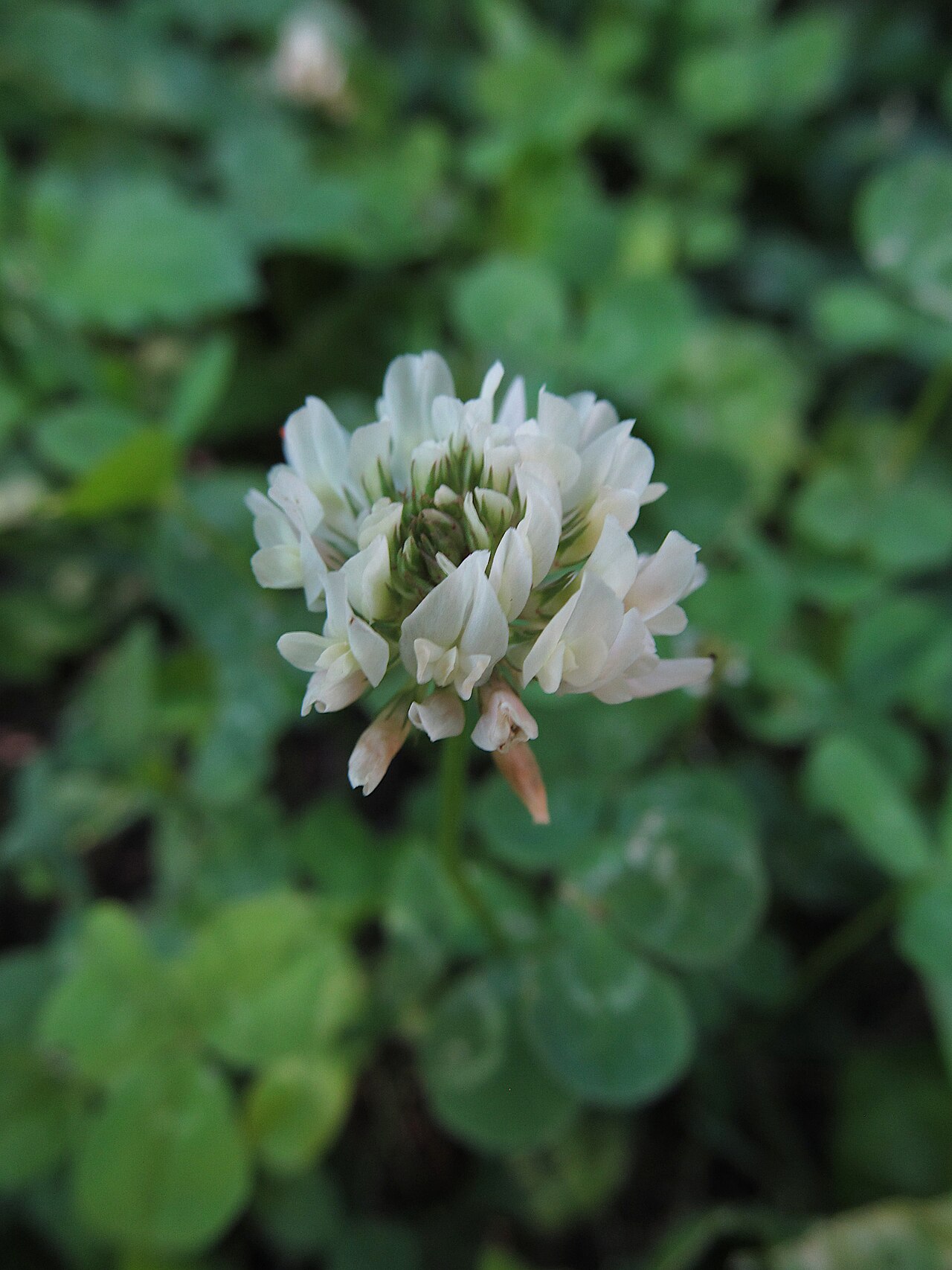
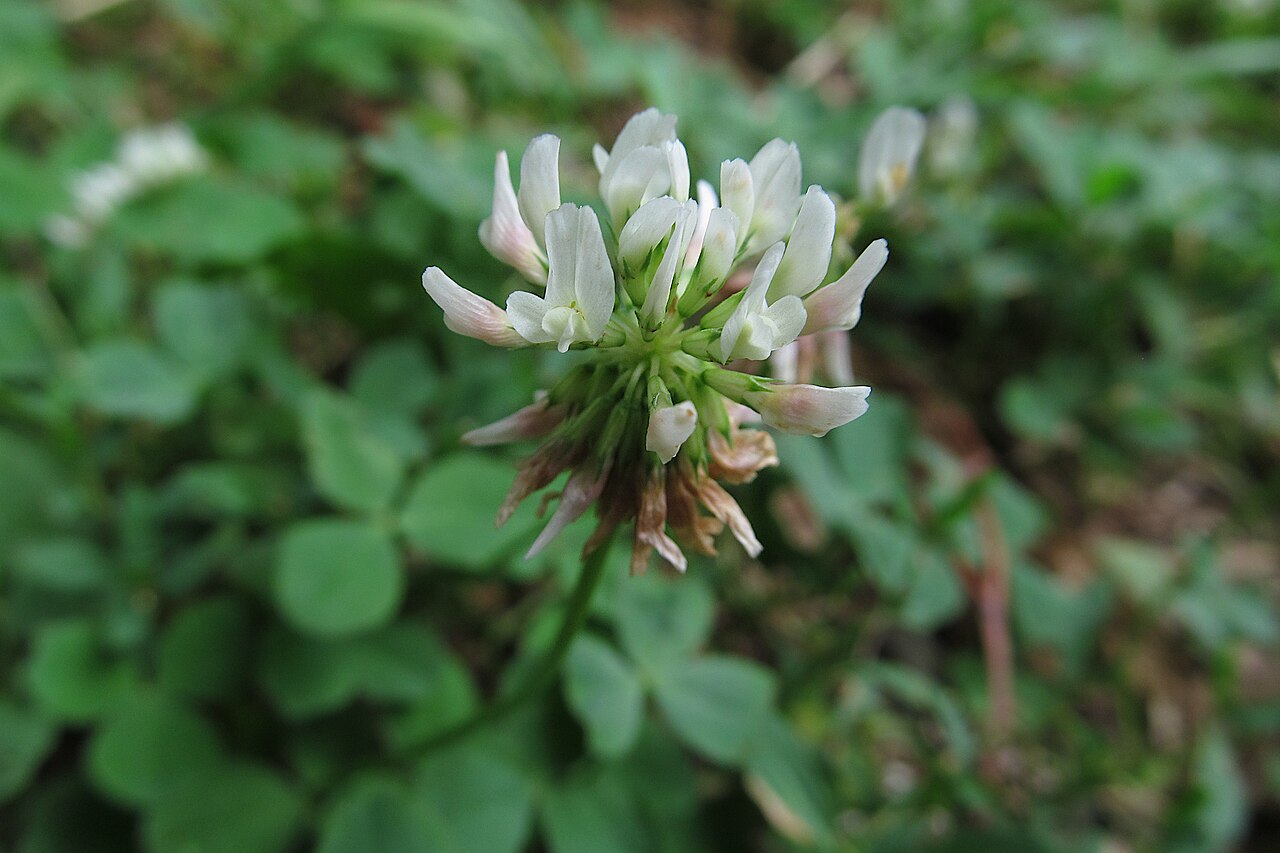
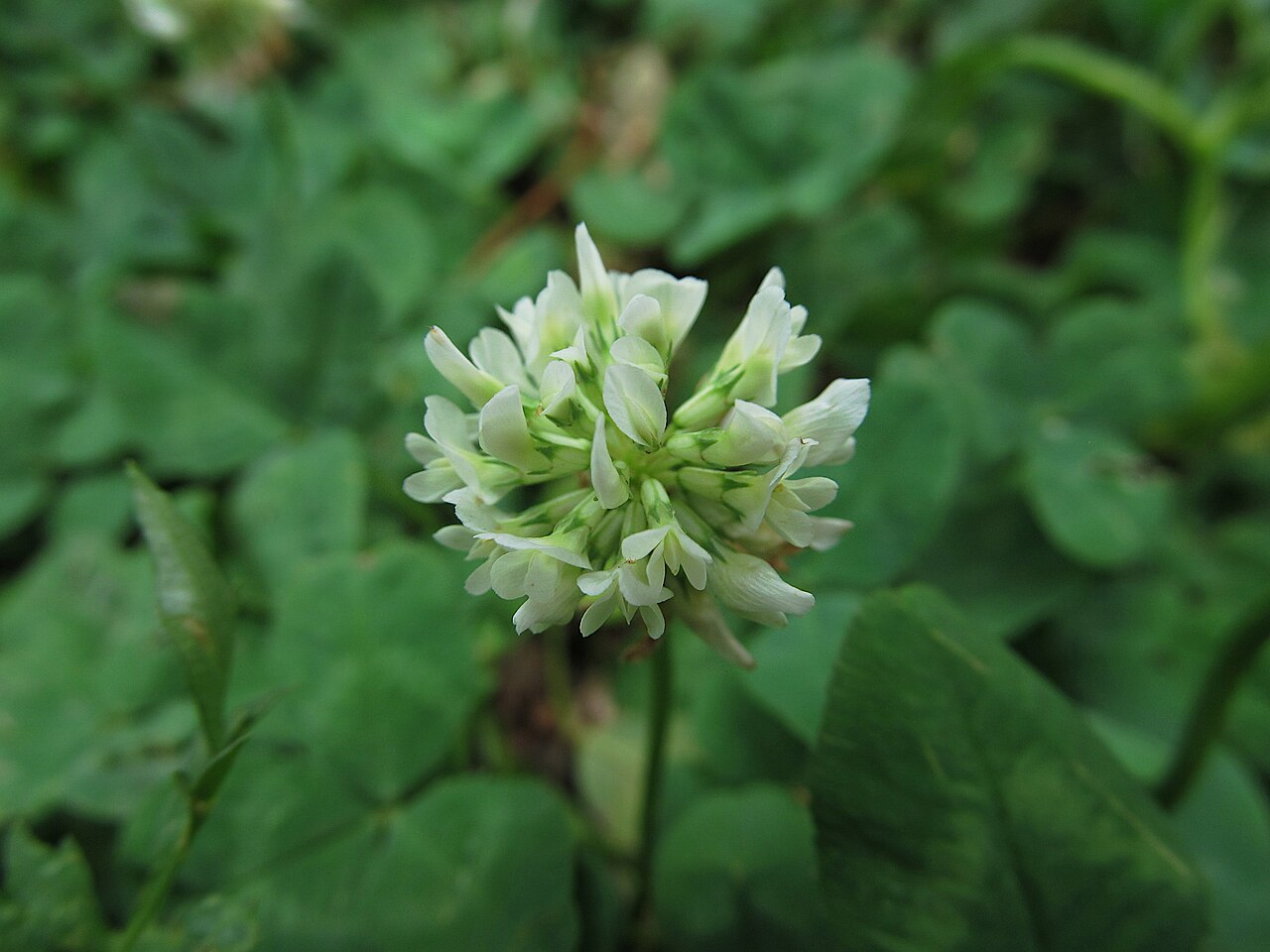
White clover (Trifolium repens) is a low, creeping perennial in the pea family, Fabaceae, native to Europe and Asia and now naturalized across much of North America. It spreads by creeping stems called stolons that root at the nodes, which is how a few plants become a patch and a patch becomes a lawn. The leaves are the classic three-leaflet clover, usually with a pale crescent or watermark across each leaflet that makes it easy to tell from look-alikes. The flowers are small, round, white heads that bees visit with real enthusiasm.
The superpower is underground. Like other legumes, white clover hosts rhizobia bacteria in nodules on its roots, and those bacteria convert nitrogen gas from the air into forms plants can actually use. That is free fertilizer, manufactured by microbes, delivered straight to the root zone. It is the same soil-food-web logic that makes worm castings valuable: feed the biology and the biology feeds the plants. A clover lawn or a clover cover crop is, in effect, a tiny nitrogen factory with flowers on top.
The Florida translation
Here is the honest version, because the internet will happily sell you a clover lawn that the climate will not sustain. White clover is a cool-season plant. University of Florida extension sources describe it as a cool-season legume that frequently acts like an annual in this state: it grows through the cool months, then fades when temperatures climb in late spring and early summer. It does best in the cooler part of the state, on fertile soil that holds moisture, and it will not thrive as a year-round lawn in hot, humid summers the way it does in cooler regions.
That does not make it useless here — it makes it seasonal. In the northern part of the state, sow white clover in fall as a cool-season lawn component, a living mulch between garden beds, or a winter cover crop that protects bare soil and feeds it nitrogen before spring planting. Expect it to thin out in summer heat, and plan for that instead of being surprised by it. In warmer parts of the state, treat it as a short cool-season guest, not a permanent resident, and lean on warm-season groundcovers for the summer months.
How to grow it
Site. Sun to light shade, on soil that stays reasonably moist. White clover tolerates a range of soils but sulks in bone-dry sand and in standing water. If the soil has never grown clover before, inoculating seed with the clover strain of rhizobia helps the nitrogen-fixing partnership get started; in soil where clover already grows, the bacteria are usually already present.
Sowing. Sow in fall or early spring when soil is cool and moist. For a lawn, mow existing grass short, rake lightly so seed reaches soil, broadcast, and water until established. For a cover crop, broadcast over a prepared bed and rake in lightly. Seed is tiny, so mix it with sand for even spreading if you are covering a large area.
Water and mowing. Water during establishment; after that, clover is fairly thrifty but still prefers steady moisture. Mow at around 3 inches if you want it to stay tidy, and let it flower sometimes — mowing off every bloom starves the bees you planted it for. If you want a pure clover lawn, know its limits: it does not stand up to heavy foot traffic the way turfgrass does, so a clover-grass blend is the tougher, more forgiving lawn.
Feeding the soil. This is the part gardeners love most: a clover stand generally needs little or no nitrogen fertilizer, because it makes its own. What it does appreciate is organic matter — compost or worm castings worked into the soil before sowing give the microbes and the roots a head start, and the clover returns the favor by feeding nitrogen back into the bed for whatever follows it.
Trouble spots
White clover is killed by broadleaf lawn weed killers, so you cannot have both a herbicide-treated lawn and a clover lawn — pick a side. It can also attract bees when in bloom, which is a feature for pollinators and a consideration for barefoot kids and anyone with a bee allergy. In rich, moist soil it can spread enthusiastically into beds, so edge it if you want it to stay put.
White clover is not native to North America, and native groundcovers support local wildlife better in the long run. But as non-natives go, it is a gentle one: university assessment has not flagged it as a problem species in this state, and it has actually declined over the years. Use it as a tool — a soil-building, bee-feeding, lawn-softening tool — and it earns its keep.
If you came here from the broader survey, the Clover guide rounds up the whole clan, from lawn clovers to cover-crop clovers, in one place.
What it looks like
Saving seeds
White clover seed is easy. Let a patch flower and set seed — the flower heads turn brown and dry in summer — then strip the seed into a paper bag. The seed coat is hard, so rub it with sandpaper or nick it, then sow in fall or spring in moist soil, barely covered. Germination usually comes in one to two weeks after treatment, and it is fast and even.
It self-seeds freely, which is the point if you want a living lawn and a chore if you do not — white clover fixes nitrogen, feeds the bees, and fills bare spots on its own. Save from the healthiest patch — the densest, the greenest, the most bee-visited — and dry the seed thoroughly before storing; it keeps several years in a cool, dry jar.
White clover crosses with other Trifolium, so grow only one clover type for seed at a time if you want it pure. And a note for the lawn: a clover lawn is a lawn that feeds the soil, and a plant grown from your own seed is a lawn that knows your yard.
In Florida, white clover is a cool-season groundcover for fall through spring, happiest in north and central Florida with sun and moist soil. It goes dormant in the summer heat, so sow in fall for the longest season, and let it go to seed in spring to stock next year’s lawn.
Varieties
Every named variety of White Clover with its own growing guide:
- Durana — The persistent one: an intermediate white clover that outlasts the big ladino types and reseeds itself back year after year.
- Osceola — The home-state pick: a Florida-developed intermediate clover that performs where southern gardeners actually garden.
- Patriot — The best of both: ladino-sized yield with the persistence the big ladino types usually lack.
- Pipolina — The lawn clover: a tiny-leafed microclover that stays low, flowers shyly, and blends into turf instead of taking it over.
- Regal — The big producer: a large ladino clover with showy leaves and heavy yields — glorious while it lasts.