
🥬 Mizuna
What it looks like
How to grow
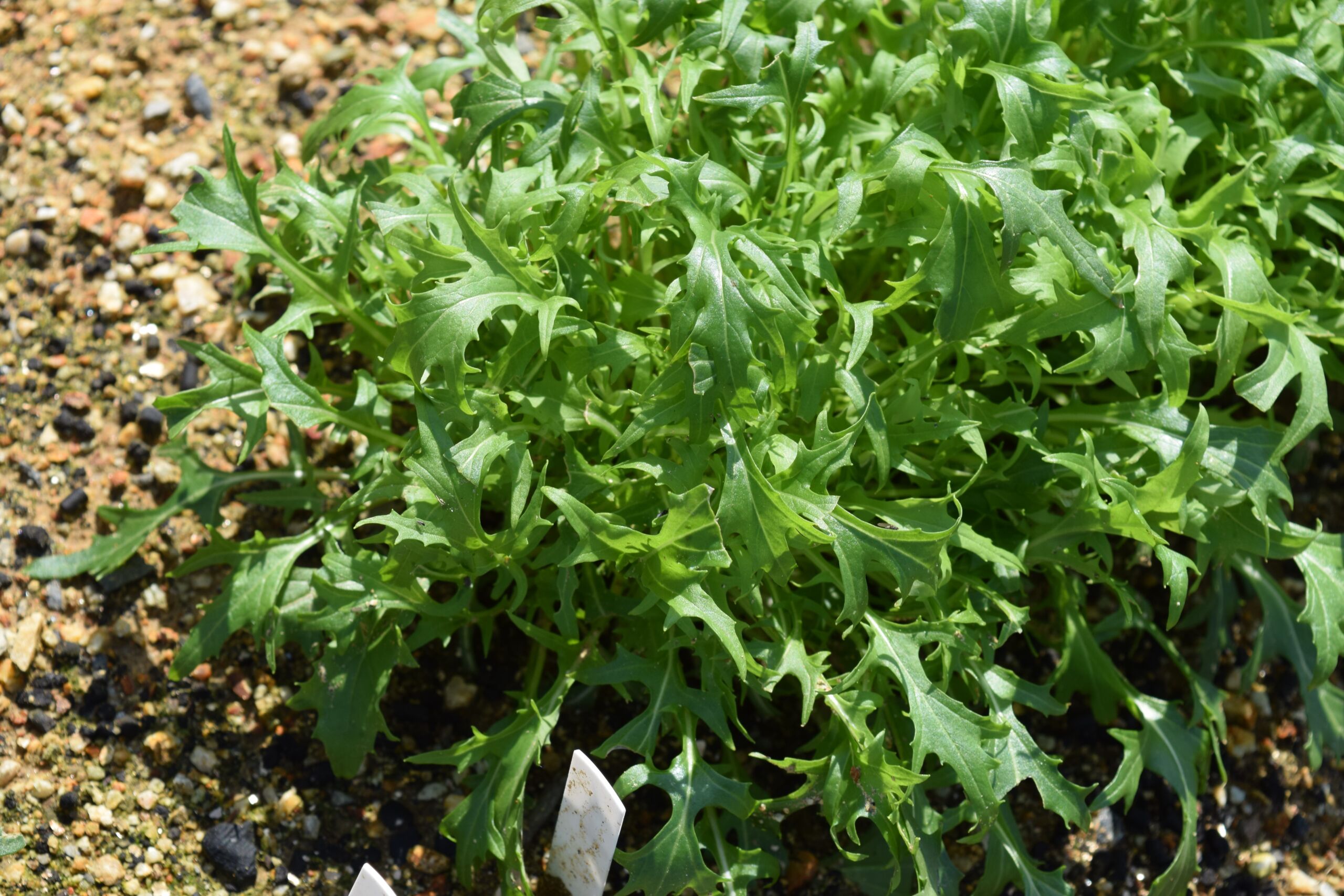
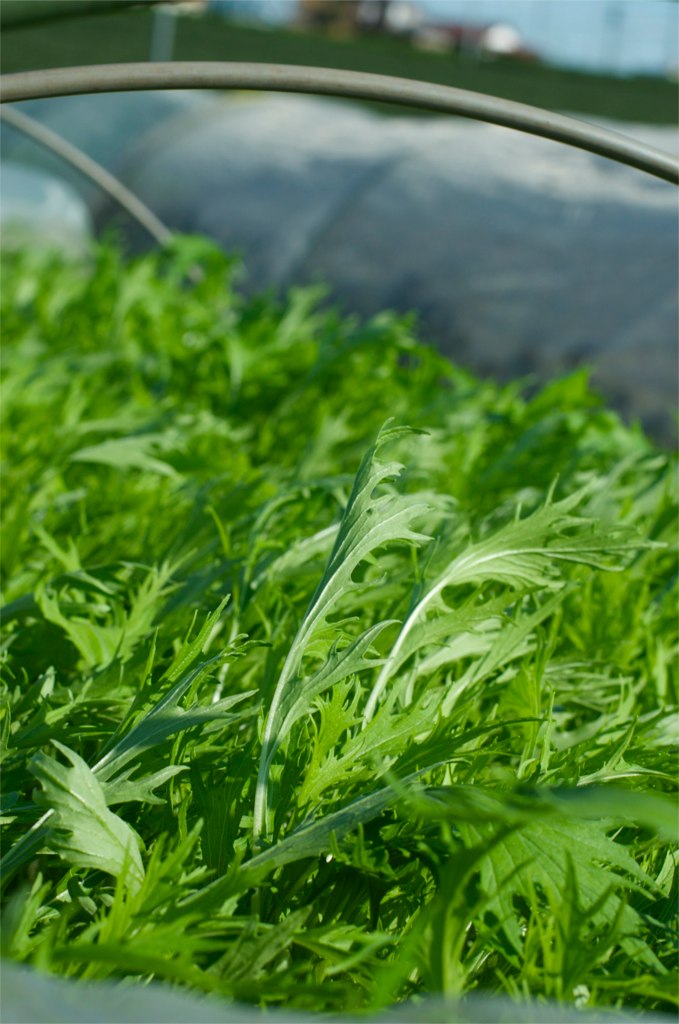
Mizuna is a Japanese mustard green with finely serrated leaves, a mild peppery flavor (far gentler than mustard greens), and a growth habit built for cut-and-come-again harvesting: cut it, and it regrows. It is a staple of Japanese nabemono hot pots and a natural for mesclun mixes, where its feathery leaves add texture no lettuce can match.
Sow 1/4 inch deep, direct, in early spring and again in late summer for fall — fall is the best crop in most zones, since mizuna tolerates frost and sweetens in cold. Succession-sow every 2–3 weeks. In mild-winter zones, fall-sown mizuna produces all winter under only light cover.
Harvest by cutting outer leaves or by cutting the whole plant an inch above the crown and letting it regrow; a single planting can give three or four cuts in cool weather. Crowded mizuna still produces, but airflow matters — thin enough that leaves dry after rain, or slugs and mildew move in.
Water & feeding
About 1 inch a week, kept even; drought makes leaves tougher and hotter. Work worm castings into the bed at planting; castings carry a low burn risk and a light side-dress after the first cut fuels regrowth without forcing soft, pest-prone leaves.
Common problems
- Bolting in heat: sow for cool seasons and harvest young; mizuna bolts later than most brassicas, but heat still wins eventually.
- Flea beetles: row cover on young plants; regrowth after cutting usually outruns damage.
- Slugs in damp, crowded beds: space for airflow, trap, and harvest promptly.
- Aphids: blast with water and check undersides, especially on regrowth.
Harvest
Pick baby leaves at 3–4 inches for salads, or cut full plants at 6–8 inches and let them regrow. Morning harvest keeps leaves crisp; cool promptly and use within a few days. Mizuna wilts beautifully into soups and stir-fries in the last minute of cooking, and its mild flavor means it pairs with almost anything — which is why a bed of it disappears faster than any other green.
Browse all plant & pest guides
Saving seeds
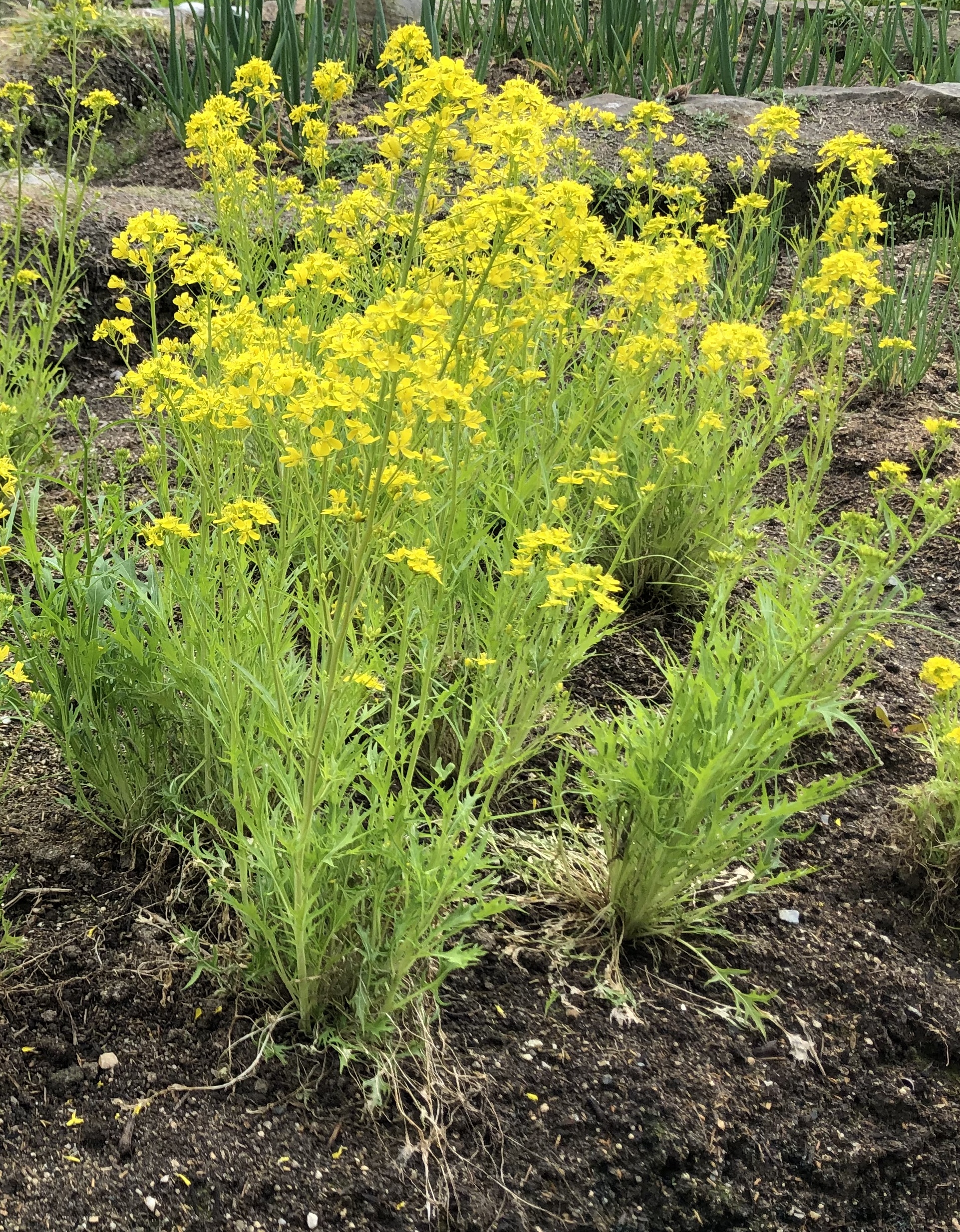
Mizuna is a cut-and-come-again green that saves seed the way all brassicas do: let a plant bolt, flower, and set pods, then harvest when the pods are dry. Pick your best plant for seed — the one with the deepest cuts, the mildest bite, the sturdiest stem — and let it go while you keep cutting the others for salads. The yellow flowers are small and pretty, and the bees will find them before you do.
Crossing is the thing to watch, because mizuna is Brassica rapa, and Brassica rapa crosses with everything in its family: turnips, bok choy, tatsoi, napa cabbage, and every other mizuna in the neighborhood. If you grow two of them to seed in the same season, expect mixed offspring. Grow one Brassica rapa variety to seed at a time, or accept the mix — for a salad green, a mixed seedling is still a salad green, which takes the pressure off.
Harvest when the pods are tan and dry and rattle when you shake them. Cut the whole stalk into a paper bag and let it dry for a week, then crush the pods and winnow the chaff away with a breeze and a bowl. The seed is small, round, and dark, and a single plant gives you far more than you need — a teaspoon is a season of salads.
Self-seeding is gentle, not a takeover: a few volunteers where the pods shattered, easy to pull or transplant while small. If you want seed and no volunteers, cut the stalks as they dry and deadhead the rest. Stored dry, the seed keeps for several years. Florida humidity is the enemy of stored seed, so dry it thoroughly before jarring it, add a silica gel packet, and keep the jar cool and dark.
Varieties
Every named variety of Mizuna with its own growing guide:
- Early Mizuna Mizuna — The classic serrated mizuna — feathery leaves, mild mustard flavor, ready in 40 days.
- Purple Mizuna Mizuna — The purple-tinged mizuna — serrated leaves flushed violet, mild flavor, and a salad showpiece.
- Kyoto Mizuna Mizuna — The traditional Kyoto mizuna — deeply cut leaves, delicate texture, and the original salad mizuna.
- Red Kingdom Mizuna — The red mizuna: serrated leaves flushed deep red-purple, mild mustard flavor, and a salad bowl that looks like autumn.
- Mibuna Mizuna — The smooth-leaved cousin in the mizuna family: long, slender, spoon-shaped leaves with the same mild mustard flavor — built for cut-and-come-again picking.
- Red Mizuna — The deep-red mizuna: lacy red leaves with a gentle mustard kick, ready in about five weeks.
- Red Streaks Mizuna — The red-veined mizuna: finely divided green leaves highlighted with vivid red veins, fast and spicy, ready in about 40–49 days.