
🥬 Mustard Greens
What it looks like
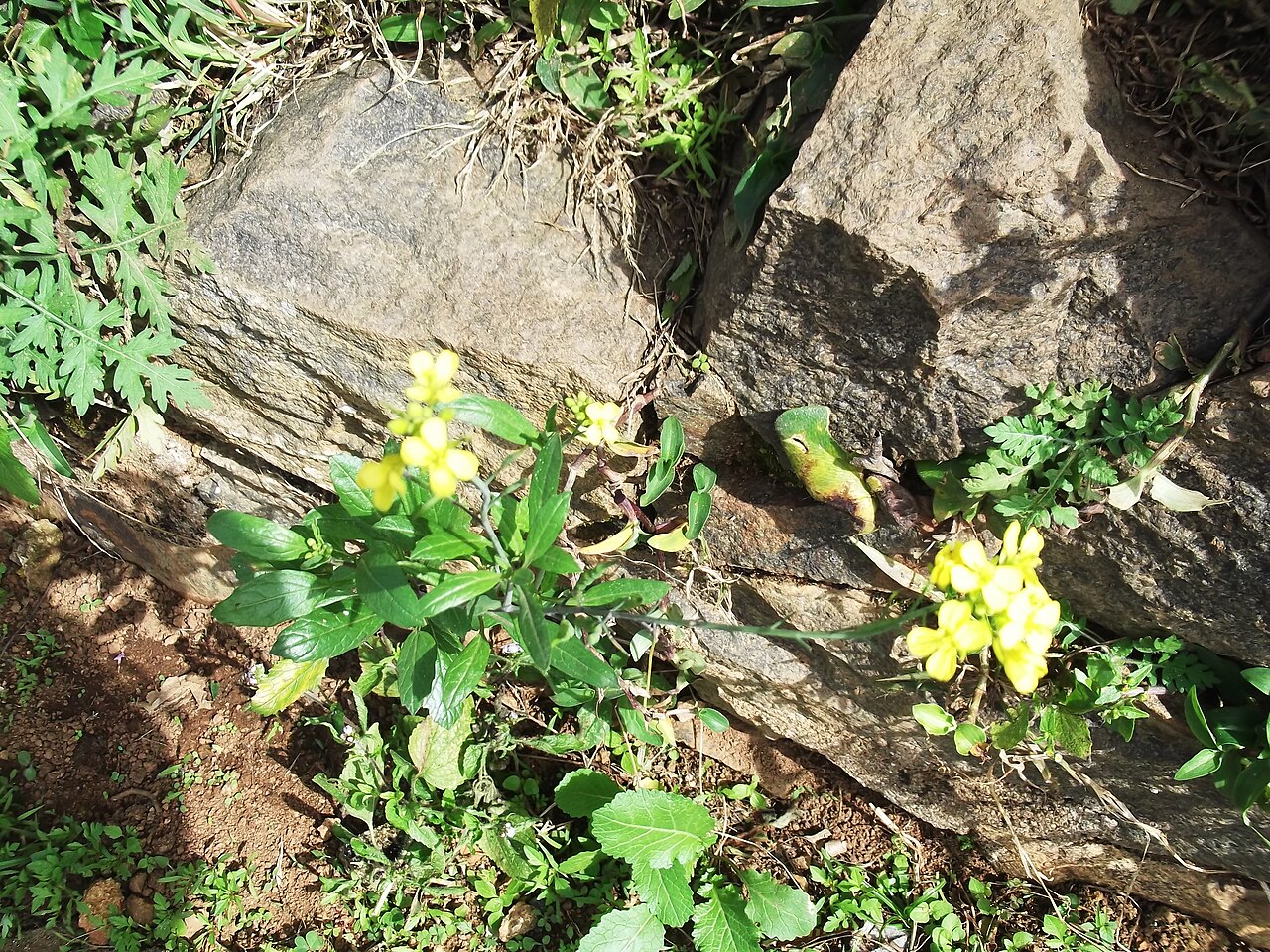
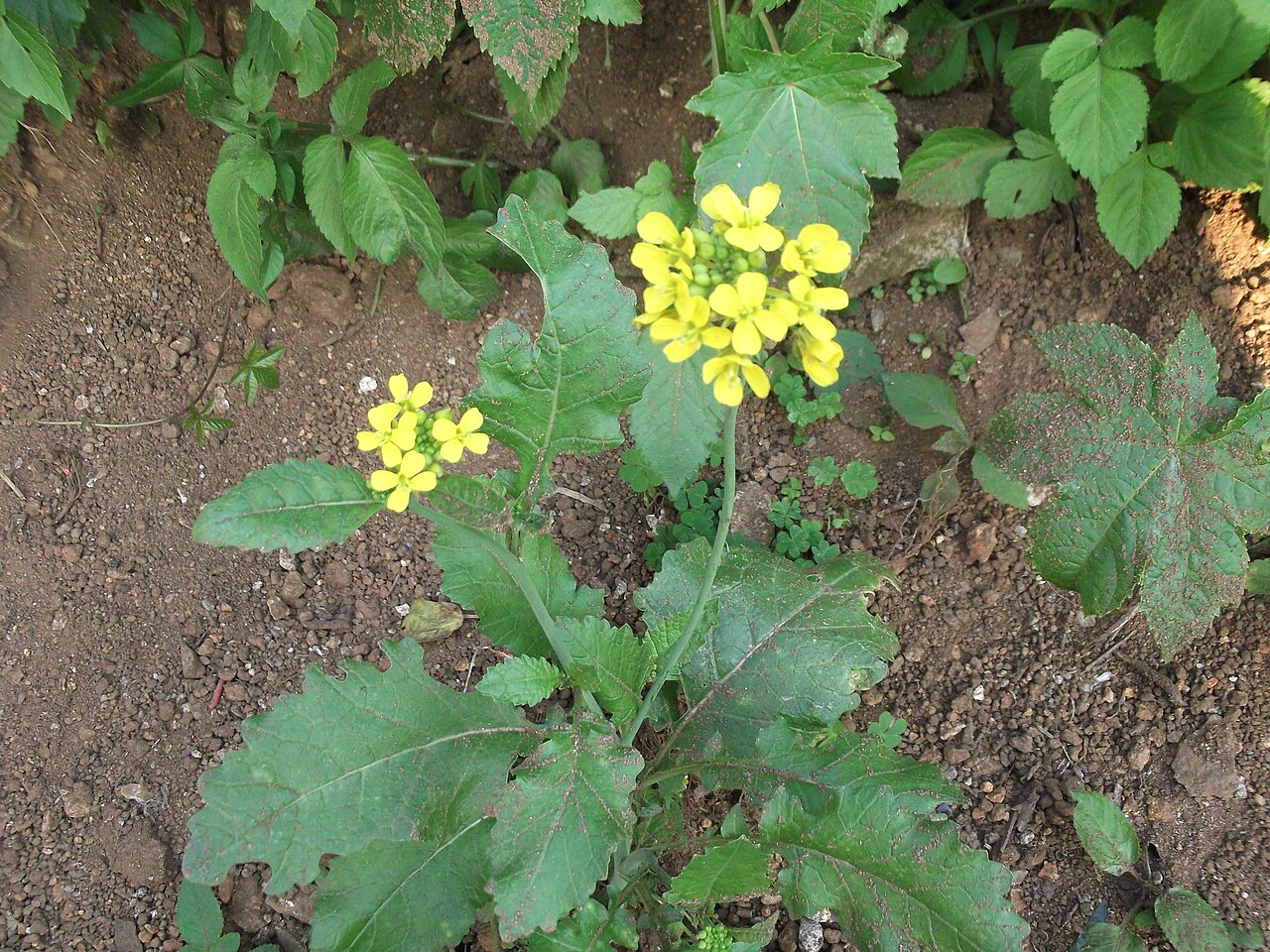
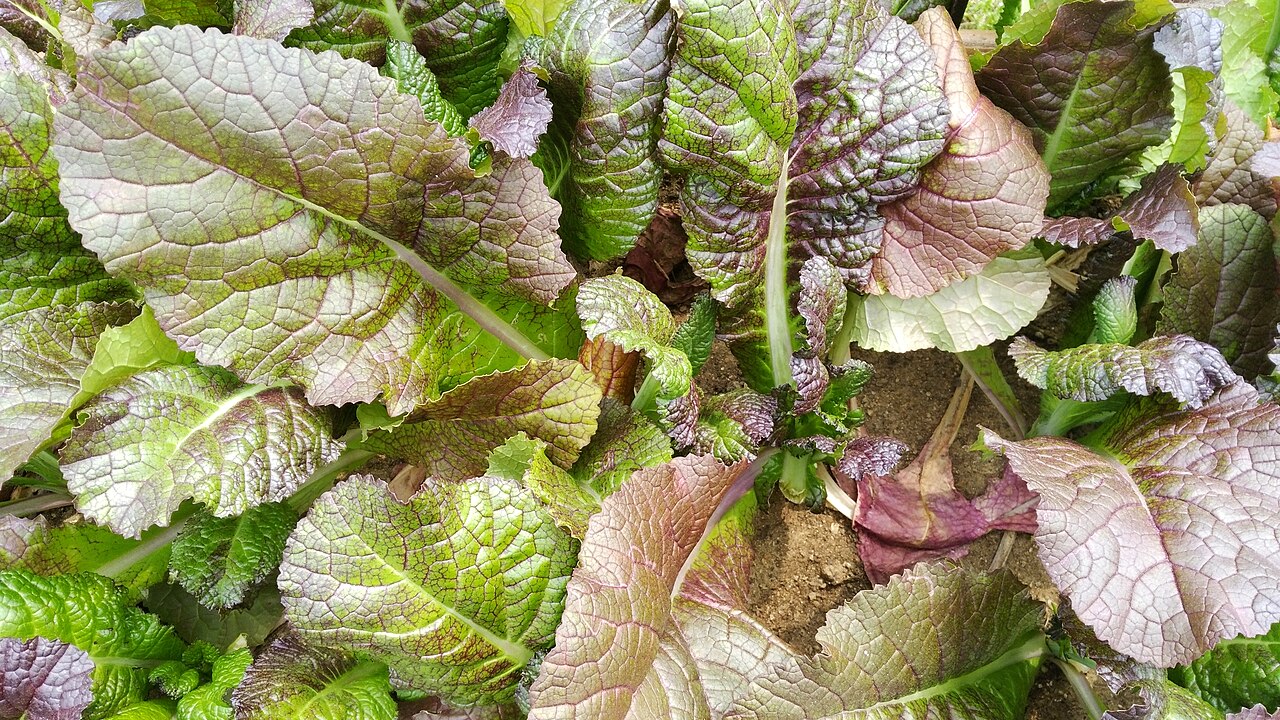
How to grow
Mustard greens are the brassica for impatient gardeners: sow, blink, harvest. The leaves carry a genuine mustard bite — the same family of compounds that gives prepared mustard its heat — which mellows with cooking and sharpens in heat-stressed plants, so the growing conditions are also the seasoning.
Sow 1/4 inch deep, direct, in early spring a few weeks before last frost, and again in late summer for fall. Succession-sow every 2–3 weeks for a steady supply; a single sowing goes from baby leaf to bolt in a hurry once days lengthen. In mild-winter zones, fall-sown mustard carries through winter with only light protection.
Thin to spacing or harvest the thinnings as baby leaf — either way, crowded mustard is aphid housing. Cut-and-come-again harvesting (outer leaves first) keeps a plant producing for weeks; leaving it alone until it is a giant just gives you one tough harvest and a flower stalk.
Water & feeding
About 1 inch a week, kept even. Dry, hot conditions make leaves hotter, tougher, and quicker to bolt — which some cooks love and most don’t, so water generously if you want mild leaves. Work worm castings into the bed at planting; castings carry a low burn risk and a light side-dress mid-season is plenty for a crop this fast.
Common problems
- Bolting in heat: sow for cool seasons, choose slow-bolting varieties, and harvest young.
- Flea beetles (shot holes in leaves): row cover on young plants; mature mustard usually outgrows it.
- Aphids: blast with water, check undersides, and keep plants spaced for airflow.
- Cabbage worms: hand-pick or Bt spray; mustard’s bite does not deter caterpillars at all, sadly.
Harvest
Pick baby leaves at 3–4 inches for salads, or outer leaves at 8–10 inches for cooking, working bottom-up so the center keeps growing. Young leaves are mild and peppery; older leaves want cooking — braised with a little fat and acid, they are a different and better vegetable. Harvest in the morning and cool promptly; mustard wilts fast.
Browse all plant & pest guides
Saving seeds
Mustard greens are one of the easiest leafy greens to save seed from, and one of the most satisfying — a few plants left to bolt will give you more seed than you can use in a year. Let your best plants flower and set pods: the slender pods turn from green to tan and papery, and the seed inside rattles when you shake them. Snip the dry stalks into a paper bag on a dry day, crush the pods gently, and winnow out the chaff. The seed is small, round, and dark, and a single plant can fill a jar.
Mustard greens are insect-pollinated, which is where the care comes in. Brassica juncea will cross with other mustard greens and with related mustards, so if you are growing more than one variety — or if a neighbor’s mustard is flowering at the same time — the seed will not stay true. The isolation distances in the books disagree, ranging from a few hundred feet to half a mile for full purity, so the practical home-garden answer is this: grow one variety for seed, pull any wild or volunteer mustards nearby before they flower, and accept that seed saved in a mixed garden is an experiment rather than a guarantee. Bagging a few flower heads in a mesh bag and hand-pollinating is the small-space alternative, and it works well for a home seed saver.
Save seed from your best plants — the ones that were slow to bolt, tender, and productive — and let them go all the way to dry pods before you harvest. Dry the cleaned seed thoroughly on a tray for a week or two before jarring it, because Florida humidity is the enemy of stored seed, and seed that goes into a jar even slightly damp will mold. Properly dried, mustard seed keeps for several years in a cool, dark jar with a silica gel packet.
One last note: mustard seed is famously long-lived in storage and famously quick to sprout, which is why it is the classic seed for school science experiments. Your saved seed should germinate within a few days in warm, moist soil — if it does not, the storage, not the seed, was the problem.
Varieties
Every named variety of Mustard Greens with its own growing guide:
- Southern Giant Curled Mustard Greens — The classic Southern mustard — huge, frilly leaves with a bold peppery bite, ready in 45 days.
- Florida Broadleaf Mustard Greens — The broad, smooth Southern mustard — large leaves, milder bite, and a heat-tolerant habit.
- Red Giant Mustard Greens — The purple-red Japanese mustard — broad, savoyed leaves with a sharp, clean bite.
- Green Wave Mustard — The frilly Southern workhorse: deeply curled, bright green leaves with a bold mustard bite — baby leaf in 20 days, full pots in 45.
- Osaka Purple Mustard — The purple Japanese heirloom: broad, reddish-purple leaves with a sharp, clean bite — baby greens in 21 days, full leaves in 40–50.
- Ruby Streaks Mustard — The frilly purple-and-green showpiece: intricately lobed, burgundy-streaked leaves with a mild spicy tang — baby leaf in 20 days, full size in 45.
- Savanna Mustard — The fast Southern hybrid: large, glossy, dark green broad leaves with a milder bite, ready in about 35 days.
- Tendergreen Mustard — The mild one: spinach-flavored mustard leaves that stay tender, resist drought, and bolt slowly, in about 35 days.
- Golden Frills Mustard — The frilly baby-leaf star: bright green, deeply lobed leaves with a strong, spicy aroma, ready in about 40 days.
- Purple Wave Mustard — The lacy purple mustard: purple-tinged, finely cut leaves with a spicy-hot kick, ready in about 45 days.
- Carolina Broadleaf Mustard Greens — The classic Southern cooking green: broad, smooth leaves with a hearty bite, mature in 40-50 days — the potlikker mustard.
- Dragon Tongue Mustard Greens — The frilly, flamboyant mustard: large, frilled leaves with a peppery bite that deepens as they mature, ready in 50 days.
- Garnet Giant Mustard Greens — The darkest purple mustard: broad, garnet leaves with a mild spicy bite — baby leaf in 21-30 days, full size in 40-45.
- Great Wave Miike Mustard Greens — The Japanese pickling mustard, reselected: big, bold takana leaves for winter eating, baby leaf in about 21 days, mature in 40-50.
- Wasabina Mustard Greens — The wasabi-lookalike mustard: shocking chartreuse, frilled leaves with a real nose-tingle bite, ready in 40-45 days.
- Amara Mustard — The mild Ethiopian mustard: tender, medium-green leaves with a complex spicy-garlic flavor, milder than most mustards, ready in about 40 days.
- Suehlihung Mustard — The heading Chinese mustard: lobed green leaves that form a head, cold-resistant and slow to bolt, for pickling and stir-fries in about 30–50 days.
- Scarlet Frills Mustard — The red frilly mustard: intricately lobed green-and-red leaves, very spicy, slow to bolt and darker red in cool weather, ready in about 37 days.